

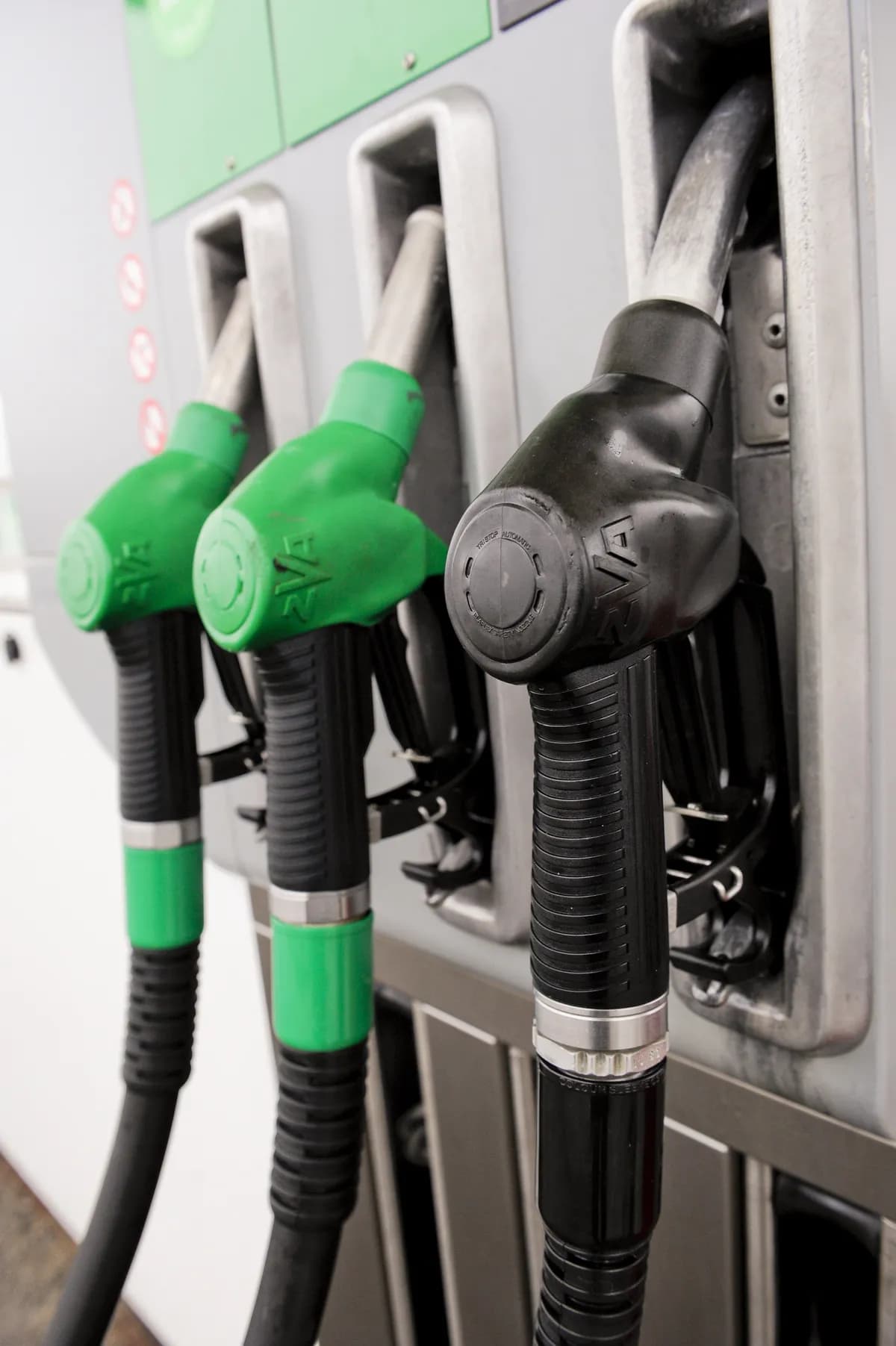
The United States-Israeli war on Iran and Tehran's retaliatory strikes across the Gulf region have upended global financial and energy markets, raising concerns of a global economic crisis or recession, according to research from four sources. Since the US-Israeli strikes on Iran began on February 28, Tehran has launched ballistic missiles targeting Israel, US military bases, oil depots, and other infrastructure across the Gulf region. This escalation has sent oil prices soaring, with Brent crude at $106 per barrel as of Monday morning, up more than 40% from $72 per barrel on February 27.
Iranian attacks have dramatically reduced traffic in the Strait of Hormuz, through which about 20% of global oil and gas supplies transit. On Thursday, Iran attacked fuel tankers in Iraqi waters, further disrupting shipping. The reduced traffic has a disproportionate impact on Asia, as about 84% of crude oil and 83% of LNG that passed through the Strait of Hormuz in 2024 was bound for the region, according to the US Energy Information Administration. China, India, Japan, and South Korea alone accounted for nearly 70% of oil shipments through the strait, with about 15% bound for the rest of Asia.
The liquefied natural gas market is under severe strain. QatarEnergy suspended its LNG production after an Iranian drone attack on March 2, according to research from four sources. This has contributed to LNG prices rising by almost 60% since the start of the war, based on research from four sources including Muyu Xu, a senior crude oil analyst at Kpler. Prices of refined products like petrol, gas oil, jet kerosene, and fuel oil have also seen significant increases and are expected to continue rising if energy flows through the Strait of Hormuz remain largely shut, according to Xu.
Analysts present divergent oil price scenarios based on the conflict's duration. If the conflict is short-lived and Iranian attacks cease, oil and LNG prices would fall sharply, with Brent crude reaching $65 per barrel by year-end, according to a Capital Economics report. In case of a longer war, oil prices would rise further to around $130 per barrel in the second quarter, and shipments through the Strait of Hormuz would be affected. However, the World Bank's Commodity Markets Outlook projects that global commodity prices are set to tumble to a five-year low in 2025 amid an oil glut that is likely to limit price effects even of a wider conflict in the Middle East.
Despite current volatility, the World Bank forecasts commodity price declines in the medium term. Overall commodity prices will remain 30% higher than in the five years before the COVID-19 pandemic, but from 2024 through 2026, they are projected to plummet by nearly 10%. Next year, global oil supply is expected to exceed demand by an average of 1.2 million barrels per day, a glut exceeded only twice before in 2020 and 1998.
Structural factors are driving this expected oil oversupply. Several non-OPEC+ countries are expected to ramp up oil production, and OPEC+ maintains significant spare capacity of 7 million barrels per day, almost double pre-pandemic levels. The oversupply partly reflects a major shift in China, where oil demand has flatlined since 2023 amid industrial slowdown and increased sales of electric vehicles and LNG-powered trucks. Assuming the Middle East conflict does not intensify, the annual average price of Brent crude is expected to fall to a four-year low of $73 in 2025, down from $80 a barrel this year.
Food price trends also show a mixed picture. Global food prices are set to fall 9% this year and 4% in 2025 before leveling off, but will remain nearly 25% above the 2015-2019 average. Energy prices are expected to drop by 6% in 2025 and 2% in 2026. Falling food and energy prices should make it easier for central banks to control inflation, but escalation in armed conflicts could complicate this by disrupting supply and driving up prices.
Global food insecurity is being exacerbated by multiple crises. High food prices, conflict, extreme weather, and other shocks have made more than 725 million people food insecure in 2024, according to Indermit Gill, the World Bank Chief Economist. If the conflict escalates and reduces global oil supply by 2% (2 million barrels per day) by year-end, it could disrupt prices and worsen this situation.
The conflict's ripple effects are now impacting manufacturing supply chains. Karex Berhad, the world's largest condom manufacturer, has warned that prices of sexual health products could rise sharply by 20-30% in coming months due to the Iran war disrupting petrochemical and rubber supply chains. According to the company, the war and blockade of Hormuz have severely restricted supply of silicone oil and synthetic rubber, essential for condom production. Karex produces over 5 billion condoms annually for brands like Durex and Trojan, and Brent crude rising above $120 per barrel has pushed up petrochemical-linked raw material prices.
Logistics challenges are compounding these raw material pressures. Higher freight costs and longer shipping times, from 30 to over 60 days for routes to Europe and North America, have left retailers with tighter inventories. Packaging has become more expensive due to energy-intensive aluminium foil production affected by global gas shortages.
Public health consequences are beginning to emerge in vulnerable regions. The crisis has begun to affect India, with reports of a growing 'condom shortage' that could lead to unintended pregnancies and increased spread of HIV/STDs in South Asia and Africa. The same raw material pressures have driven the price of medical gloves up by nearly 40%, with hospitals in Malaysia and Singapore rationing surgical supplies.
Analysts warn of potential global healthcare product scarcity. CIMB Securities analysts stated that unless maritime corridors reopen soon, cost-push inflation in the rubber sector could lead to a global scarcity of essential healthcare rubber products by late May. Major media has also issued a warning about a price increase, though the specific product and magnitude remain unclear.