

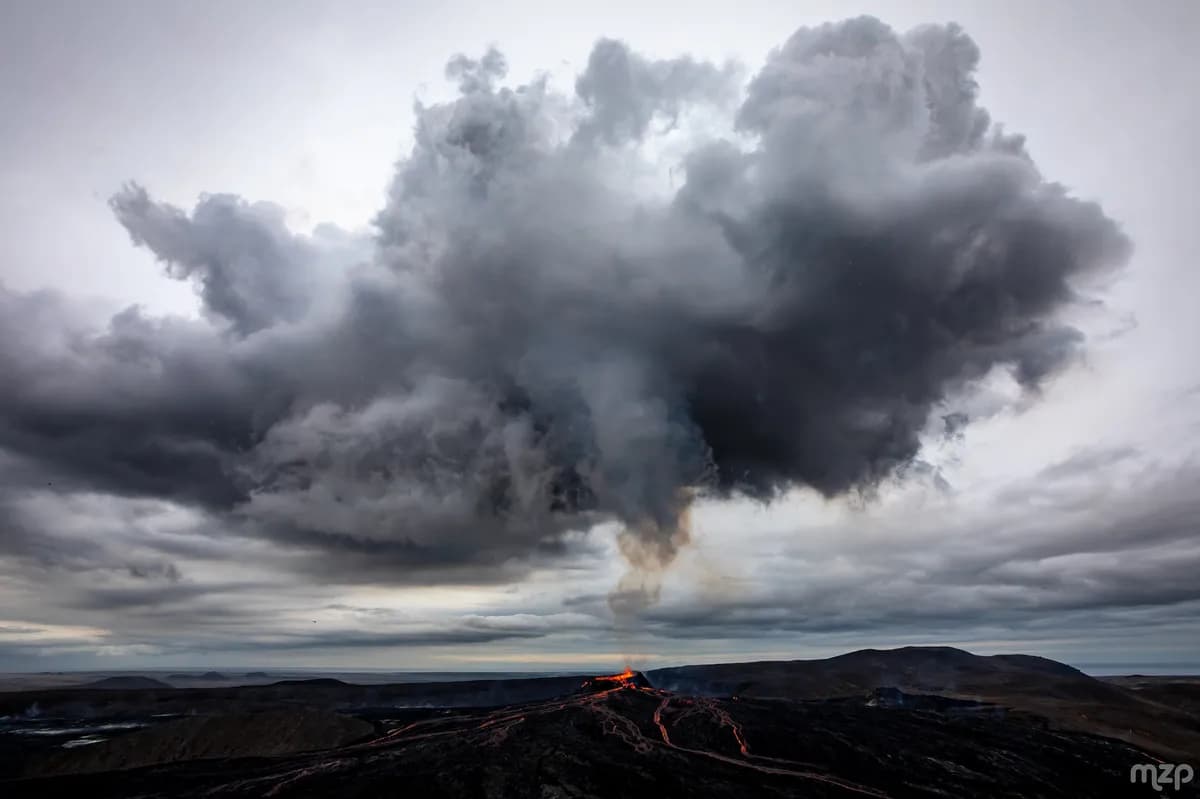
The Hunga Tonga-Hunga Ha'apai eruption in 2022 produced more than 2,600 lightning flashes per minute stretching up to 19 miles above sea level, according to multiple reports. Scientists were puzzled how a dry volcanic plume of ash and rock fragments could pick up charge, as particles of the same rocky material should not charge during collisions. New research from the Institute of Science and Technology Austria shows that a fine coating of carbon-rich molecules on silica particles enables charge transfer during collisions.
Perfectly clean silica particles did not tend to pick up charge, but carbon-coated ones did. The carbon coating can be produced simply by heating silica, as carbon-containing molecules in normal air cause surface contamination. The heat and updraught of a volcanic plume create the right conditions for charging, leading to volcanic lightning.
The specific carbon-containing molecules in air that cause the coating remain unknown, and it is unclear how the thickness or composition of the coating affects charge transfer.