

According to multiple reports, Ukrainian drone operators with frontline combat experience are lending their hard-won tactics to Aurora 26, Sweden’s largest military exercise since joining NATO. Running from April 27 to May 13, the exercise involves approximately 18,000 soldiers from 13 countries practicing collective defense, officials said. Aurora 26 is led by the Swedish Armed Forces and represents a milestone as the first major test of Sweden’s host nation support role since joining NATO.
Running from April 27 to May 13, the exercise involves approximately 18,000 soldiers from 13 allied nations, according to multiple sources. It is the largest Swedish military drill since the country abandoned its longstanding neutrality, and a sharp departure from previous Auroras that were designed to counter an invasion of Swedish soil, military officials said. Of the total participants, around 16,000 are from Sweden’s Army, Navy, Air Force, and Home Guard, while roughly 1,500 hail from allied countries.
We don't need to be coy about who the opponent is.
Media reports list the United States, United Kingdom, Finland, Norway, Estonia, Latvia, Ukraine, Denmark, Germany, the Netherlands, Canada, and France among the contributing nations, underscoring the multinational character of the new collective defense posture. The exercise scenario is built on a threat from the East, with Russia heavily implied as the unnamed adversary, military leaders said, though details of the simulated opponent and the exact nature of the threat remain classified. 'We don’t need to be coy about who the opponent is,' Vice Admiral Ewa Skoog Haslum told a press conference.
Exercise director Jonas Wikström noted that the previous Aurora drills rehearsed national invasion defense, while Aurora 26 now rehearses defending the NATO alliance—a transformation that reflects Sweden’s altered strategic reality. A core objective is host nation support, which encompasses reception, staging, onward movement, and integration of allied forces. S.
Trafikverket contributes by maintaining its ordinary mission while flexibly supporting the Swedish Armed Forces' transport needs during the period.
forces arriving from North America via Norway and crossing into Sweden, a complex logistical operation that demands tight coordination with civilian agencies such as customs and police; however, how these procedures will mesh with NATO’s broader operational plans remains a question mark, as the alliance’s new defense designs for the Nordic region are still being formulated. The Swedish Civil Contingencies Agency (MSB) has been coordinating the participation of civilian actors, treating the exercise as if it were a real crisis, multiple reports indicate. Multiple reports indicate that MSB is monitoring the drills closely to test the civil-military interface that would be crucial in a real war.
According to multiple reports, the most novel element is the involvement of Ukrainian drone operators, who bring a level of frontline experience unmatched by any NATO unit. On a typical day, Ukraine’s military uses around 10,000 drones, a scale that dwarfs anything Western forces have encountered, a Ukrainian operator told the Swedish publication Mestis. 'No NATO unit has this combat experience,' one Ukrainian operator told the Swedish publication Mestis.
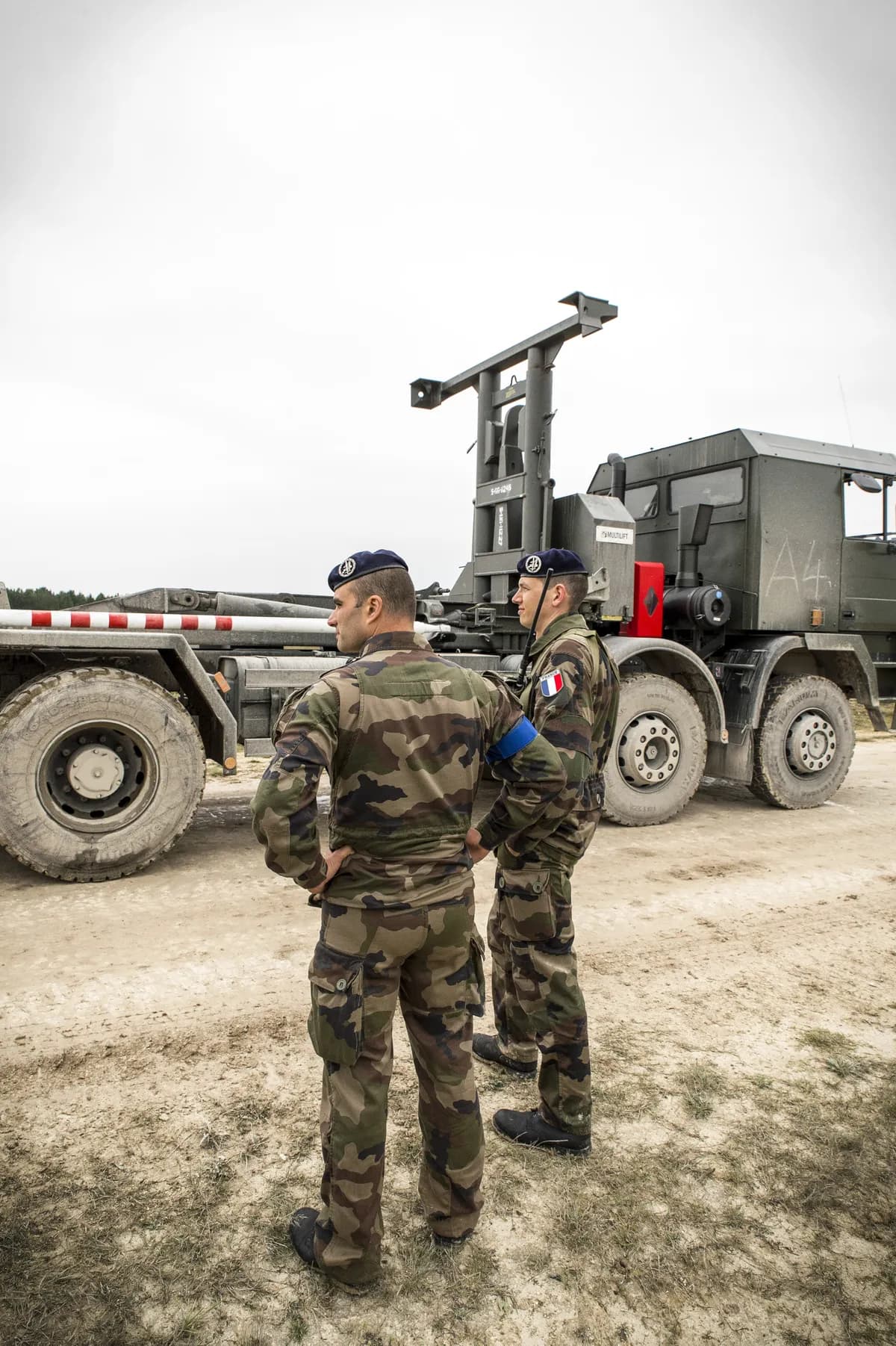
Unusual military vehicles will be present on roads; road users should maintain distance, stay calm, and must not hinder, disturb, or break a military column.
The roles have famously reversed, multiple reports note: early in the war, Western instructors trained Ukrainians on advanced systems; now, Ukrainian troops are the sought-after experts, sharing lessons learned in the crucible of high-intensity warfare. In last year’s Estonian exercise Hedgehog 25, Ukrainian drone crews reportedly overwhelmed large NATO units that were not accustomed to the pervasive drone threat, according to reports from that drill, and their improvised, low-cost methods have now been brought to Sweden. At Karlsborg, Swedish and Ukrainian operators collaborated on a mock attack, with a Swedish soldier attaching tennis balls beneath a drone to simulate dropping a grenade on enemy vehicles five kilometers away, Swedish media reported.
According to multiple reports, the Ukrainian teams will act as both opposing forces and instructors across multiple training locations, challenging Swedish troops to adapt to a battlefield where drones are ubiquitous. The full extent of their influence on the exercise outcome remains to be evaluated. Major elements of the Swedish military are deployed across southern Sweden and the strategic island of Gotland, the Armed Forces said.
Do not share images of the Armed Forces vehicles or equipment on social media. It could help an adversary in a real situation.
The navy is relocating units from the west coast to the east coast, a movement that has heightened maritime activity in the Baltic, according to Swedish media; according to Aftonbladet, Robin Johansson, battalion chief of the Älvsborgs amphibious battalion, described his unit’s operations spanning Öresund, Stockholm, and Gotland. In the port of Höganäs, some 30 combat boats and 300 soldiers from the amphibious battalion are conducting drills, according to multiple reports. The municipality has stepped in to provide meals for the troops, serving food identical to local school lunches, local officials said.
Farther east, in Skåne, Dutch Apache attack helicopters and Swedish main battle tanks are executing combined attack drills, military sources said. According to Aftonbladet, Peter Schölander, a municipal councilor in Höganäs, emphasized that for residents, understanding what a real crisis could entail is vital. With convoys of unusual military vehicles on public roads, safety is a priority.
Our battalion operates in Öresund, Stockholm, and Gotland.
'Unusual military vehicles will be present on roads; road users should maintain distance, stay calm, and must not hinder, disturb, or break a military column,' warned Helena Sundberg, regional director at Trafikverket. Traffic safety training for conscripts—covering load securing and vehicle weighing—has been integrated into the exercise, according to military officials. The public is urged to follow instructions closely to minimize disruption and danger.
Authorities are also concerned about information security. 'Do not share images of the Armed Forces vehicles or equipment on social media. It could help an adversary in a real situation,' Sundberg cautioned.
It is important for residents to understand what a real crisis situation could be like.
Road users should heed temporary signs and restrictions, and stay updated via Trafikverket’s website and Sveriges Radio P4, officials advised. Sundberg outlined Trafikverket’s broader role in Sweden’s total defense framework, explaining that the agency is one of 60 designated preparedness authorities and serves as the sector-responsible body for transport, ensuring that roads, railways, and other infrastructure function in crises and wartime. 'Trafikverket contributes by maintaining its ordinary mission while flexibly supporting the Swedish Armed Forces' transport needs during the period,' she said.
According to defense officials, Sweden’s total defense doctrine integrates both civil and military defense, so that even at the highest alert level, all essential societal functions continue. Across the Baltic Sea in Finland, a parallel exercise, Mighty Arrow 26, led by the Finnish Defence Forces, runs in Niinisalo, Satakunta, and ends on May 9, Finnish media reported. It involves about 2,800 soldiers and nearly 500 vehicles, primarily from Finland, Estonia, and Lithuania, Finnish media reported.
The exercise features an array of modern equipment, including CV9035 infantry fighting vehicles, BOXER armored personnel carriers, and various drones, along with helicopter operations, according to Finnish media. Heavy vehicle movements are expected to disrupt traffic on certain roads, particularly in the Hattula area, where delays are likely, officials warned, and residents are advised to allow extra travel time and stay informed. Looking further ahead, the first dedicated civilian host nation support exercise is scheduled for June 2025, multiple sources confirmed.
This will build on lessons from Aurora 26 and deepen the integration of Swedish civilian agencies into NATO operations, though the long-term consequences for Nordic security and the delicate military balance with Russia will take time to unfold.