

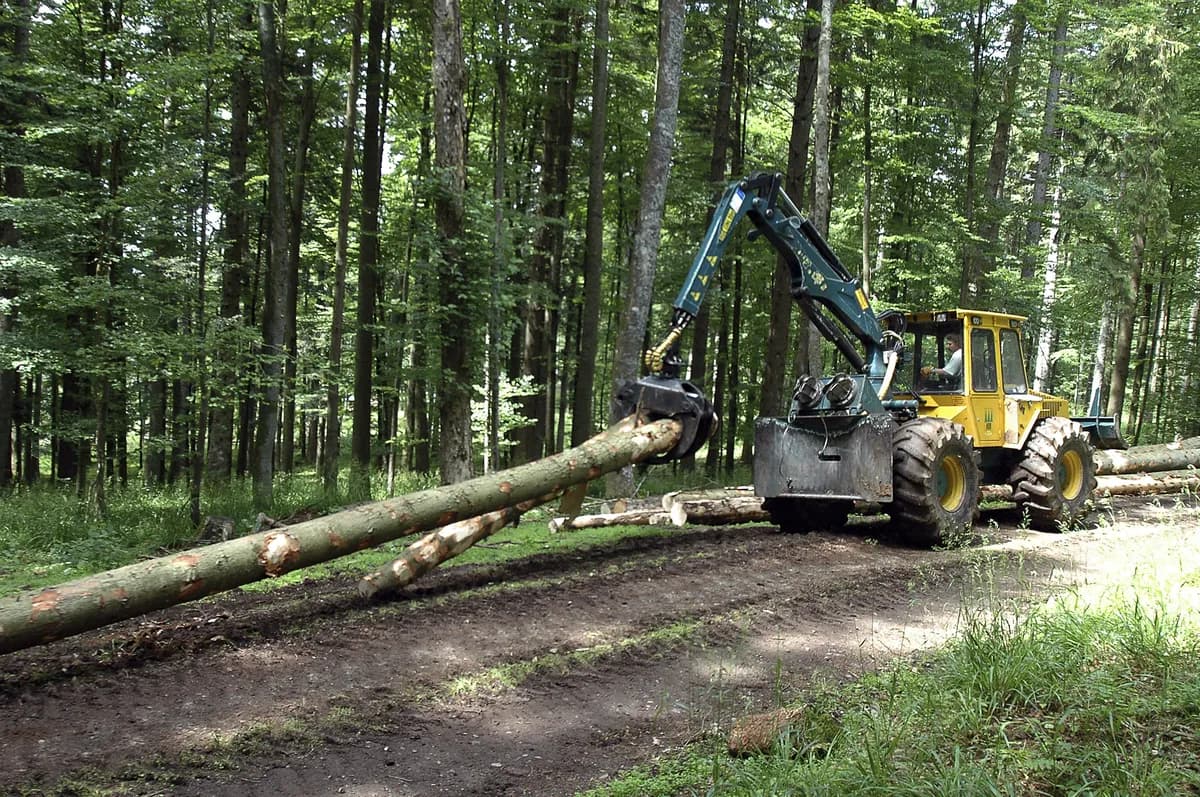
A man came to Mårten Lind at his holiday home and announced that the forest around it would be logged, an event Lind expected and that was scheduled to occur within a couple of years. Lind later saw logging machines working through 'snow smoke and winter darkness' at Lucia one year, a vivid memory that underscores the personal stakes in his writing. This experience, combined with his earlier success—his first book 'När almen tystnar' (2023) was awarded the Disa Prize in 2024, an award aimed to 'promote popular scientific writing'—frames his latest work as both a reflection and a critique of forest management practices. The identity of the man who announced the logging and his specific role or affiliation remain unknown, leaving questions about the broader context of such decisions.
In 'Granarnas tid', Lind crafts a cultural, intellectual historical, and popular scientific depiction of the spruce and its relationship with humans, drawing on literary figures for depth. He writes that the spruce does absolutely nothing to win our love, a sentiment echoed by poet Harry Martinson, who described it as 'the gloomy spruce, the darkest tower in the city of forests' in his poem 'Septembermorgon' from 'Tuvor' (1973). Lind uses Martinson and other forest poets to enrich the narrative, blending scientific insight with poetic resonance to explore how these trees shape both landscape and imagination. This approach allows the book to capture the multifaceted interaction between people and spruce forests, as noted by a reviewer who has lived near such woods for over 25 years.
Egentligen gör granen absolut ingenting för att vinna vår kärlek
The book's examination extends to forest diseases, including attacks by spruce bark beetle, pine weevil, and root rot, leading to a discussion of the 'tamed forest' characterized by clear-cuts and even-aged stands. This tamed forest will be logged in due time, highlighting the tension between ecological health and economic interests, as forest raw material is deemed important for growth in a spruce country like Sweden. Specific examples or case studies illustrating the 'tamed forest' and its eventual logging are not detailed in available reports, leaving gaps in how the book quantifies the impact of diseases or proposes solutions to balance logging with preservation.
In its final chapters, 'Granarnas tid' gains general ecological wings, exploring themes of power over nature and its corrupting influence, with Lind drawing inspiration from J.R.R. Tolkien's 'The Lord of the Rings'. The book suggests that no one can control power, and in the end, it destroys itself, a concept eerily illustrated by the approaching climate chaos in our time. The exact ecological arguments presented regarding power and climate chaos are not fully elaborated in the sources, but this section is described as a highlight, linking literary metaphor to contemporary environmental crises. This elevates the work from a mere study of trees to a broader commentary on human ambition and its consequences.
Den tungsinta granen, det mörkaste tornet i skogarnas stad
The reviewer, who was charmed by an old moss-rich spruce forest and moved to its foot with their family, expresses deep admiration for the book, impressed mainly by its ability to capture so much of the complexity in our interaction with the spruce forest. This personal connection underscores the book's resonance, as it weaves together scientific data, cultural history, and poetic reflection to address urgent questions about sustainability and legacy. By integrating direct quotes and diverse perspectives, Lind creates a nuanced portrait that challenges readers to reconsider their relationship with these ubiquitous yet often overlooked trees.