

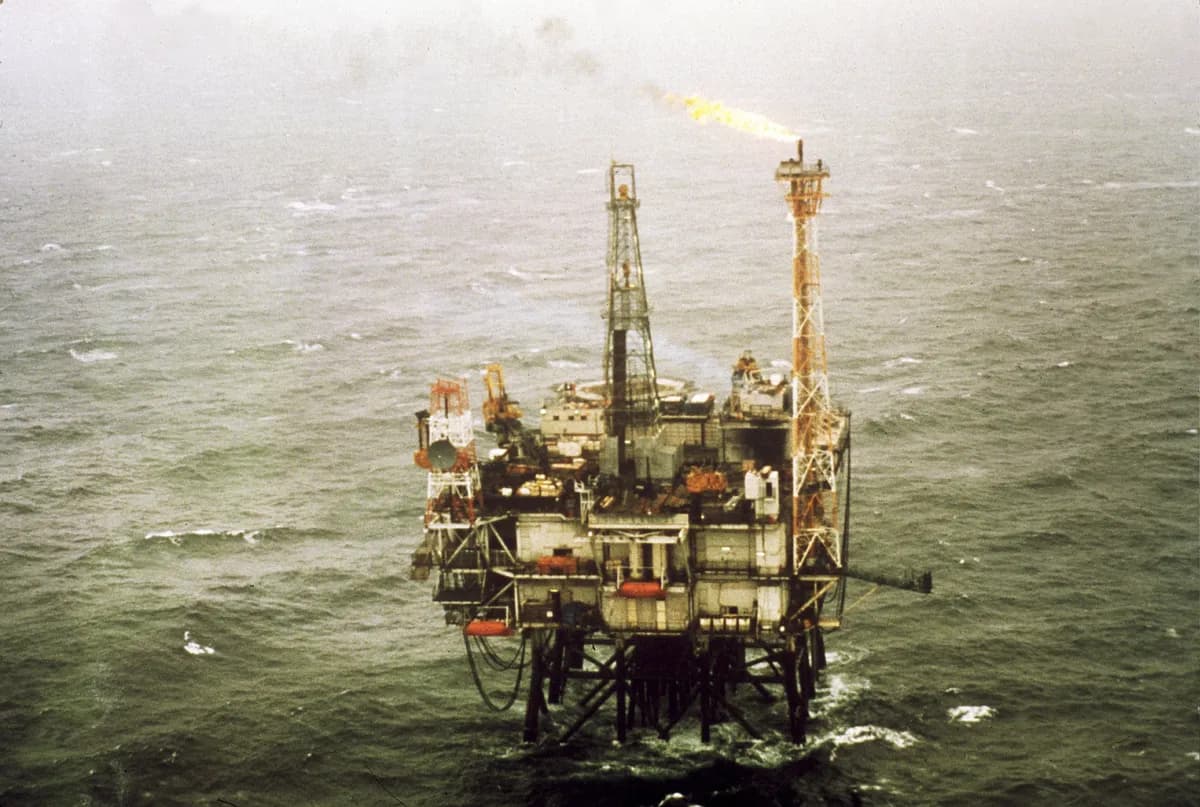
Oil prices surged approximately 10% last week, reaching an intraday peak north of $81 per barrel on Monday, according to research from nine sources. Last week’s Iranian missile attacks and muddled White House comments on potential Israeli strikes on Iranian oil infrastructure produced a sharp oil price rise, with markets experiencing some of the steepest price rises ever recorded as conflict escalated over the last week. Qatar’s energy minister told the Financial Times that regional exporters may have to shut down oil and gas production within days, warning oil prices could nearly double and the war might bring down the economies of the world. Research indicates oil prices could breach $100 a barrel within days amid supply disruption from the Iran war.
Shipping disruptions from the conflict are causing delays for major industrial projects, including the delivery of one of the world's largest electric arc furnaces to the Port Talbot steelworks in Wales, according to major media reports. The length of the shipping delay has not been revealed, but it is likely to be at least several weeks. Shipping charges have soared since the Iran war, with the price of fuel oil 55 percent higher last week than it was at the end of February, major media reports indicate. Vessels carrying newly-completed sections of the furnace will need to be rerouted to avoid the Red Sea and Suez Canal, travelling on a much longer route around the Cape of Good Hope in South Africa. Ship traffic through the Strait of Hormuz has been choked off due to vessel attacks, elevated strike risk, GPS interference, and withdrawal of insurable war-risk coverage, according to maritime analytics firm Windward. On March 7, vessel crossings through the Strait of Hormuz totaled only three ships, a 25% decrease from the previous day and below the 7-day average of 13.43 crossings, Windward data shows.
Tata Steel, which is overseeing the Port Talbot project, insists the disruption will not affect the timescale of its plan for a £1.3 billion rebuilding of the site, according to major media reports citing the company. The giant furnace will have a 3.2 million ton annual capacity and is being supplied by Italian firm Tenova, with some sections produced at a Chinese factory as it is the only place in the world where they are made. Tata says it still expects the furnace to arrive in sections during the 'summer' as planned, and the longer route around the Cape of Good Hope was always part of its logistics strategy. The company declined to reveal details of the extra costs for 'commercial confidentiality' reasons but added that it will foot the bill for these costs rather than the Government. Tata defended the use of components made in the Far East, saying the specific type of conveyor-fed electric arc furnace chosen for Port Talbot is not manufactured in Europe and that this approach would help secure a long-term future for UK steelmaking.
The Port Talbot transition involves replacing coal-powered blast furnaces that were shut down 18 months ago with electric arc furnaces, which use high-voltage electricity to melt scrap metal for recycling, unlike traditional blast furnaces that use coal to make new steel. This technology is considered a more environmentally friendly method of steelmaking. The UK Government is contributing £500 million of taxpayers' cash towards the new electric furnaces, according to major media reports.
Military escalation has intensified, with Israel launching a targeted attack on an Iranian missile production site on October 26 that killed one civilian and four IRGC soldiers, according to research from nine sources. Earlier, on October 1, Iran launched approximately 180 ballistic missiles at Israel, with some striking central and southern parts of the country and causing damage to Israeli air bases. In April, Iran launched Operation True Promise, a massive aerial attack on Israel involving more than 120 ballistic missiles, 30 cruise missiles, and over 170 drones, followed later that month by Israeli airstrikes targeting an S-300 long-range air defense facility in Isfahan, central Iran. On April 1, Israel allegedly attacked the Iranian consulate building in Syria’s capital, Damascus, killing 13 people, including seven IRGC members. Further actions include Israel assassinating Hamas’ political leader Ismail Haniyeh in Tehran in July, initiating a ground invasion into Lebanon named Operation Northern Arrows in September, and attacking residential buildings in southern Beirut on September 27 using bunker buster bombs to kill Hezbollah leader Hassan Nasrallah.
Nuclear tensions are rising, with Secretary of State Antony Blinken assessing in July that Iran was only one or two weeks from a breakout toward a nuclear weapon. The US has stationed B-52 Stratofortress bombers and F-15 fighter jets in the region, according to research from nine sources. As per Israeli intelligence, Tehran is expected to launch a counter-attack from Iraq in early November. Israel and the US have reprimanded Iran of a severe retaliation, evoking the possibility of direct attack on Iranian oil facilities, according to research from nine sources.
The broader conflict context includes an armed conflict between Israel and Hamas-led Palestinian militant groups that has been taking place in the Gaza Strip and Israel since October 7 last year. Iran’s regional proxies, including the Yemeni Houthis and the Lebanese Hezbollah, have been exchanging missile attacks with Israel.
Industrial damage extends to aluminum production, with Emirates Global Aluminium's Al Taweelah manufacturing base in the UAE suffering significant damage from Iranian missile and drone strikes, the company reported. A number of EGA staff were injured during the attack on the Khalifa economic zone in Abu Dhabi, with none of the injuries life-threatening. EGA's Al Taweelah aluminum smelter is slated to produce 1.6 million metric tonnes of cast metal by 2025, with an adjacent refinery that produces 2.4 million metric tons of aluminium raw materials. The company claimed to have substantial metal stocks on the water and some overseas locations, and reports earlier in the month indicated that EGA was rerouting aluminium exports to the Omani port Sohar and importing raw materials via this port. Most aluminium producers from the Gulf region, who account for around 9 percent of global production, have not been able to ship metal via their usual channels to world markets due to the closure of the Strait of Hormuz. Prices for aluminum rose to multi-year highs in the first weeks of the war but have since fallen.
Energy market analysis suggests traders are factoring in strikes on Iranian petroleum infrastructure, with ClearView Energy Partners estimating impacts of up to $7 per barrel for sanctions, up to $13 per barrel for attacks on Kharg Island, and $13-$28 per barrel for a 3-7 day Iranian blockade of the Strait of Hormuz. Israel could target Iranian refinery capacity, potentially curtailing finished fuels within Iran without significantly diminishing global crude supplies. Arab Gulf producers are unlikely to have comparable defenses to shelter upstream, midstream, and downstream assets.
Global supply chain effects are widespread, with PepsiCo and Coca-Cola warning that higher feedstock costs and freight rates from curtailed vessel traffic through the Strait of Hormuz could lead to higher prices for customers. The PET resin spot price in Europe has climbed about 65% since late February, assessed at €1,450-1,600 per tonne delivered as of March 27, while one US PET producer nominated a 10¢ per pound increase for March PET resin, up about 17% from February. PET producer Indorama announced an additional 5¢ per pound war surcharge to all PET resin grades effective immediately. Container freight costs for PET increased by 30% from February 27 to March 20, closing at $83-103 per tonne from East Asia to the US West coast. According to logistics platform Cargowise, the supply chain impact is not confined to the Middle East, affecting the Americas, EMEA, and APAC, with flight cancellations, rerouted services, and extended flight paths becoming more common, leading to higher fuel burn and rising operating costs. China, Japan, South Korea, and Thailand are particularly vulnerable to what has in effect been a closure of the Strait of Hormuz.
Economic measures are being implemented, with Egypt slowing down large state projects that require high fuel and diesel usage for at least two months and reducing fuel allocations for government vehicles by 30%, according to Prime Minister Madbouly. The public sector, as well as the private sector except for services and manufacturing industries, would work remotely every Sunday in April, with possible extensions. Egypt has suffered economically from the Iran war, especially in its energy sector, due to disruption in oil and gas trade and production across the Middle East, and fuel prices and public transport costs have already been raised. Finance minister Ahmed Kouchouk stated that debt servicing costs will only rise 5% in the fiscal year beginning July. The US agreed a 30-day waiver allowing India to buy Russian oil, and the US has significantly depleted oil reserves following Russia’s 2022 invasion of Ukraine, with prices at the pump rising.
Key unknowns include the duration of the conflict, the extent of disruptions in the Strait of Hormuz, and outages at key energy infrastructure in the Persian Gulf. Prolonged escalation could cause energy price spikes to spill over into core economic indicators like inflation, interest rates, trade balances, and GDP growth. According to energy analyst Sam Reynolds, renewable energy offers a strategic hedge against commodity market volatility.