

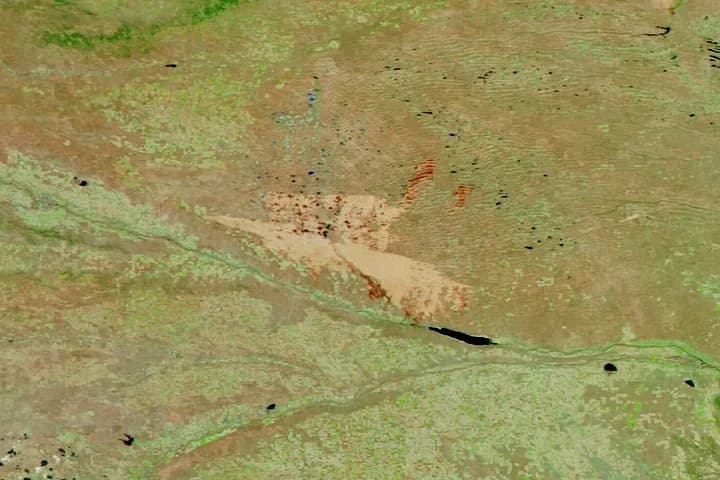
A wildland fire ignited in Morrill County, Nebraska on the afternoon of March 12, 2026, according to officials. Within 12 hours, high winds propelled flames approximately 70 miles east-southeast across the prairie, officials reported. The Morrill fire burned over 640,000 acres within a week, becoming the largest wildfire in Nebraska's history. The fires in western Nebraska affected large areas of ranch and pasture lands, destroyed homes, barns, and fences, and injured or killed livestock, according to news reports. According to major media, a grandmother died while trying to flee wildfires sweeping across Nebraska. Nebraska Governor Jim Pillen confirmed that Rose White died while attempting to escape the fast-moving Morrill Fire, according to major media. The victim was Rose Mary White, 86, of Arthur County, according to the Draucker Funeral Home.
Exceptionally dry fuels contributed to rapid fire growth and unusual fire behavior for the time of year in the Great Plains in early 2026, the National Interagency Fire Center reported. Throughout the winter, much of the region saw warmer and windier-than-average conditions, as well as less than 50 percent of average precipitation over a 90-day period, leading to low soil moisture and grass fuels primed to burn, officials said. According to major media, strong winds gusting over 60 mph starting last week have sent the fires roaring over the region's rolling hills, fueled by tinder-dry prairie grass and stands of red cedar.
By March 29, authorities reported the Morrill fire was 100 percent contained. According to major media, the fires remained uncontained for days until Tuesday, when the winds slowed, and some rain and snow allowed firefighters to get a handle on the flames. According to major media, the Morrill County fire remained only 16% contained by midday Wednesday.
According to major media, four major wildfires are currently being tracked. A second blaze, the Cottonwood Fire in Lincoln County, is burning south of Interstate 80 near Brady and Gothenburg. The second-largest blaze, called the Cottonwood fire, has burned more than 205 square miles, starting about 10 miles southeast of North Platte, according to major media. The Cottonwood fire was about 40% contained by Wednesday, according to David Boyd. The Road 203 Fire is burning within the Nebraska National Forest south of Halsey and Dunning, according to major media. Authorities said the Road 203 Fire may have originated from a federal prescribed burn, though investigations remain ongoing, according to major media. Another blaze, the Anderson Bridge Fire west of Valentine, has also burned thousands of acres, according to major media. Two other fires, well north of the Morrill County and Cottonwood fires, are much smaller, having burned about 56 square miles and 27 square miles, respectively, and were mostly contained by Wednesday, according to major media.
The combined fires have forced evacuations in several communities and damaged or destroyed numerous structures, according to major media. Dozens of structures have burned, according to major media. At least one residential area near Jeffrey Reservoir, around the Cottonwood fire, has been evacuated since last weekend, according to major media.
The Morrill fire burned much of the Crescent Lake National Wildlife Refuge in the Nebraska Sandhills. Despite the fires, hundreds of thousands of sandhill cranes are still making their annual migration through the Platte River valley, according to reports.
Governor Pillen declared a state of emergency for seven counties, including Morrill, Garden, Arthur, Keith, Lincoln, Dawson and Frontier, according to major media. The governor also issued a statewide burn ban through March 27, according to major media.
A coalition of firefighters and volunteers entered their seventh day Wednesday of battling wildfires in western and central Nebraska, according to major media. Crews were working to contain two smaller blazes immediately to the northeast, the Ashby and Minor fires, which ignited early on March 26, officials said.
As of March 27, 15,436 fires had burned 1,510,973 acres nationwide in the U.S. in 2026, far higher than the 10-year average of 9,195 fires burning 664,792 acres for the same period, according to the National Interagency Fire Center.
According to major media, the fires have burned more than 600,000 acres of land statewide. Four separate fires have burned around 1,300 square miles — larger than Rhode Island, according to major media. The largest of the fires, dubbed the Morrill County fire, covers parts of five counties and stretches more than 80 miles from around Bridgeport in the Nebraska Panhandle east to Lake Ogallala, according to major media.
Officials say the Morrill County Fire was likely sparked by an electrical fire caused by powerful winds, according to major media. Officials say the Morrill Fire alone spread more than 65 miles in just six hours after igniting, according to major media.
The economic cost of the wildfires and recovery efforts for ranchers and communities remains unknown, as does the full impact on livestock, including precise numbers of animals injured or killed. The total number of structures destroyed or damaged across all affected areas has not been confirmed.
At least one person -- an 86-year-old woman from rural Arthur -- died at her home Thursday trying to escape the fire, according to Nebraska Governor Jim Pillen via major media.
The exact cause of the Morrill fire ignition beyond the 'likely electrical fire' speculation is still under investigation. The long-term environmental consequences for the Crescent Lake National Wildlife Refuge and other burned habitats are not yet clear.