

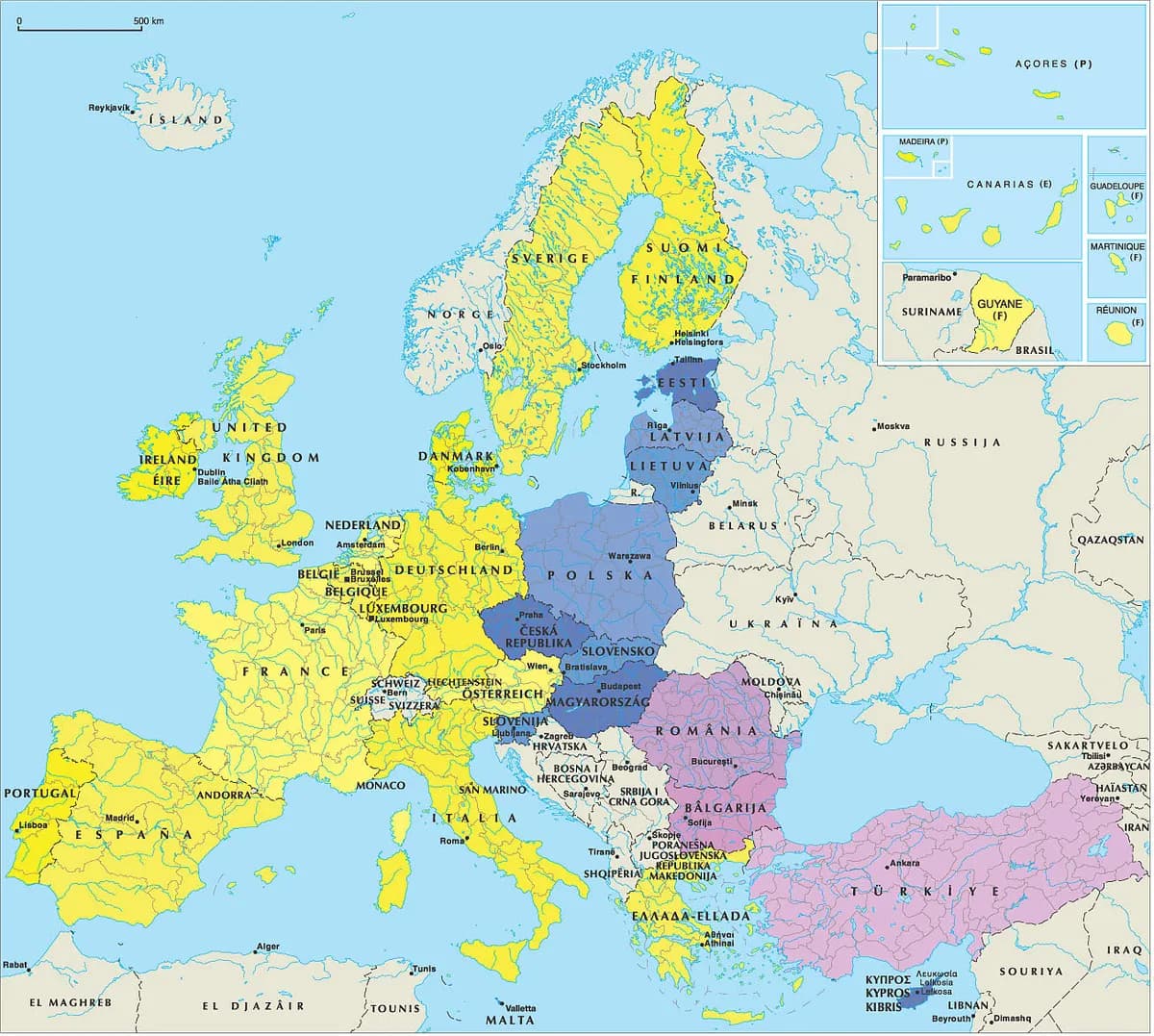
Finland and Sweden opted for NATO membership after Russia's invasion of Ukraine in February 2022, with Finland deciding to adhere to NATO on 12 May 2022. Russia's full-scale invasion of Ukraine in February 2022 fundamentally altered the security landscape in Europe. Finland's future relations with Russia depend largely on the development of the war in Ukraine.
Finland is updating its foreign and security policy report regarding the future of Russia relations. At some point, the need to open political-level connections will be examined, but there will be no return to the old bilateral relationship. Diplomatic relations between Finland and Russia have not been cut off so that information exchange flows.
Cooperation at the border proceeds at a minimal level. There is a high risk of inadvertent escalation in Northern Europe, particularly in the Baltic Sea region. Finnish authorities seized the tanker Eagle S in December 2024 on suspicion of damaging undersea cables linking Finland and Estonia.
Russia has characterized NATO actions against tankers as piracy and responded with military protection, such as naval escorts and air support. Russia has been reconstructing bases and military infrastructure near Finland, while Finland has responded with stricter border measures and increased military exercises. Finland has scheduled 122 military exercises for 2026 and agreed to host NATO Forward Land Forces.
Putin warned that Finland's choice to renounce military neutrality would prove erroneous and negatively affect Russo-Finnish relations.
Finland is eliminating legislative obstacles to hosting nuclear weapons to participate fully in NATO's nuclear planning. Finland was the only small state at high-level talks on Russia's war in Ukraine at the White House in August 2025. Russia remains a formidable, capable, and determined adversary with the world's largest nuclear arsenal.
A Russian victory in Ukraine would force the United States to spend an additional $808 billion over five years to reinforce NATO, according to an analysis by the American Enterprise Institute. If Vladimir Putin can't win a clear victory in Ukraine, he will seek one elsewhere; a clear victory would embolden Moscow to further aggression. The lowest risk and most likely option for Moscow is Russian forces occupying Norway's Svalbard archipelago.
The specific conditions that would trigger Finland to reopen political-level connections with Russia have not been detailed. The details of Finland's updated foreign and security policy report regarding Russia relations remain unclear. The full impact of Russia's military reconstruction on border security and regional stability remains uncertain.
When proper peace negotiations in Ukraine will be reached and how Russia will position itself afterwards are further unknowns. The long-term strategic and financial consequences for NATO and regional stability will be profound, with potential scenarios ranging from costly reinforcement to heightened aggression depending on the outcome in Ukraine.