

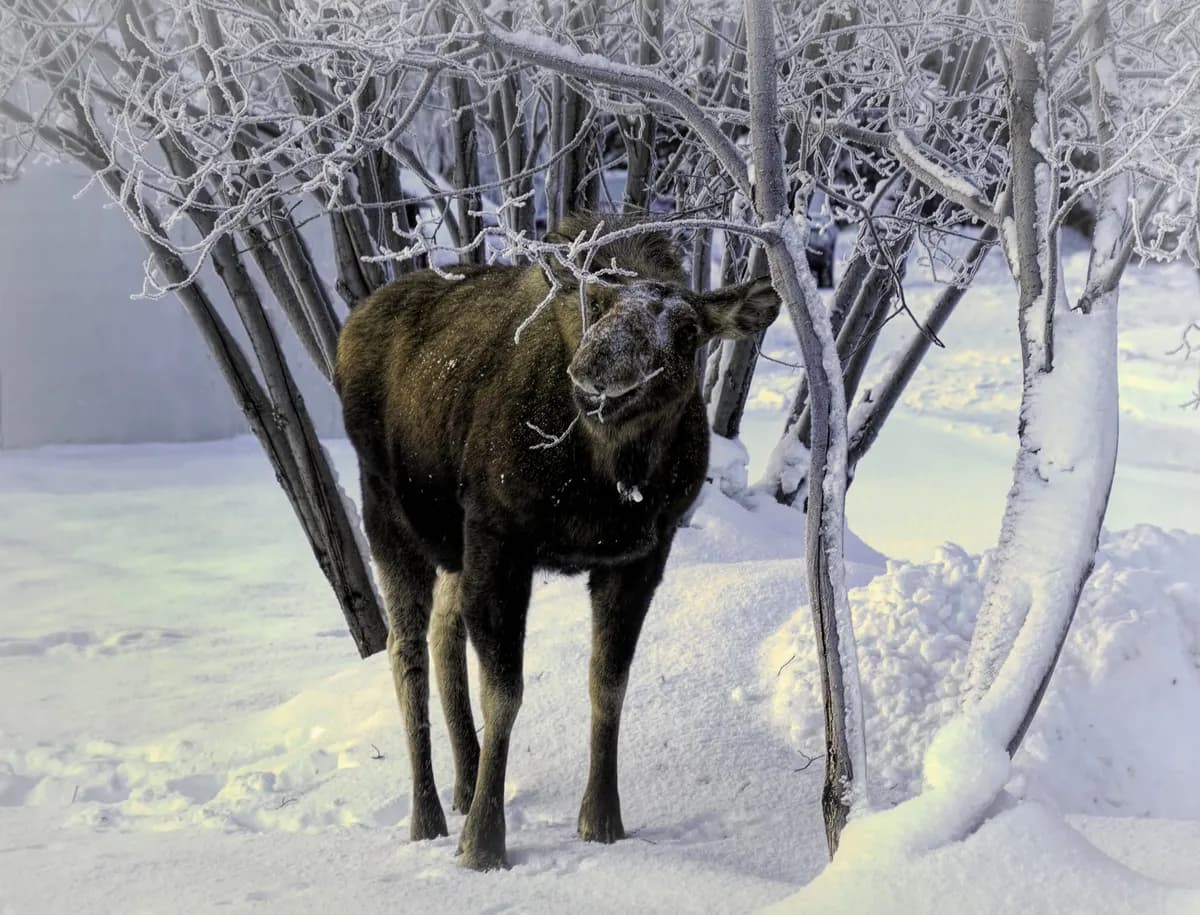
The project that followed the moose is ending, and the collars are being removed. The moose with collars have become viewer favorites in SVT's 'Den stora älgvandringen' (The Great Moose Migration). With technology's help, both researchers and the public have been able to follow the moose's movements around the clock, year-round via the WRAM database.
In February, researchers from SLU located the moose one last time, sedated them, and removed the collars. The project that began in 2019 with the trio Trygga mamman, Ärrande damen, and Jokern is completed, and now a compilation of results awaits. Researchers can quantify how the moose use the landscape and their migration behavior—when they start migrating, when they stop, and to which areas, as Wiebke Neumann Sivertsson, a researcher at SLU, stated.
We can quantify how they use the landscape and their migration behavior—when they start migrating, when they stop, and to which areas.
It is also the first time researchers have been able to study how moose behave in areas with a large proportion of fast-growing contorta pine, though the specific impact on behavior remains unknown. Researchers see that the moose differ in how they move and what habits they have, with some migrating long distances and others not as far. Sivertsson noted, 'When you follow them over several years, you see that they move quite a lot in the same areas.
' It has been special to follow the moose that have simultaneously become TV celebrities. ' The long-term conservation or management implications of the findings are not yet clear.
When you follow them over several years, you see that they move quite a lot in the same areas. A moose can be fairly predictable in where it will be during winter and summer. They learn the landscape and know where it is good to be.