

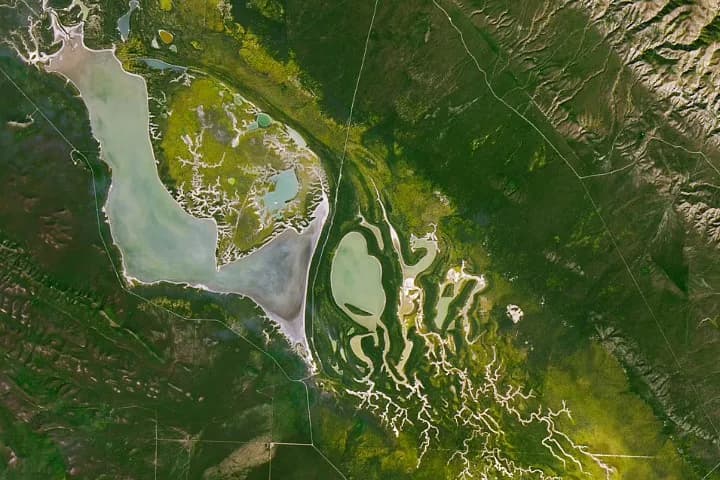
According to sources, Landsat satellites showed early signs of wildflower color in February 2026. By early March 2026, flowers had turned areas around Soda Lake bright yellow, spreading farther by mid-month. Yellow wildflower blooms were visible amid streams flanking Soda Lake, which dries out completely during drought years.
Colors were particularly vibrant across Carrizo Plain National Monument, with purple splashes from Phacelia ciliata blooms along the San Andreas Fault. Winter 2025-2026 brought bouts of rain and variable conditions that benefited wildflowers. Soaking rains in November and December 2025 saturated soils, bringing rainfall totals to nearly twice the usual level according to the California Department of Water Resources.
The Lasthenia blooms there are one of many 'seemingly unending stretches of color' across the valley bottom.
NASA data showed soil moisture remained well above average for February 2026. The pulse of early rains helped kick-start wildflowers because many seeds need at least a half-inch of rain to wash off their protective coating to germinate, according to the National Park Service. Warm, dry periods following the rains also helped wildflowers, which benefit from intermittent rainfall rather than constant soaking once established.
The Wild Flower Hotline reported that west-facing slopes of the Temblor Range were the first places to come alive with hillside daisies, California goldfields, and forked fiddlenecks in March 2026. Reports from experts on the ground indicate that common goldfield (needle goldfield) is responsible for the expanse of yellow near Soda Lake. Common goldfield plants are small but often grow in disturbed areas just centimeters apart and bloom simultaneously, creating expansive blankets of color.
Lasthenia is a 'staple' of vernal pools and seasonally wet areas.
Teams of NASA scientists are using remote sensing to study wildflower blooms and flowering plants, aiming to develop techniques for tracking blooms over broad areas and tools for farmers, beekeepers, and resource managers.
The synchronicity of blooms on the valley floor and surrounding hills during a March visit was 'beyond anything' he had expected.