

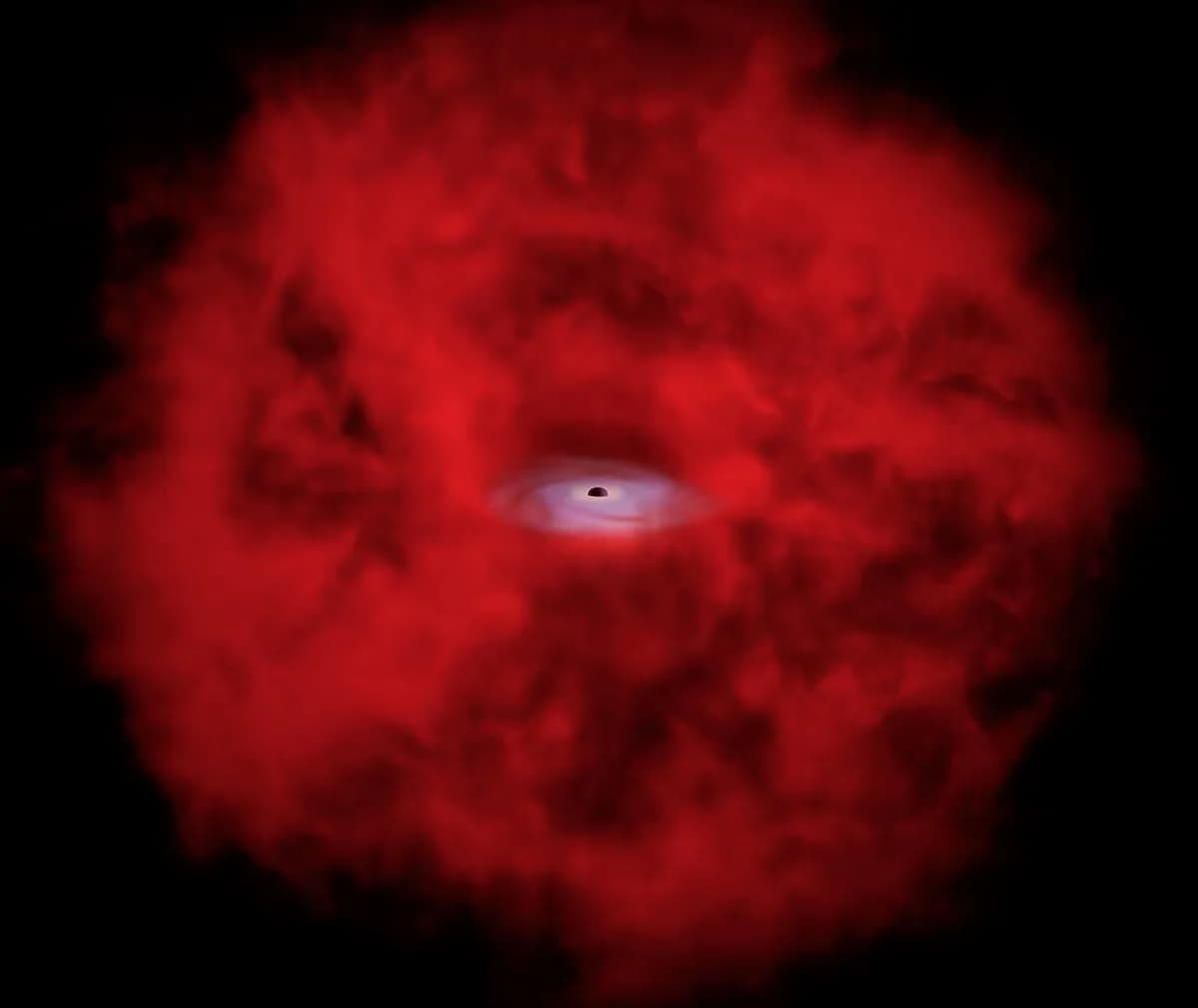
8 billion light-years from Earth, the object is thought to be a supermassive black hole embedded in dense gas. Many astronomers believe LRDs are such black holes, but their X-ray silence has been puzzling. The new X-ray detection may indicate that the black hole is beginning to clear a path through the gas, creating patchy holes that let X-rays escape.
The Chandra X-ray Observatory data revealed hints of variations in X-ray brightness, supporting the idea that the black hole is partly obscured. A paper describing the results was published in The Astrophysical Journal Letters, led by Raphael Hviding of the Max Planck Institute for Astronomy and co-authored by Anna de Graaff of the Center for Astrophysics | Harvard & Smithsonian. 'Astronomers have been trying to figure out what little red dots are for several years,' Hviding said.