

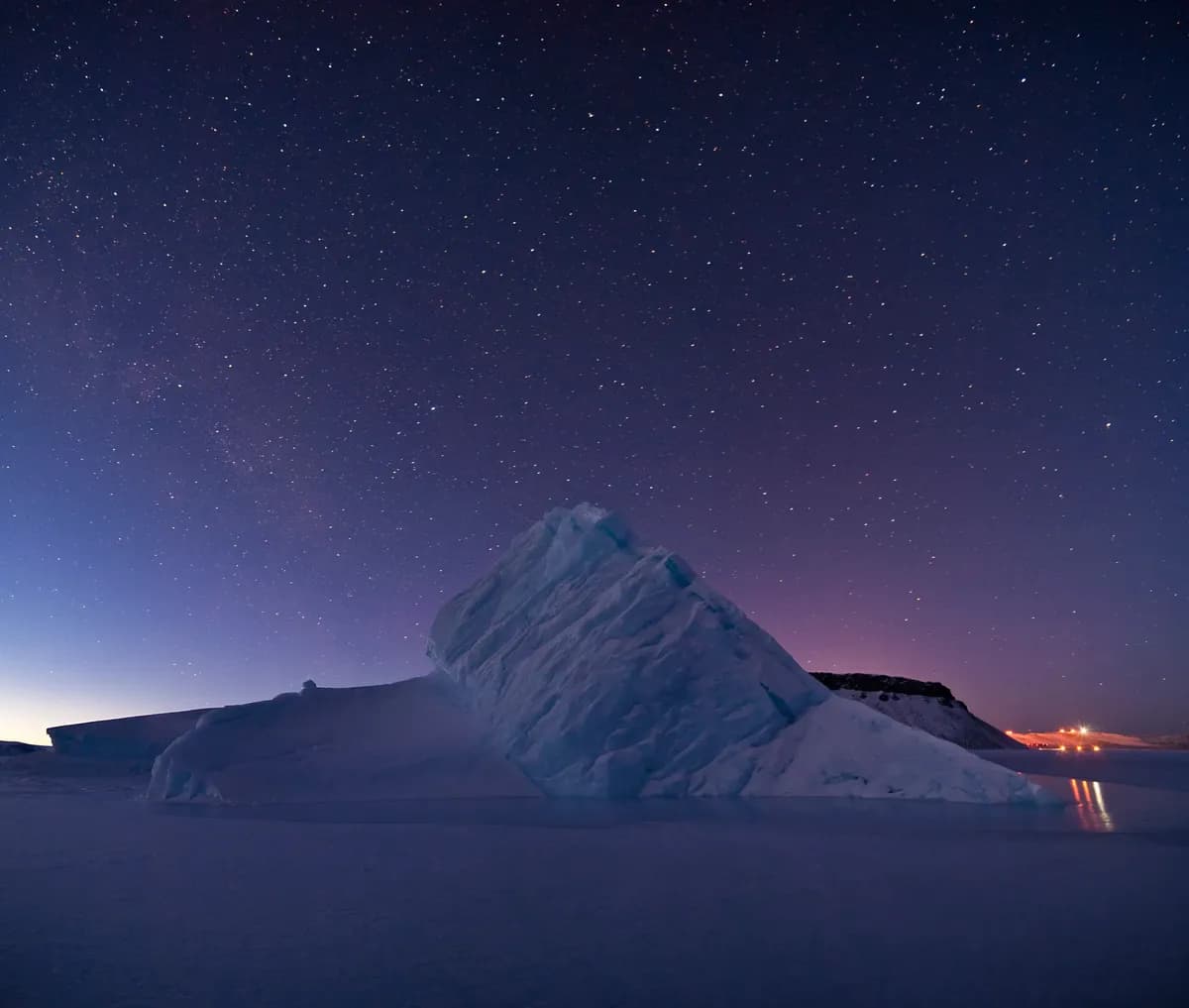
The world's largest iceberg, A-23A, has disintegrated into fragments months shy of its 40th birthday, according to multiple reports.
A-23A calved from Antarctica's Filchner Ice Shelf in 1986 and weighed nearly a trillion tonnes at its peak, according to major media reports. The iceberg remained grounded on the seabed for over 30 years before it began moving in 2020.
I noticed in recent weeks how Mother Nature seemed to keep a veil of clouds over the dying iceberg as if trying to give it some privacy at this stage.
After freeing itself, A-23A drifted more than 2,000 miles (2,300 kilometers) north. It spent time spinning in an ocean vortex known as the Taylor column. At one point, the iceberg was 173 miles off the coast of South Georgia, posing a potential collision course with the island, according to multiple reports.
In its final months, A-23A shrank to just over 66 square miles (170 square kilometers) before disintegrating, major media reports said. The exact cause of the disintegration remains unknown, as does whether any fragments reached South Georgia or caused harm to wildlife. The precise date of the breakup has not been confirmed.
Iceberg A–23A ranks among the giants known to have broken, or 'calved', from Antarctica. Though several other icebergs in the satellite era have been larger, A–23A was remarkable for its longevity. After spending its early days in the Weddell Sea, its journey came to an end in the South Atlantic Ocean, months shy of its 40th birthday. These images show the iceberg at the start and end of its lifespan.
NASA described the iceberg's longevity in a statement: "Iceberg A–23A ranks among the giants known to have broken, or 'calved', from Antarctica. Though several other icebergs in the satellite era have been larger, A–23A was remarkable for its longevity. After spending its early days in the Weddell Sea, its journey came to an end in the South Atlantic Ocean, months shy of its 40th birthday. These images show the iceberg at the start and end of its lifespan."
According to Daily Mail - Science & Tech, Dr Jan Lieser, a scientist at Australia's Bureau of Meteorology, described noticing in recent weeks how clouds seemed to veil the dying iceberg, as if giving it privacy. Dr Andrew Meijers, an oceanographer with the British Antarctic Survey, told the same outlet that it was exciting to see A-23A on the move again after periods of being stuck, and that scientists were interested to see if it would follow the same route as other large icebergs that have calved off Antarctica.