

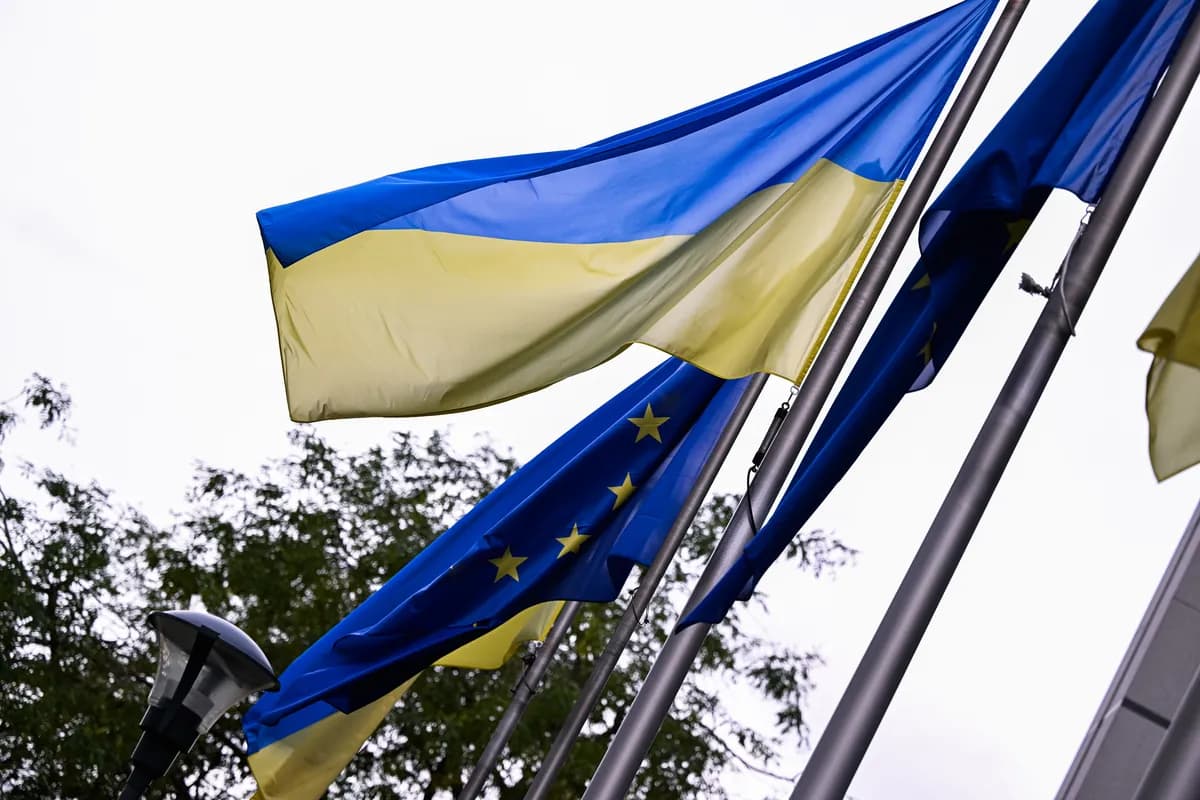
A Western-funded classified program that supported a 'non-violent resistance' initiative inside Russian-occupied Ukraine for more than three years encouraged civilians to engage in 'suicidal' activities despite credible reports of deaths, torture, and imprisonment, according to a Kyiv Independent investigation. The investigation found that two Ukrainian grassroots resistance movements, Yellow Ribbon and Zla Mavka, were exploited by a Dubai-based consulting firm IN2. The movements were formed after Russia's invasion of Ukraine to strengthen civil resistance, but the investigation alleges they also facilitated Russian intelligence in identifying pro-Ukrainian individuals. Activists were urged to carry out life-threatening activities, including listening to Ukrainian music publicly, wearing national clothes, or burning Russian flags, despite organizers knowing the risks of death, torture, or capture. Yellow Ribbon and Zla Mavka promote activities such as listening to Ukrainian songs in public, taking photographs with pro-Ukrainian symbols, burning Russian flags, and poisoning Russian soldiers with laxatives, according to the investigation. Zla Mavka is an all-female resistance group operating in occupied territories, including Crimea and Zaporizhzhia Oblast, the investigation reported. Recruitment and training of Yellow Ribbon activists consists of a minutes-long exchange with an unencrypted Telegram bot; comprehensive safety information is optional, according to research from four sources. Project leaders ignored safety risks in recruitment and execution of resistance activities, the investigation alleged. Ukrainian special forces have launched an investigation into the methods, described by experts as dangerous, according to major media reports.
The project was funded by Canada and the UK, with money channeled through IN2, a Dubai-based British communications firm that secured funding vastly surpassing operational costs while downplaying risks and attempting to silence critics, according to multiple sources. Canada paid 2.3 million Canadian dollars between 2022 and 2024, the Kyiv Independent reported. The UK funded the project with several hundred thousand pounds over four months in 2025, according to the same report. Most of the funds went to high consultant fees, not to activists, the investigation found. Two key individuals were identified: a British journalist employed as project manager who received 800 pounds per day in consultant fees, and a Ukrainian female researcher acting as local contact. Canadian funding ended in 2024; UK funding stopped in 2025 due to safety concerns and uncertainty about fund use, according to the Kyiv Independent. IN2 and Yellow Ribbon leadership denied any risks or harm to individuals, despite evidence to the contrary, the investigation reported. IN2 and Hanna Shelest falsely represented independent research as evidence that no harm had ever come to any civilian undertaking activities with Yellow Ribbon, the Kyiv Independent reported.
The program's leaders ignored repeated warnings of critical flaws in operational security that could be exploited by Russia's FSB, according to multiple sources. Yellow Ribbon spokesperson Yaroslav Bozhko stated publicly in 2022-2023 that at least 30 activists were arrested and some killed. One Yellow Ribbon activist was sentenced to over 13 years in prison. Ukrainian special forces have launched an investigation into the methods, described by experts as dangerous, according to major media reports. Recruitment and training of Yellow Ribbon activists consisted of a minutes-long exchange with an unencrypted Telegram bot, with comprehensive safety information optional, according to research from four sources. IN2 and Hanna Shelest falsely represented independent research as evidence that no harm had ever come to any civilian undertaking activities with Yellow Ribbon, the Kyiv Independent reported.
In 2025, Russian forces captured 4,831 square kilometers of Ukrainian territory and recaptured approximately 473 square kilometers in Kursk Oblast, according to the Institute for the Study of War (ISW). Russian gains in Ukraine in 2025 amounted to 0.8% of Ukraine's territory, ISW reported. The average daily rate of advance of Russian troops in 2025 was 13.24 square kilometers per day, exceeding 9.87 square kilometers per day in 2024, according to ISW. The highest rate of advance in 2025 was in November at 20.99 sq km per day, after a slow October at 8.8 sq km per day, slowing to 15 sq km per day in December, ISW reported. Russian forces employed a new operational model based on air blockade, tactical blocking, penetration missions, and mass attacks by small groups, according to ISW. Russian forces used drones to block Ukrainian ground lines of communication in early spring 2025, ISW reported. Russian forces increased production of fiber-optic drones resistant to electronic warfare, with range increasing from 7 km in early spring 2025 to about 20 km in summer 2025, and later to 50-60 km, according to ISW. Russian forces introduced 'mother ship' drones that can carry and extend the range of FPV drones, ISW reported. Russian forces advanced an average of 0.12 kilometers per day in Pokrovsk from July 31 to November 26, according to research from six sources. Russian forces have consolidated advances in 66 percent of Pokrovsk as of November 26, the same research indicated. Russian forces advanced an average of 9.3 square kilometers per day across the entire theater between August 15 and November 20, according to the research. Russian forces could seize the remainder of Ukrainian-held Donetsk Oblast by August 2027, assuming a constant rate of advance, the research projected.
The Kyiv Independent's War Crimes Investigations Unit has released 12 films, hosted 90 screenings, and won 7 awards over three years, according to research from four sources. Their documentaries have gathered at least 3 million views on YouTube as of February 2026, the same research reported.