

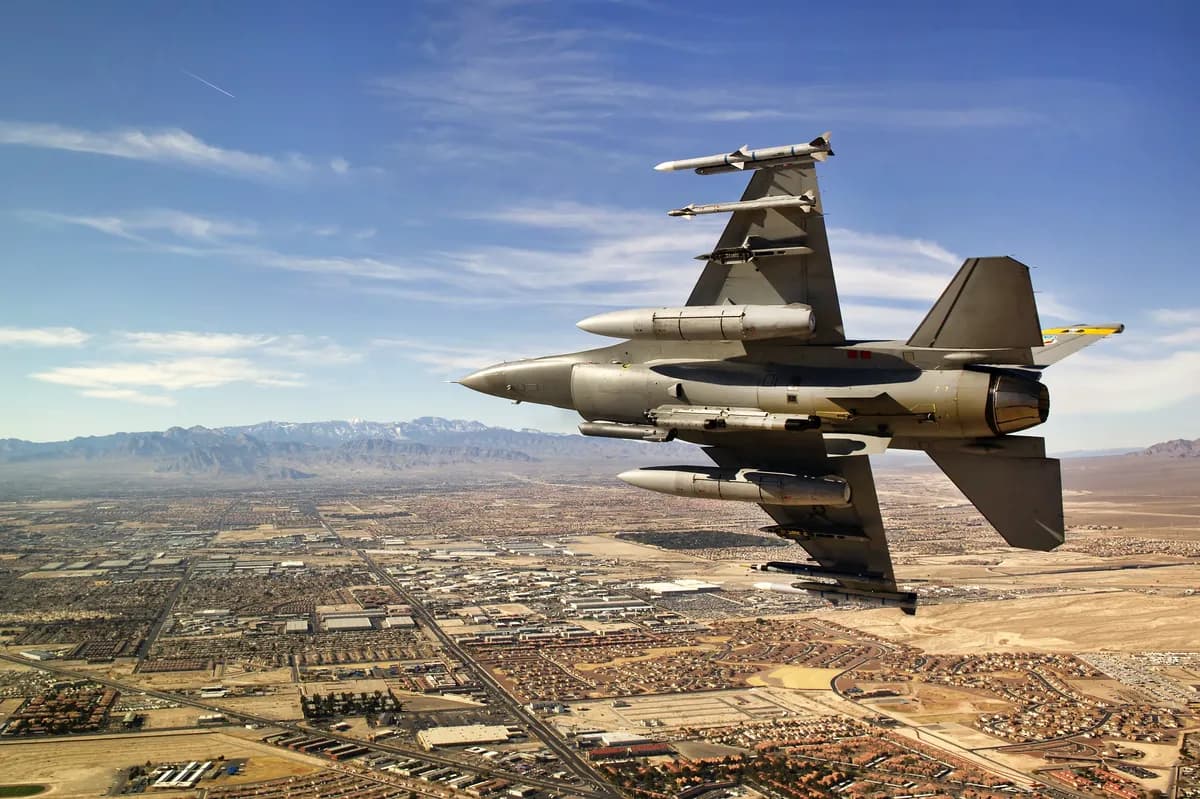
On February 28, 2026, the United States and Israel launched a surprise military attack on Iran, according to multiple sources. Iran retaliated with missile and drone strikes against Israel, U.S. military facilities, and Gulf states. The Strait of Hormuz was effectively closed, causing a global energy shock, as reported by research sources.
The human toll has been severe, with more than 1,800 people killed so far in the conflict, according to research. Iran accused the U.S. and Israel of launching an attack on a girls' school, killing 168 people including around 110 children. At least 175 students were killed by a reported U.S. strike on an Iranian elementary school, according to the Council on Foreign Relations. Expert video analysis by BBC Verify shows a U.S. Tomahawk missile hit a military base near the school, though the exact impact on civilian casualties remains unclear.
Military developments have included complex rescue operations and aircraft losses. An American service member missing since Iran shot down an F-15E fighter jet has been rescued, U.S. officials confirmed. The rescue operation involved a fierce firefight and damaged helicopters, according to multiple reports. Iran claimed it brought down enemy aircraft during the U.S. rescue mission, as stated by Iran's Revolutionary Guards. Hezbollah attacked an Israeli military barge with a cruise missile, the group announced, expanding the conflict's scope.
Political leadership changes in Iran have been accompanied by conflicting claims about a key figure. Iran's Assembly of Experts appointed Mojtaba Khamenei to succeed Ayatollah Ali Khamenei, according to research. However, U.S. Defence Secretary Pete Hegseth said Mojtaba Khamenei was injured and 'likely disfigured,' a claim denied by Iran, highlighting uncertainty about his condition.
U.S. leadership has shown confusion, with President Donald Trump issuing conflicting statements on U.S. military objectives and the trajectory of the conflict, as per research. Trump commented on the rescued airman, saying he sustained injuries but will be 'just fine.' Iran rejected Trump's ultimatum to reopen the Strait of Hormuz, Tehran reported, signaling defiance.
The legal and nuclear context of the conflict adds layers of complexity. The U.S. and Israeli attacks on Iran cannot be legally justified under international law, according to legal experts. The U.S. and Israel have targeted Iran's nuclear program sites, research indicates. The International Atomic Energy Agency said there was no evidence of a structured nuclear weapons program in Iran at the time of the strikes, raising questions about the justification for these attacks.
International dimensions include Russian support and humanitarian impacts. Iran has received military equipment from Russia, including MiG-29 and Su-35 fighter jets, according to research. The war has limited humanitarian aid access and increased global hunger, aid groups reported, exacerbating the crisis beyond military confines.
Domestically, anti-war sentiment has emerged in Israel, with around 10 people arrested during anti-war protests, police said. This reflects internal divisions as the conflict intensifies.
In a separate context, website data practices involve user consent mechanisms. Reach and its partners use information collected through cookies and other identifiers from your device to improve experience on the site, analyze how it is used, and show personalized advertising, according to Reach. You can opt out of the sale or sharing of your data at any time by clicking the 'Do Not Sell or Share my Data' button at the bottom of the webpage, Reach states. Your preferences for opting out of data sale or sharing are browser specific, the outlet notes. Use of the website and any of its services represents your acceptance of the use of cookies and consent to the practices described in the Privacy Notice and Terms and Conditions, Reach explains.
Key unknowns persist in this developing conflict. The specific military objectives and endgame of the U.S. and Israel remain unclear, as does the current status of the Strait of Hormuz and global energy supply. The exact number of U.S. aircraft lost in the conflict has not been confirmed, adding to operational uncertainties.
Further unknowns include the true condition and whereabouts of Mojtaba Khamenei after his reported injury, and the full extent of humanitarian impact, including casualties and aid access, across all affected regions.