

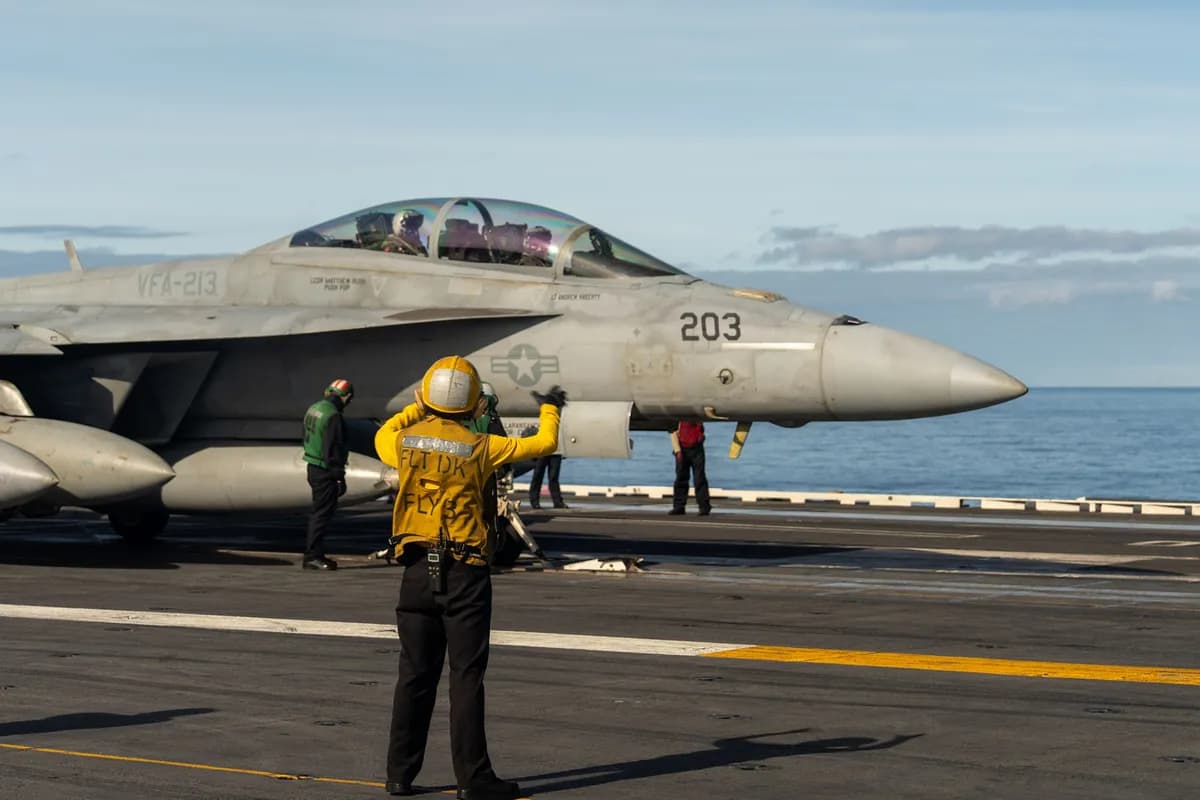
The US and Israel launched wide-ranging strikes on Iran on February 28, according to multiple reports. These strikes killed Iran's Supreme Leader Ayatollah Ali Khamenei. Other high-ranking Iranian officials killed include Ali Larijani, Esmail Khatib, and Gholamreza Soleimani.
Mojtaba Khamenei was named as Ayatollah Ali Khamenei's successor on March 8. US Defense Secretary Pete Hegseth said Mojtaba Khamenei was injured and 'likely disfigured'. However, Iran denied the claim that Mojtaba Khamenei was injured and disfigured.
The US and Israel targeted Iran's missile infrastructure, military sites, leadership, nuclear program sites, and oil and gas sites. Key sites targeted include Kharg Island oil terminal and South Pars natural gas field. Oil depots and fuel facilities in Tehran were targeted by airstrikes.
Civilian casualties have mounted, with Human Rights Activists in Iran reporting 3,220 people killed in Iran as of March 20, including 1,165 military, 1,398 civilians, and 657 unclassified. Iran accused the US and Israel of attacking a girls' school near an IRGC base on February 28, killing 168 people including around 110 children. Over 1,330 civilians, including around 300 children, have been killed in Iran amid US and Israeli attacks, according to Iran's ambassador to the UN. According to the Iranian Red Crescent, a US-Israel strike on a primary school in Minab killed at least 165 students and teachers. More than 1,800 people have been killed so far, including 8 US service members and at least 175 students killed by a reported US strike on an Iranian elementary school.
Contradictory accounts surround the school incident, with the US saying it was investigating and Israel stating it was 'not aware' of any military operations in the area, while expert video analysis shows a US Tomahawk missile hit a military base near the school, highlighting discrepancies in the reports.
Negotiating with itself.
An Iranian warship was sunk by a US submarine in the Indian Ocean near Sri Lanka on March 4, killing at least 87 people. Israeli authorities said 15 civilians were killed by missile fire as of March 19. Iran's closure of the Strait of Hormuz caused a global energy shock, prompting the International Energy Agency to release 400 million barrels from its strategic reserve.
In the first two days of fighting, at least three US jets were shot down. The Kuwaiti Ministry of Defense stated that 'several' US warplanes crashed over their territory. The US claims the jets were shot down by friendly fire.
Iran has received MiG-29 Su-35 fighter jets and Mil Mi-28 attack helicopters from Russia.
The Trump administration offered a 15-point ceasefire plan to Iran, submitted through Pakistani intermediaries. The Trump administration revived a 15-point plan previously rejected by Iran a year ago, according to reports. Iran dismissed the 15-point plan a year ago as unrealistic and coercive, according to reports. The Trump administration is framing the 'roadmap' as a pathway to de-escalation, according to reports. The 15-point plan calls for Iran to abandon key aspects of its nuclear program, limit ballistic missiles, ban support for Hamas and Hezbollah, and ensure free navigation in the Strait of Hormuz. It includes the US lifting sanctions, resuming civilian nuclear cooperation, and a temporary 30-day ceasefire.
The US is preparing to deploy at least 1,000 troops from the 82nd Airborne Division to the Middle East. Israeli airstrikes battered Iran as Iranian missiles and drones struck sites across the Mideast. Israeli officials were taken by surprise by the US ceasefire plan.
No negotiations were taking place with the US.
Trump called off his ultimatum to 'obliterate' Iran's power plants after 'constructive conversations' with Tehran. Multiple reports say Iran's negotiator is parliament speaker Mohammad Baqher Ghalibaf. US-Iranian talks are happening through mediators from Egypt, Pakistan, and Turkey. Turkish Foreign Minister Hakan Fidan has been leading mediation efforts. Mediators are working to convene a meeting in Islamabad, with US delegation possibly including Vice President Vance, Steve Witkoff, and Jared Kushner. On April 12, 2025, Iran and the US began negotiations aimed at a nuclear peace agreement, following a letter from Trump to Khamenei.
Trump set a 60-day deadline for Iran to reach an agreement; after it passed, Israel attacked Iran, igniting a war. High-level meetings were held in Oman, Rome, and Muscat, led by US special envoy Steve Witkoff and Iranian foreign minister Abbas Araghchi. Iran offered to build at least 19 additional reactors as part of peace proposals. The IAEA reported Iran had amassed a record amount of military-grade enriched uranium on May 31.
The Iranian Red Crescent said attacks targeted 7,943 homes, 1,617 commercial sites, 32 health centers, 65 schools, and 13 Red Crescent facilities.
Iran sets tough terms in response to Trump's 15-point peace plan, seeking shutdown of US bases in the Gulf and compensation for damage.
According to reports, Iran is a far more capable and complex adversary than those the US has faced in past Middle Eastern wars, such as Iraq. The odds are increasingly stacked against the United States and Israel in the conflict with Iran, according to reports. The US and Israel have misjudged Iran's capabilities and the political, economic, and historical terrain of the war, according to reports. Iran is a deeply embedded and adaptable regional power with resilient institutions, networks of influence, and the capacity to impose asymmetric costs across multiple theatres, according to reports. The war lacks legitimacy as it has authorization from neither the United Nations nor the US Congress, according to reports.
According to reports, US intelligence assessments indicate Iran was not rebuilding its nuclear programme following earlier strikes. Joe Kent resigned as head of the National Counterterrorism Center on March 17, according to reports. A majority of Americans oppose the war, according to reports. Current polling shows Trump's Republicans trailing the Democrats ahead of the midterm elections in November, according to reports. International allied support for the war is eroding, including from the United Kingdom, according to reports.