

US President Donald Trump announced a naval blockade of the Strait of Hormuz after weekend negotiations with an Iranian delegation in Pakistan failed to reach a deal, according to multiple reports. The US set a deadline of 2pm on Monday to begin a partial blockade, according to US officials, though some reports indicated the blockade began at 10am ET, citing unnamed sources. The blockade will be enforced impartially against vessels of all nations entering or departing Iranian ports and coastal areas, including all Iranian ports on the Arabian Gulf and Gulf of Oman, according to US Central Command. Weekend peace talks broke down over the subject of Iran's nuclear ambitions. On Sunday, after diplomatic negotiations faltered, Trump said that the US would enforce its own blockade on the waterway.
Oil prices surged above $100 per barrel as the Strait closure tightened supply. Brent crude traded at $101.95 a barrel on Monday afternoon, up from $96.14 at the time of the equities close in London on Friday, according to multiple reports. Since the Iran war erupted in late February, oil prices have jumped roughly 60 percent. Oil prices briefly eased after Trump announced a two-week ceasefire with Iran last Tuesday, but the cost increases have been largely attributed to Iran's de facto blockade of the Strait of Hormuz. Brent crude surged to nearly $120 a barrel on March 9. Benchmark Middle Eastern crudes like Oman and Dubai have already crossed the $150 threshold, according to Vandana Hari, founder of Vanda Insights. $200 oil is already within sight, even if not for Brent and West Texas Intermediate, Hari added. Analysts at Wood Mackenzie have said Brent could soon hit $150 and that $200 oil is not 'outside the realms of possibility' in 2026. Brent's record nominal high remains $147.50 during the 2008 financial crisis, equivalent to roughly $224 in today's money. Brent futures were priced at $101.13 as of 03:00 GMT.
President Trump warned that gas prices may climb higher heading into the midterm elections.
Global stock markets declined amid geopolitical tensions. The FTSE 100 closed down 17.57 points, 0.2%, at 10,582.96, according to multiple reports. The AIM All-Share rose 4.83 points, 0.6%, to 782.31. The CAC 40 in Paris closed down 0.3%. The Dow Jones Industrial Average was down 0.6%. The S&P 500 was little changed. The Nasdaq Composite was up 0.3%.
Goldman Sachs reported $17.23 billion in total net revenue, up 14% from $15.06 billion the year prior, according to multiple reports. Despite better-than-expected first quarter earnings, Goldman Sachs shares fell 3.6%.
On Sunday, after diplomatic negotiations faltered, Trump said that the U.S. would enforce its own blockade on the waterway.
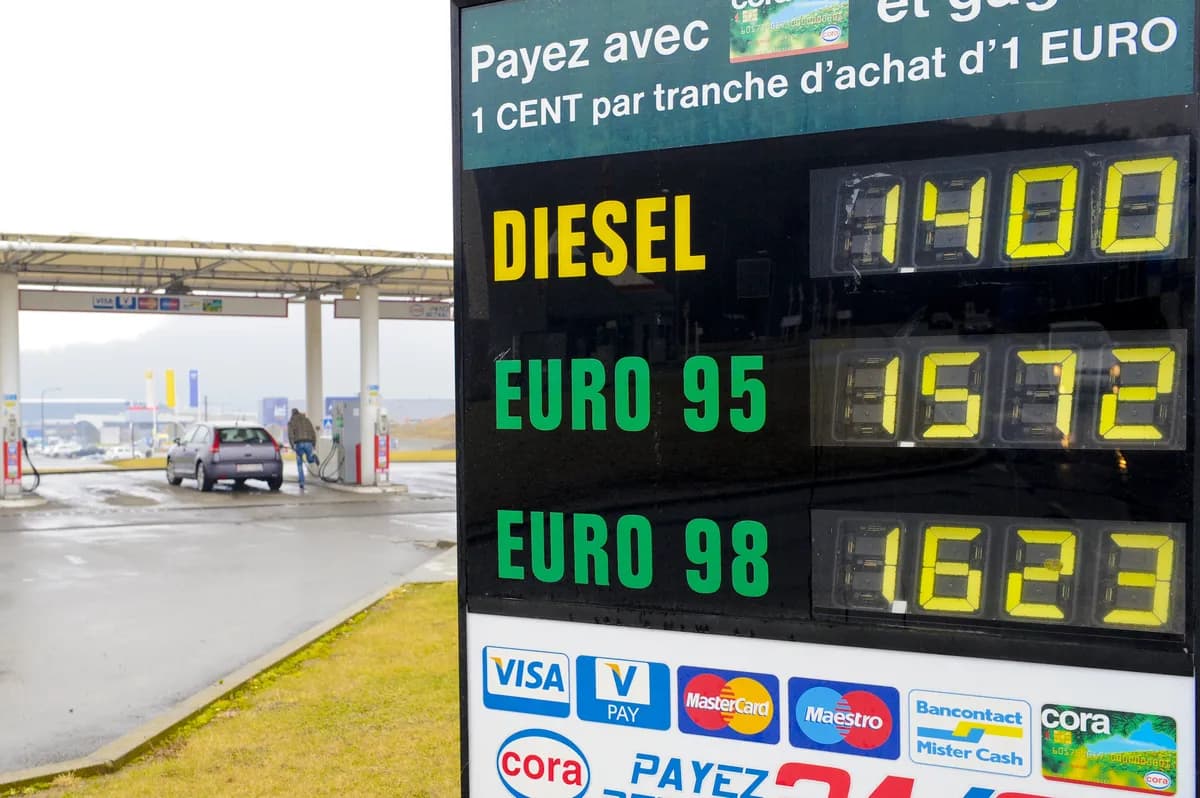
Rising gas prices and inflation fueled political concerns in the US. President Trump warned that gas prices may climb higher heading into the midterm elections. On Monday, the average cost of a gallon of gas in the US was $4.12, up from $3.18 one year ago, according to AAA. Inflation rose by 3.3 percent year-over-year, according to the Bureau of Labor Statistics. Some Republicans fear that rising prices could worsen the political blow in the midterms, according to multiple reports. 69 percent of Americans are concerned about elevated gas and fuel prices as a result of the Iran war, according to Pew Research Center.
Iran maintained its effective closure of the Strait of Hormuz, with attacks on vessels continuing. Tehran has effectively closed the Strait of Hormuz to oil and other traffic since the start of US-Israel strikes on Iran in late February. Shipping traffic through the Strait has largely ground to a halt after Iran declared the strait closed to all but its enemies, according to multiple reports. Only a handful of ships – mostly Indian, Pakistani, Turkish and Chinese-flagged vessels – have been allowed to pass in recent days. Iran's Supreme Leader Mojtaba Khamenei pledged to maintain the effective closure of the Strait of Hormuz. Khamenei described Tehran's threats against shipping in the waterway as a 'lever' that 'must continue to be used'. No more than five ships have passed through the Strait each day since the US and Israel launched joint strikes on Iran on February 28, compared with an average of 138 daily transits before the war, according to the United Kingdom Maritime Trade Operations (UKMTO) centre. At least 16 commercial vessels have been attacked in the region since the start of the conflict, according to UKMTO. Tehran has claimed responsibility for several of the attacks, including a strike on Wednesday that crippled a Thai-flagged vessel off the coast of Oman.
Trump claimed that the strait would be open for tankers soon and that other countries would assist in clearing the passageway of Iranian mines.
Trump prioritized nuclear non-proliferation over oil prices. Trump claimed that the strait would be open for tankers soon and that other countries would assist in clearing the passageway of Iranian mines. US President Donald Trump posted that stopping Iran from getting nuclear weapons was of 'far greater interest and importance' than rising oil prices.
Emergency stockpile releases and other measures were announced to stabilize the oil market. The International Energy Agency announced that member countries would release 400 million barrels of oil from emergency stockpiles. The US Department of the Treasury issued a temporary licence authorising countries to purchase sanctioned Russian oil that has been stranded at sea. Several countries in the Group of Seven have signaled they could coordinate emergency stockpile releases if supply disruptions worsen, according to research.
Iran's Supreme Leader Mojtaba Khamenei pledged to maintain the effective closure of the Strait of Hormuz.
The global oil market surplus could flip to deficit due to supply disruptions. The global oil market has been in significant surplus since the start of 2025, according to the International Energy Agency. Ahead of the military actions that began on 28 February, global oil supply was also expected to far exceed demand in 2026. Prolonged supply disruptions could flip the market into a deficit, the IEA said. Some operators have begun shutting in production, and the region's refined product output has been impacted, according to the IEA. Efforts to stabilise the market by releasing 400 million barrels from emergency stockpiles are unlikely to fully offset supply losses, according to multiple reports. Researchers at OCBC estimate the world could still face a daily shortfall of around 10 million barrels.
Analysts warned of prolonged price swings and potential for $150-$200 oil. Analysts warn that geopolitical shocks tend to produce sharp and prolonged price swings. If the current conflict expands, or energy infrastructure remains under threat, crude prices could climb even higher, with some forecasts suggesting oil could test US$120 to US$150 under severe supply constraints.
Khamenei described Tehran's threats against shipping in the waterway as a 'lever' that 'must continue to be used'.
The impact on European gas prices and the winter heating season could be significant. ICIS model-based analysis suggests that even a relatively short interruption to shipping through the Strait could push European gas prices sharply higher. Under a scenario in which the waterway is closed for four weeks, benchmark prices at the TTF could rise to approximately 60 euros per megawatt-hour in March, with summer prices remaining about 20 percent above pre-crisis forward levels, according to Independent Commodity Intelligence Services (ICIS). Europe's gas market remains exposed to global LNG dynamics, even after several years of efforts to diversify supply following the Russian invasion of Ukraine, according to research. Higher LNG prices would likely lead to faster depletion of stored gas during the spring and early summer, leaving less cushion ahead of the winter heating season.
The International Monetary Fund estimates that every 10 percent rise in oil prices, sustained over a year, would correspond with a 0.4 percent increase in global inflation and a 0.15 percent reduction in economic growth.
US President Donald Trump posted that stopping Iran from getting nuclear weapons was of 'far greater interest and importance' than rising oil prices.
Several uncertainties remain. The exact timing of the US blockade start is unclear, with reports conflicting between 10am and 2pm. It is uncertain whether the US blockade will effectively reopen the Strait of Hormuz or escalate tensions further. The actual daily shortfall in oil supply due to the Strait closure remains unknown, as does how long the Strait will remain effectively closed.