

US President Donald Trump announced the blockade after Vice President JD Vance left weekend negotiations with an Iranian delegation in Pakistan without a deal, according to reports. The US set a deadline of 2pm on Monday to begin a partial blockade of the strategic waterway. US Central Command stated that the blockade will be enforced impartially against vessels of all nations entering or departing Iranian ports and coastal areas, including all Iranian ports on the Arabian Gulf and Gulf of Oman. A fifth of the world’s oil and gas passes through the Strait of Hormuz, making it a critical chokepoint for global energy supplies.
Oil prices reacted immediately, with Brent crude trading at $101.95 a barrel on Monday afternoon, up from $96.14 at the close of trading in London on Friday. The oil price topped $100 per barrel on Monday, according to multiple reports. Brent crude had surged to nearly $120 a barrel on March 9 and has remained above $100 since March 13. Market analysts warn that oil prices could soar to a staggering $200 a barrel amid fears that escalating conflict may choke off the strait.
This disruption comes atop existing closures. Tehran has already effectively closed the Strait of Hormuz to oil and other traffic since the start of US-Israel strikes on Iran in late February, according to multiple reports. Shipping traffic through the strait has largely ground to a halt after Iran declared it closed to all but its enemies and threatened to target vessels attempting to pass. Only a handful of ships – mostly Indian, Pakistani, Turkish and Chinese-flagged vessels – have been allowed to pass in recent days.
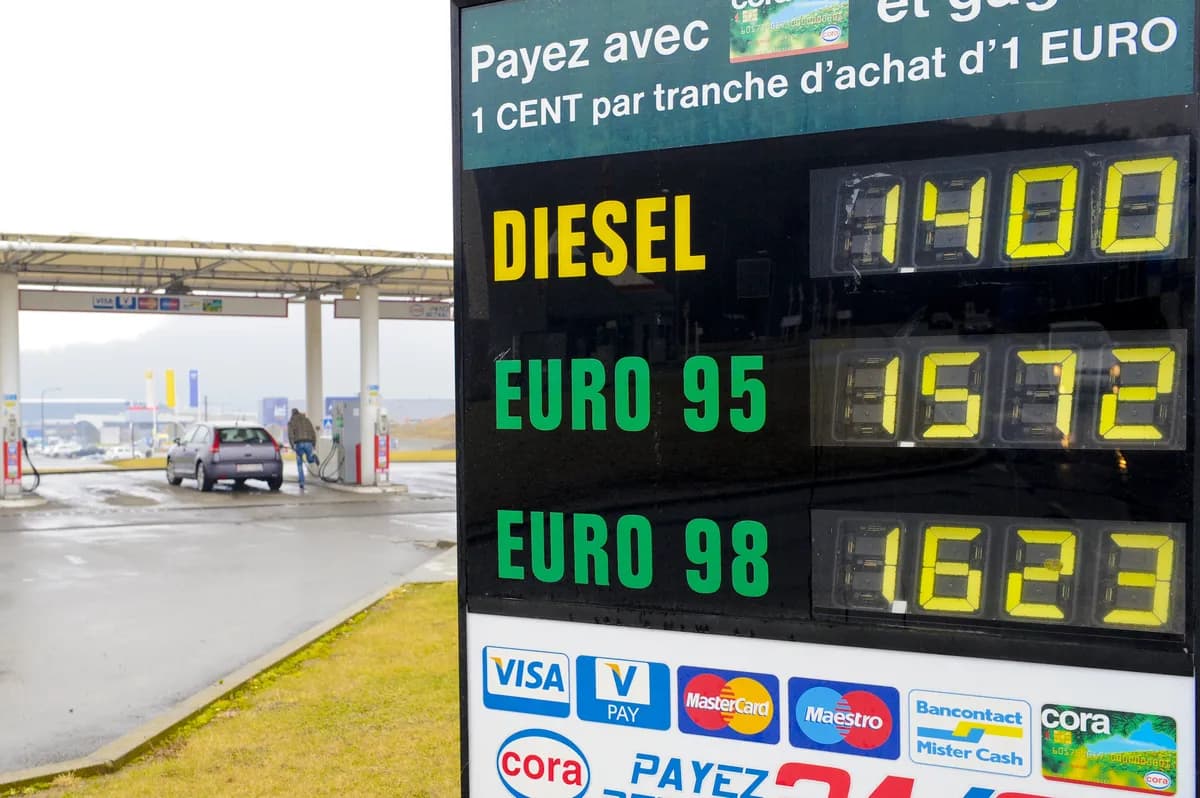
The economic implications are severe. The International Monetary Fund estimates that every 10 percent rise in oil prices, sustained over a year, would correspond with a 0.4 percent increase in global inflation and a 0.15 percent reduction in economic growth. Inflation in the US rose by 3.3 percent year-over-year as of last week, and the average cost of a gallon of gas was $4.12 on Monday, up from $3.18 one year ago. Efforts to stabilise the market by releasing 400 million barrels from emergency stockpiles are unlikely to fully offset supply losses. Researchers at OCBC estimate the world could still face a daily shortfall of around 10 million barrels.
Global stock markets showed mixed performance on Monday. The FTSE 100 closed down 17.57 points, or 0.2%, at 10,582.96, while the AIM All-Share rose 4.83 points, or 0.6%, to 782.31. In Paris, the CAC 40 closed down 0.3%. In New York, the Dow Jones Industrial Average was down 0.6%, the S&P 500 was little changed, and the Nasdaq Composite was up 0.3%.
Individual companies felt the impact. Shares in Goldman Sachs fell 3.6% on Monday despite the bank reporting better-than-expected first quarter earnings. Goldman Sachs reported $17.23 billion in total net revenue in the first quarter, up 14% from $15.06 billion the year prior.
Analysts project further price increases. Benchmark Middle Eastern crudes like Oman and Dubai have already crossed the $150 threshold. Analysts at consultancy Wood Mackenzie have said Brent could soon hit $150 and that $200 oil is not outside the realms of possibility in 2026. Brent's record nominal high remains $147.50 during the 2008 financial crisis - equivalent to roughly $224 in today’s money. However, some analysts argue the spike may be limited by rising production in countries such as the United States, Canada and Brazil, as well as reduced demand if prices climb too high.
Public concern is mounting. The vast majority of Americans, 69 percent, are concerned about elevated gas and fuel prices as a result of the Iran war. The political context remains fraught, as weekend peace talks between the US and Iran broke down over the subject of Iran’s nuclear ambitions. The specific terms that caused the breakdown have not been disclosed. It is also unclear how long the US blockade will last or what criteria will be used to end it. The exact current level of oil supply disruption through the strait and the corresponding reduction in global oil flow have not been quantified.