

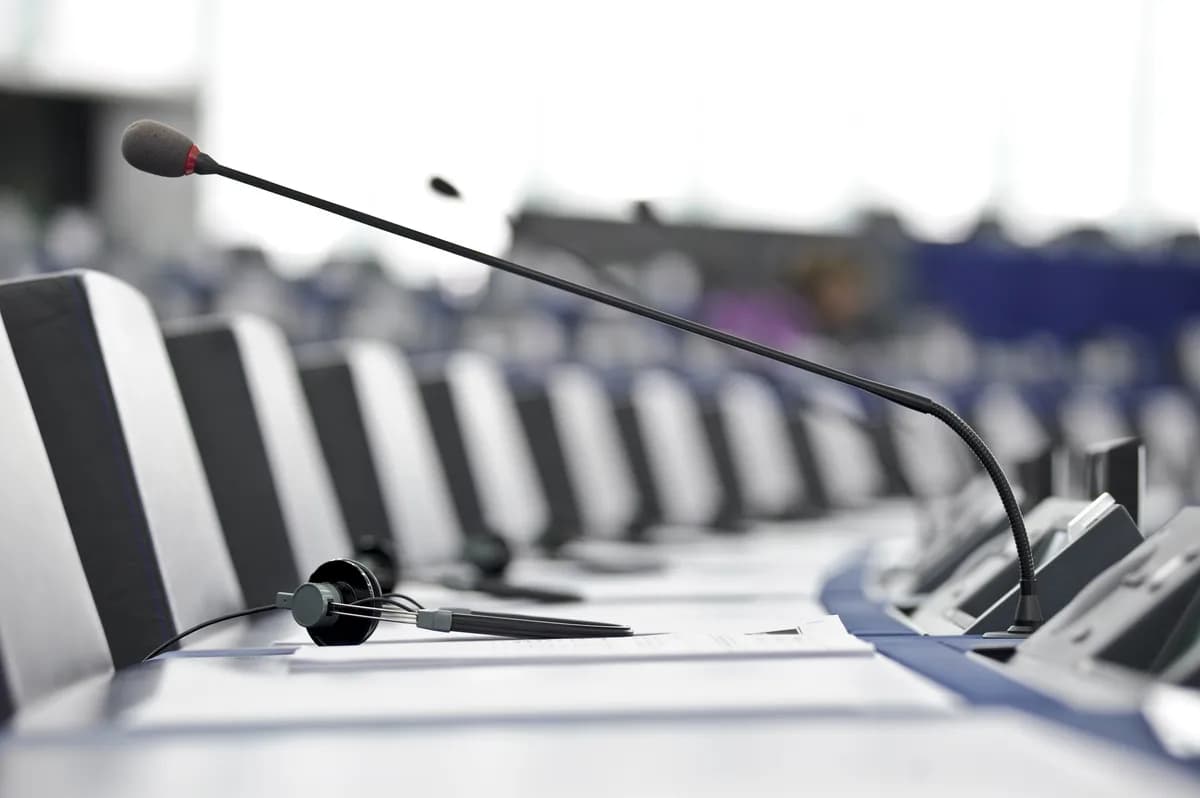
The negotiations are being held at the Serena Hotel in Islamabad, which was emptied of guests and surrounded by a red zone with heavy security, according to multiple reports. A source within Pakistan's security service said the hotel is perfect for hosting the two delegations of about 150 people. A large hall was converted into a media center with banners reading 'Islamabad talks' and flags of the three countries. The Serena Hotel has hosted international delegations since 2002, but Islamabad's worst terror attack occurred in 2008 at the nearby Marriott hotel, underscoring security concerns. The US delegation was led by Vice President JD Vance, who traveled with Steve Witkoff and Jared Kushner, according to multiple reports. The Iranian delegation was led by Parliament Speaker Mohammad Bagher Qalibaf, a former commander with Iran's Revolutionary Guard who has issued some of Iran's most fiery statements since fighting began, according to research. Officials from the region said Chinese, Egyptian, Saudi and Qatari officials were in Islamabad to indirectly facilitate talks, speaking on condition of anonymity. The White House confirmed the direct nature of the talks, and Iranian state TV said talks continued as of 1 a.m. Sunday in Islamabad. The delegations discussed with Pakistan how to advance the ceasefire, according to research. Iran's state-run news agency said the three-party talks began after Iranian preconditions, including a reduction in Israeli strikes on southern Lebanon, were met. Iran's delegation told state television it had presented 'red lines' in meetings with Pakistani Prime Minister Shehbaz Sharif, including compensation for damage caused by U.S.-Israeli strikes that launched the war on Feb. 28 and releasing Iran's frozen assets.
President Trump set a hardline tone ahead of the talks, saying it is 'highly unlikely' a ceasefire will be extended and warning of bombs if no deal, according to Daily Mail - News. He said the Strait of Hormuz will continue to be blockaded until a deal is reached, according to the same source. Trump posted on Truth Social that he is 'winning a War, BY A LOT' and his deal will be something the world will be proud of. According to Daily Mail - News, Trump said the deal will be far better than the JCPOA, the 2015 agreement between Iran and the US, UK, France, China, Russia, and Germany, from which the US withdrew in 2018. Trump also said if he did not terminate the JCPOA, nuclear weapons would have been used on Israel and the Middle East, and that he is under no pressure to make a deal, according to Daily Mail - News. According to Dagens Nyheter, Trump confirmed talks had begun but would not speculate on the outcome. Vice President Vance, a reluctant defender of the war with little diplomatic experience according to research, warned before boarding: 'If they try to deceive us, they will find the negotiating team is not so receptive,' according to Sveriges Radio Nyheter. According to www.pbs.org, Vance warned Iran not to 'try and play us'. According to skardu.pk, Vance cautioned that the fragile ceasefire could be easily shattered if Iran fails to engage in genuine negotiations. He stated that if the Iranians genuinely seek to collaborate, a mutually beneficial agreement can be reached, but if they opt for deceit, they will face consequences. Vance also said President Trump has instructed the entire negotiating team, comprising Secretary of State Rubio and special envoy Steve Witkoff, to engage in honest and transparent negotiations. Vance highlighted the US's considerable leverage, encompassing military, diplomatic, and economic measures, which will be deployed if Iran refuses to reciprocate. He noted that Trump has expressed his assessment that while Iran possesses skilled negotiators, they are less formidable as combatants, and pointed out internal divisions within Iran regarding the deal, citing contradictory statements on social media. The decision to send Vance was made after waiting to hear whether Tehran would send a negotiating team, according to Axios. A source told Axios that Iran is stalling while under pressure from the Revolutionary Guards to hold firm. Iran has not committed to attending further talks in Islamabad, according to multiple reports. Iran's president Masoud Pezeshkian said there remains a 'deep historical mistrust' of the US and that Tehran is concerned about 'unconstructive and contradictory signals from American officials', according to The Guardian - World. Iran's parliamentary speaker Mohammad Bagher Ghalibaf said Iran would not accept negotiations with the US while under threat and that they have prepared to reveal new cards on the battlefield, according to the same source.
There remains a 'deep historical mistrust' of the US and that Tehran is concerned about 'unconstructive and contradictory signals from American officials'.
The war has had devastating humanitarian and regional impacts. The head of the UN's humanitarian agency Tom Fletcher said the normalization of violent language, such as Trump's threat to bomb Iran, is very dangerous, according to The Guardian - World. Fletcher said the $2bn a day spent on the Iran war could have funded saving more than 87 million lives, and warned that food and fuel inflation is reaching close to 20% and will push more people into poverty in sub-Saharan Africa and east Africa, according to the same source. The ceasefire is threatened by deep disagreements and Israel's continued attacks against Hezbollah in Lebanon, according to research. Lebanon's health ministry said the death toll in Lebanon has surpassed 2,000. The war has killed at least 3,000 people in Iran, 2,020 in Lebanon, 23 in Israel and more than a dozen in Gulf Arab states, according to research. It caused lasting damage to infrastructure in half a dozen Middle Eastern countries. Iran's grip on the Strait of Hormuz has largely cut off the Persian Gulf and its oil and gas exports from the global economy, sending energy prices soaring. The U.S. military said two destroyers transited the Strait of Hormuz ahead of mine-clearing work, a first since the war began. However, Iran's state media said the joint military command denied that two destroyers transited the Strait of Hormuz, highlighting the information war.
Amid the conflict, allegations of sexual violence in the West Bank have emerged. According to human rights and legal experts, Israeli soldiers and settlers are using gendered violence and sexual assault to force Palestinians out of the West Bank. Palestinian women, men and children have reported attacks, forced nudity, invasive body cavity searches, and threats of sexual violence. Researchers said sexualized attacks are hastening displacement of Palestinians, with over two-thirds of households surveyed identifying rising violence as a tipping point.
Iran would not accept negotiations with the US while under threat and that they have prepared to reveal new cards on the battlefield.
In a separate development, Labor Secretary Lori Chavez-DeRemer is resigning amid misconduct allegations including drinking on the job and having an affair with a subordinate, according to the administration. Chavez-DeRemer and her aides are being investigated by the department's inspector general over allegations of professional misconduct, according to multiple reports.
The normalization of violent language, such as Trump's threat to bomb Iran, is very dangerous.
The $2bn a day spent on the Iran war could have funded saving more than 87 million lives.
Food and fuel inflation is reaching close to 20% and will push more people into poverty in sub-Saharan Africa and east Africa.