

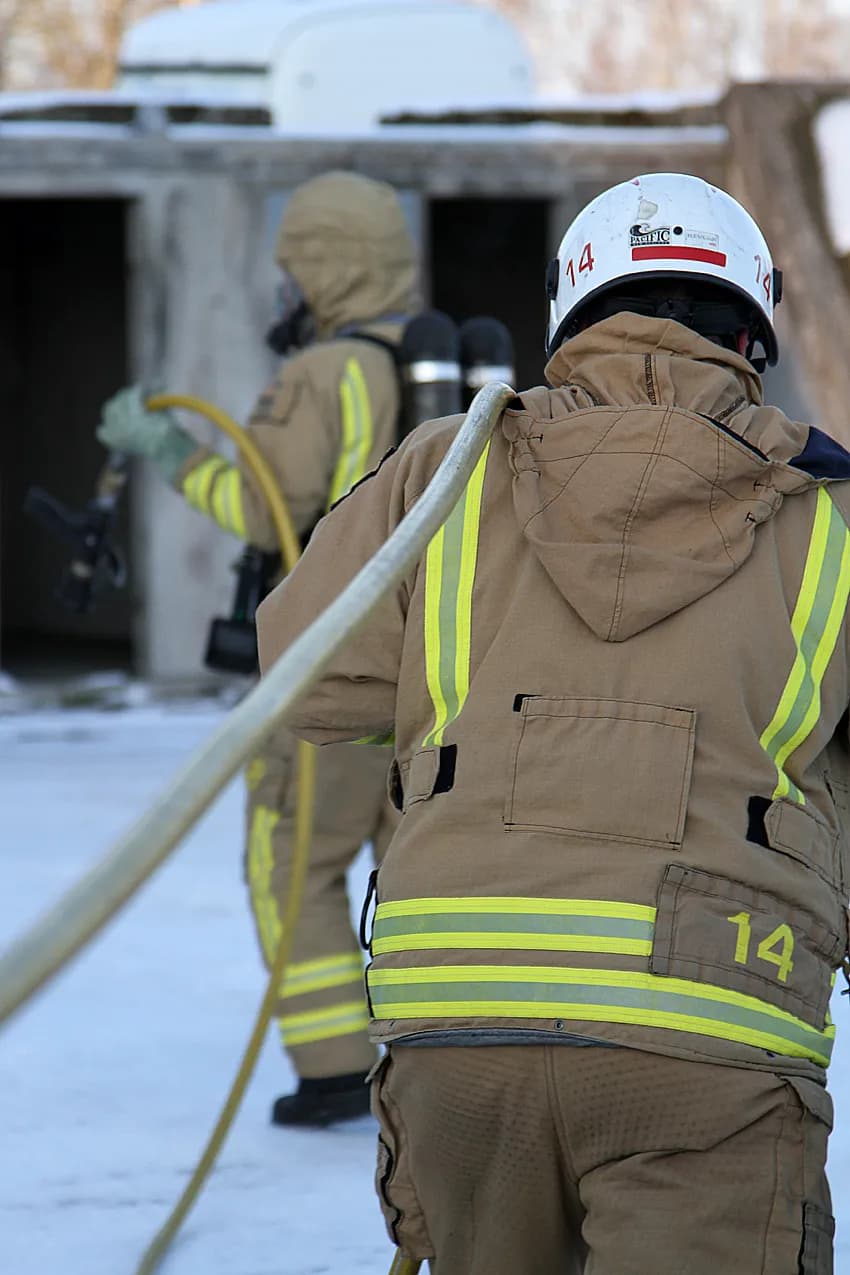
The Uppsala Fire Department is organizing a try-out day for women for the third time to attract more women, with participants wearing eye protection and smoke diving equipment to enter a building simulating smoke-filled conditions. According to SVT Uppland, Sofia Eriksson, a participant, described gaining a completely different view of the profession when trying it out firsthand. However, the proportion of women working as full-time firefighters in the Uppsala Fire Department this year is only 4%, highlighting the ongoing challenge.
Nationally, the proportion of women in operational service or on-call duty full-time in Sweden is 7% in 2024, according to the latest figures from the Swedish Civil Contingencies Agency (MCF), covering both officers and firefighters. According to SVT Uppland, Örjan Lokeborn, the operations manager at Uppsala Fire Department, described the importance of better reflecting society and having broadened competence and diversity. It remains unclear what specific measures, besides try-out days, are being taken to increase the proportion of women in firefighting, or how many women have attended these events over the years and subsequently enrolled in training.
You get a completely different view of the profession when you get to try it out yourself.
According to SVT Uppland, a reporter questioned whether try-out days are the solution, noting they have been arranged for several years without a rush of women to the fire department. According to SVT Uppland, Örjan Lokeborn described difficulty in measuring the impact because the department encourages studies, and the training takes a couple of years, making it a long-term effort. The main barriers preventing more women from joining, as well as targets for increasing female representation in Uppsala, have not been disclosed.
It is important to better reflect society and for us to have broadened competence and diversity.
Is this really the solution to the problem – you have arranged it for several years and there is still no rush of women to the fire department?
It is difficult to measure this because we encourage studies. Currently, we cannot see the effect of the efforts we make because it is long-term since the training is a couple of years.