

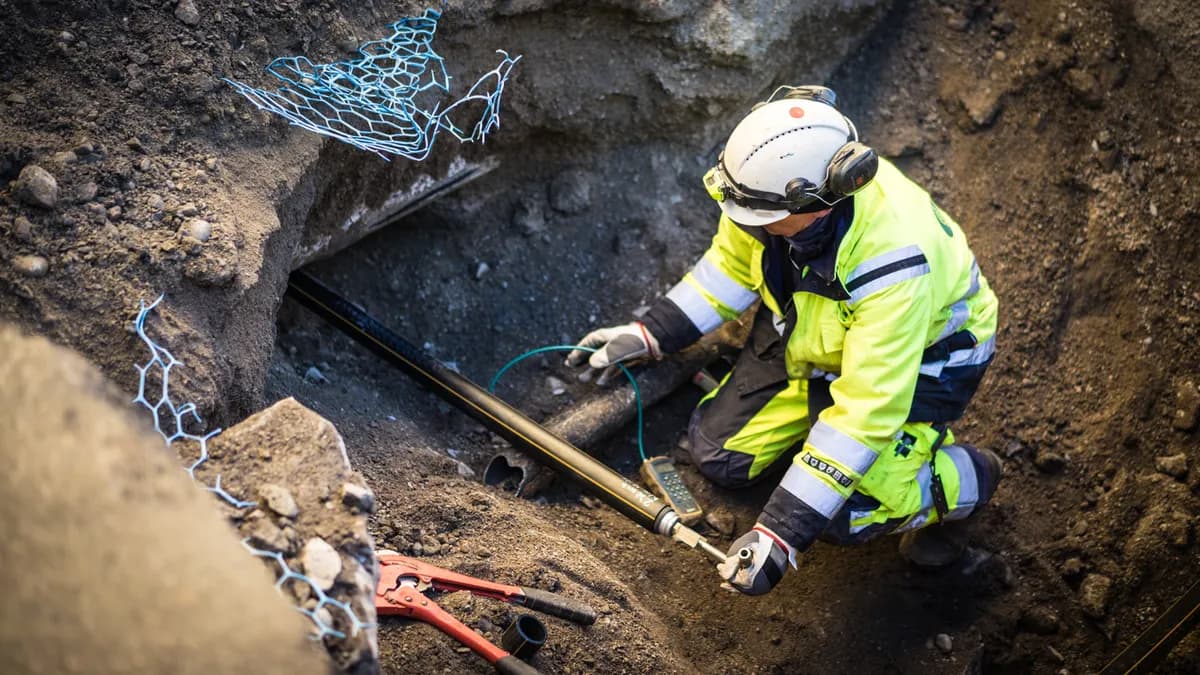
Ukraine has released oil through the war-damaged Druzhba pipeline, according to a Ukrainian source for AFP. The resumption of oil flow is crucial for the EU's multi-billion euro loan to Ukraine to be approved, major media reports indicate. Oil began pumping through the pipeline at 11:35 Swedish time, a source within the 'energy industry' told AFP.
Ukraine halted oil transit through the Druzhba pipeline on January 27, 2025, due to Russian strike damage, Ukrainian officials said. Ukraine completed repair works on the pipeline by April 21, 2025, and expects to resume operations tied to EU support, according to President Volodymyr Zelenskyy. The EU Ambassador to Ukraine requested to inspect the Druzhba pipeline but was denied, the Financial Times reported. Hungary threatened to suspend power supply to Ukraine if oil transit was not restored, Viktor Orban said. Slovakia terminated its emergency power supply contract with Ukraine on March 4, 2025, according to SEPS. The European Commission and Council proposed technical and financial support to restore Russian oil transit to Hungary and Slovakia, Ursula von der Leyen and Antonio Costa said.
Russia launched a full-scale invasion of Ukraine on February 24, 2022, according to research from four sources. Putin recognized Donetsk and Luhansk as independent states on February 21, 2022, the Russian president said in a public speech. At its furthest advance in March 2022, Russia occupied roughly 27% of Ukrainian territory, research from four sources indicates. By late November 2022, Ukraine had reclaimed approximately 74,000 sq km, reducing Russian control to about 19% of the country, according to the Institute for the Study of War.
By 2025, Russia had gained only a further 0.8% of Ukraine's territory, according to Oleksandr Syrskii via Al Jazeera and the ISW via UNN. In 2025, Russian forces captured 4,831 sq km of Ukrainian territory and recaptured approximately 473 sq km in Kursk Oblast, the ISW reported. The average daily rate of Russian advance in 2025 was 13.24 sq km per day, up from 9.87 sq km per day in 2024, according to the ISW.
Pokrovsk was captured by Russia in early December 2025, according to research from four sources. However, as of November 26, 2025, Russian forces had only consolidated 66% of Pokrovsk, implying it was not yet fully captured by early December, according to other reports. This contradiction affects the understanding of the pace of Russian advances in Donetsk Oblast and the reliability of different sources. Russian forces entered Pokrovsk by July 31, 2025, and advanced an average of 0.12 km per day from July 31 to November 26, 2025, the ISW reported. Russian forces could seize the remainder of Ukrainian-held Donetsk Oblast by August 2027, assuming a constant rate of advance, according to the ISW. Russian forces began using a new operational model involving air blockade, tactical blocking, penetration missions, and mass small-group attacks in fall 2025, the ISW reported. Russian forces increased production of fiber-optic drones, extending range from 7 km in spring 2025 to 20 km in summer 2025, and later to 50-60 km, according to the ISW.