

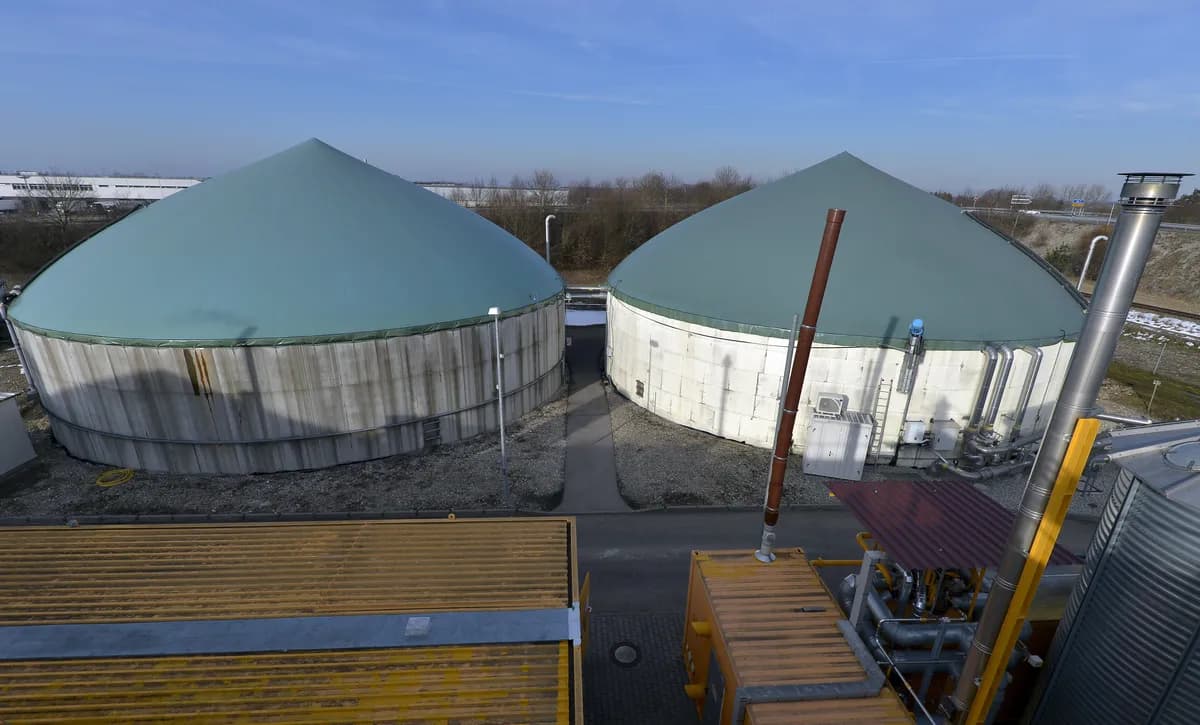
The UK government is providing up to £100 million to reopen the mothballed Ensus CO2 plant on Teesside, according to major media reports. Business Secretary Peter Kyle signed off the grant, which will pay to get the plant operational again for an initial three-month period. The plant is being reopened due to its ability to produce carbon dioxide as a by-product, a gas vital for sectors including drinks and the nuclear industry. CO2 supply has been disrupted due to soaring energy costs affecting other sources such as fertilizer factories. This grant marks the first major intervention by the UK government aimed at tackling possible shortages caused by the conflict with Iran.
The Ensus bioethanol plant in Redcar was mothballed last year after a trade deal with the US cut tariffs on bioethanol, its main product. The plant had warned it faced imminent closure in May after the deal allowed tariff-free bioethanol imports, and the UK government decided not to offer rescue funding to the bioethanol industry at that time. Talks are now ongoing to secure Ensus's future by exploring options for CO2 supply. The plant produces about 400 million litres of bioethanol annually, along with animal feed and carbon dioxide.
This move aligns with broader UK energy security efforts. The UK government says thousands of new, skilled jobs will be supported in the North East of England as contracts for the first carbon capture, usage and storage (CCUS) projects in the UK are signed. The East Coast Cluster in Teesside is set to start construction in mid-2025, backed by a government commitment of £21.7 billion to ensure the UK's vision for CCUS becomes a reality. Net Zero Teesside Power is estimated to deliver secure low-carbon energy capable of powering up to one million homes from 2028. The deals will unlock £4 billion worth of contracts awarded to supply chains, supporting 2,000 jobs in the North East initially, with tens of thousands more across the UK in coming years.
The urgency of these domestic measures is underscored by an escalating international conflict. The US and Israel launched attacks on Iran on 28 February, killing Iran's Supreme Leader and senior leaders. Iran has since declared total war on Israel and the United States, according to Iranian statements.
A central flashpoint is the Strait of Hormuz, where shipping is now paralyzed. Traffic through the strait has almost completely stopped after Iran threatened to set fire to ships, with ship traffic at a virtual standstill. Iran said it would attack any vessel travelling through the Strait of Hormuz. Around 10 vessels have been attacked in or near the strait since Iran's threat. The key question remains how long Iran’s effective blockade will last, with the strait reported closed as of Wednesday evening, though Iran’s foreign minister Abbas Araghchi claimed it was open to non-hostile shipping.
The immediate impact on energy markets has been severe. The conflict has caused oil and gas prices to soar, with oil prices above $100 per barrel on 9 March. In the UK, petrol and diesel prices have increased, and gas prices have doubled since the beginning of the conflict, briefly hitting 171p a therm.
Industry figures are warning of impending shortages. Former BP executive Nick Butler described the risk of the UK facing oil and gas shortages in two to three weeks, urging the government to plan for handling such a scenario. On Tuesday, Shell chief executive Wael Sawan issued a similar warning at an industry conference. However, UK ministers continue to insist the supply of petrol remains reliable.
Analyst views on the conflict's duration and oil price trajectory are conflicting. UBS warned that escalating tensions could heighten global geopolitical risks, but does not expect the recent escalation to last long, anticipating only short-term disruptions to global energy supplies. UBS expects the initial rise in oil prices to retreat once military operations near an end. In contrast, UOB expects oil prices to stabilize at $80 per barrel during the second and third quarters of 2026 despite the escalating conflict, and forecasts prices will resume a downward trend through the first quarter of 2027, averaging around $70 per barrel.
The geopolitical and economic implications are profound. The Middle East produces a significant portion of the world's crude oil and natural gas, with strategic importance due to hydrocarbon reserves and export routes. Disruptions to shipping through the Strait of Hormuz can trigger supply shortages and energy price volatility. Geopolitical tensions in the region introduce supply risk premiums into oil markets, driving volatility, and conflicts can significantly impact LNG supply chains, particularly from Qatar.
Regional vulnerabilities are uneven. Capital Economics highlighted that Gulf oil exports have alternative routes bypassing the Strait of Hormuz, such as Saudi Arabia's pipeline to Yanbu. However, Iraq, Kuwait, and Iran lack significant alternatives, putting 10–20% of global oil supplies at risk in a disruption. Liquefied natural gas exports have no alternative routes, explaining why European gas prices surged more than oil prices. The Strait of Hormuz accounts for roughly 25% of globally seaborne oil shipments and about 20% of global LNG flows in 2024. Saudi Arabia and the UAE can reroute some crude oil via pipelines, but Kuwait, Qatar, and Bahrain have no alternatives. Saudi Arabia has started to reduce oil production due to limited storage and export options.
The global fallout is pushing parts of the world into energy triage, forcing governments to choose where to cut demand or absorb costs. Asia is the most exposed to energy disruptions due to heavy reliance on imported fuel shipped through the Strait of Hormuz. Southeast Asia is rationing scarce energy, with measures like four-day workweeks and reduced power use. Thailand halted exports to protect its limited reserves, contributing to shortages in Cambodia.
Specific disruptions are mounting. Iranian drones targeted the Ras Laffan gas facility in Qatar, pausing production that will take weeks to restart. Insurance premiums on vessels considered American, British, or Israeli have risen significantly.
Diplomatic tensions are high, with conflicting statements on negotiations. The conflict continued with Washington saying it would hit Iran harder if Tehran refused to accept it had been defeated militarily. White House spokeswoman Karoline Leavitt insisted productive talks were continuing between Washington and Tehran. Iran’s foreign minister Abbas Araghchi said there had been no negotiations or discussions with the American side. Araghchi suggested the US had effectively admitted defeat.
Critical unknowns persist, including how long the effective blockade of the Strait of Hormuz will last and when normal shipping might resume. The exact terms of the UK's £100 million grant for the Ensus plant and any plans beyond the initial three months have not been detailed. It is also unclear whether there are any active, behind-the-scenes diplomatic negotiations between the US and Iran to de-escalate the conflict, or the full extent of global energy shortages in the coming weeks. The specific timeline for restarting production at Qatar's Ras Laffan gas facility after the drone attack remains uncertain.