

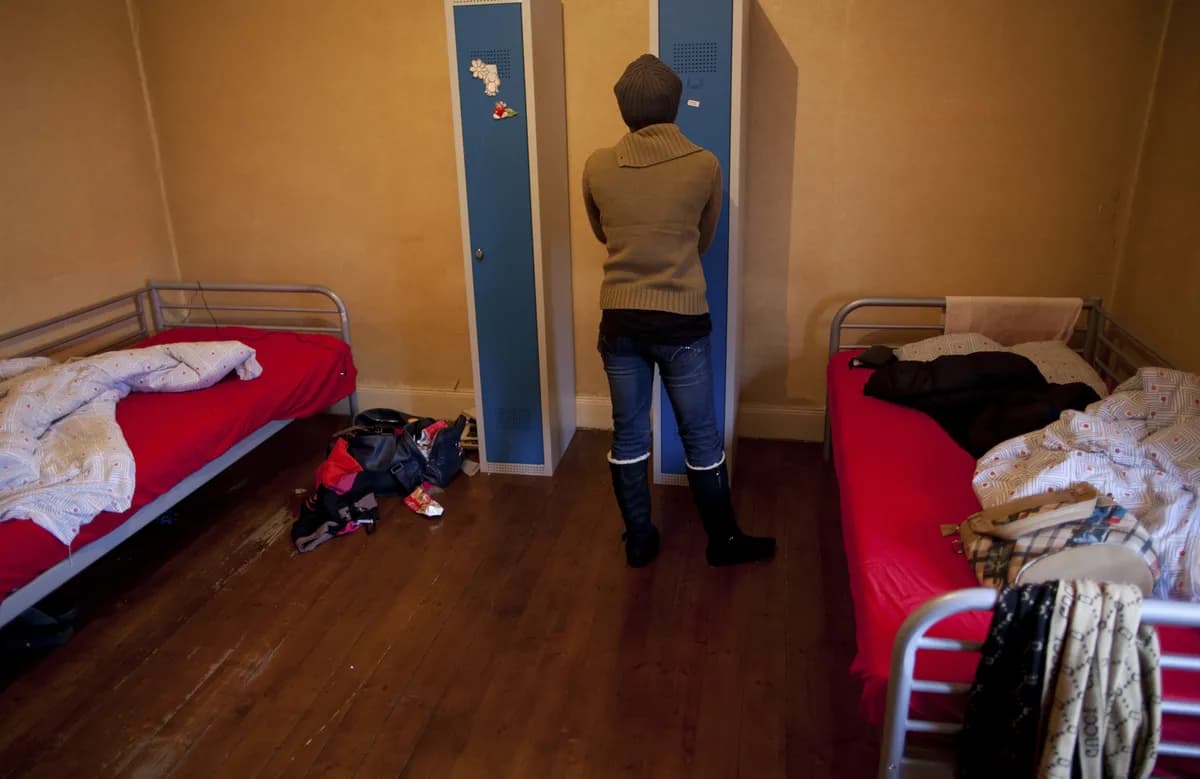
An immigration judge has allowed an Afghan refugee's parents and sister to reunite with him in the UK, accepting they will become a significant burden on the NHS. Deputy Upper Tribunal Judge Bijan Hoshi made the ruling for the refugee, who was granted five years' leave to remain in 2023 after claiming persecution due to a relationship with a woman from a Taliban-linked family. According to multiple reports, the woman was killed by her family, and the refugee fled Afghanistan, leaving his family at risk of reprisals. The family members have serious medical conditions requiring complex intervention, but the Home Office conceded that NHS treatment costs were not relevant for assessing if the refugee could support his family without public funds, setting a precedent for similar cases.
In a separate case, a judge ruled a Sudanese migrant with adult physical features is actually a child, aged 17, based on evidence including social media accounts. The migrant, known only as 'ASB', arrived in the UK on a small boat in February 2025 and claimed asylum, but initial age assessments by Liverpool City Council judged him to be an adult, aged 23-25, based on physical features. Multiple reports indicate officials said he must be an adult because he has a 'protruding Adam's apple', old acne scars, and sunken eyes, with a 'weathered' face, beard, and 'well-developed jaw line and cheek bones'. However, the judge from the Immigration and Asylum Chamber sided with ASB, who maintained he was 17 and provided evidence including his TikTok and Facebook accounts, and he will now be treated as a child in future asylum hearings. The Home Office had judged his probable age as 23 with a date of birth of July 1, 2001, while he claimed to be 16 born on July 1, 2008, and said he has two uncles and a cousin in the UK with whom he had been speaking in Calais.
Meanwhile, Labour's 'one-in-one-out' deal with France faces implementation challenges and legal interventions. Under the deal, adult migrants crossing the Channel may be returned to France if their asylum claim is inadmissible, but a high court judge halted the removal of an Eritrean trafficking victim to France due to concerns about harm and lack of support. According to Home Office figures, some 1,200 migrants crossed the Channel in March 2026, bringing the 2026 total to over 3,400, with over 18,700 since the deal started. As of 5 March, 370 people have been brought to the UK legally and 354 sent back to France under the scheme. The Eritrean asylum seeker is a confirmed trafficking victim with PTSD and may face barriers to healthcare and accommodation in France, according to Mr Justice Sheldon.
The 'one-in-one-out' deal does not deter me because I have come too far to stop now.
Controversial cases have also emerged, including two Eritrean migrants wanted for gang rape in Denmark who were granted asylum and benefits in the UK before being extradited. Fikak and Tekleab arrived in the UK on small boats in October 2024 and received taxpayer-funded support, according to multiple reports. In another case, a father-of-four with 22 criminal convictions will be deported to Nigeria after a judge overturned his right to stay, citing intermittent relationships with his children. Deputy judge Mark Symes ruled against Sydney Igbanoi, who arrived in the UK in 1991 and was granted indefinite leave to remain but has convictions including drug offences and assault.
A child has been charged with endangering others during a small boat Channel crossing under a new law, despite being assessed as under 18. The child was seen piloting the boat, and some migrants lacked life jackets, leading the Crown Prosecution Service to prosecute due to the seriousness of the offence, according to Gary Willmott for the prosecution.
The Home Office is offering up to £40,000 per family to failed asylum seekers to leave the UK, a scheme criticized as incentivizing illegal immigration. Home Secretary Shabana Mahmood confirmed the policy, which aims to reduce the backlog but faces scrutiny over its potential effects.
I cannot believe that an asylum case is 25 years in the making.
In a detailed legal battle, the case of MIA v Dorset Council [2025] EWHC 970 AC-2024-LON-002655 saw judgment handed down in favour of the claimant MIA against Dorset Council on 16 April 2025 by His Honour Judge Dight CBE. MIA arrived in the UK on 15 June 2023 as an unaccompanied asylum-seeker from Afghanistan, and following an assessment by the Home Office, he was ascribed the age of 16 with a date of birth of 1 January 2007. He was initially accommodated in a hotel in or around Coventry before being taken to Home Office accommodation, then placed in a residential unit for unaccompanied asylum-seeking children in Kent, where he was treated as a looked-after child under Section 20 of the Children Act 1989. On 15 August 2023, MIA was transferred under the National Transfer Scheme to Dorset social services, but in October 2023, following an adverse age assessment, Dorset Council decided he was not eligible for Children Services, discharged him from care, and moved him to adult asylum accommodation. MIA later obtained a copy of his Tazkira after the adverse assessment, and two experts, Dr Zadeh and Dr Giustozzi, verified its authenticity as a genuine document.
In a contrasting outcome, the Court of Appeal upheld an age assessment against a Sudanese migrant found to have lied about his age. The asylum seeker, known only as AI, arrived in the UK in October 2021 and was assigned a date of birth of 20 April 1998 by the Home Office, making him an adult, but he claimed he was born in August 2004, which would have made him a child. West Berkshire Council undertook age assessments and adopted the Home Office's date, relocating him, and AI challenged the decision in 2022 after a judge at an Upper Tribunal found he was an adult when he entered the UK. The judge found he had lied about his schooling, the means he came to the country and his age, and the Court of Appeal dismissed a claim that insufficient reasons were given by the Upper Tribunal, with three judges finding they were 'sufficiently adequate'. Tuesday's judgment said AI's asylum claim was based on threats to his safety from the Janjaweed militia, who had allegedly killed his father and kidnapped his brother.
A correction from the Daily Mail clarifies that a migrant who failed to disclose a child sex offence did not win his appeal; the Home Office succeeded in overturning it, according to multiple reports.
The UK immigration system is under significant strain with multiple legal challenges ongoing, reflecting broader debates over border control and human rights. Legal experts and officials have responded to controversial rulings, with implications for future cases. According to GB News, David Haigh described disbelief at a case lasting 25 years, while according to Daily Express - UK News, a migrant named Khaled described the 'one-in-one-out' deal as not deterring him because he had come too far to stop.
Precedents have been set for family reunification and age assessment procedures, potentially affecting thousands of cases. The Afghan case establishes that NHS costs may not block family reunification for refugees, while the ASB ruling emphasizes the role of digital evidence in age disputes. However, key questions remain about age assessment criteria, such as what specific evidence led to the judge ruling ASB is 17 despite initial physical assessments, and how many other age dispute cases are pending with their success rates. The exact terms and legal basis of the 'one-in-one-out' deal with France, including conditions for returns and receptions, are also unclear, as are the total taxpayer costs of the Afghan family reunification and safeguards in the £40,000 scheme for failed asylum seekers.