

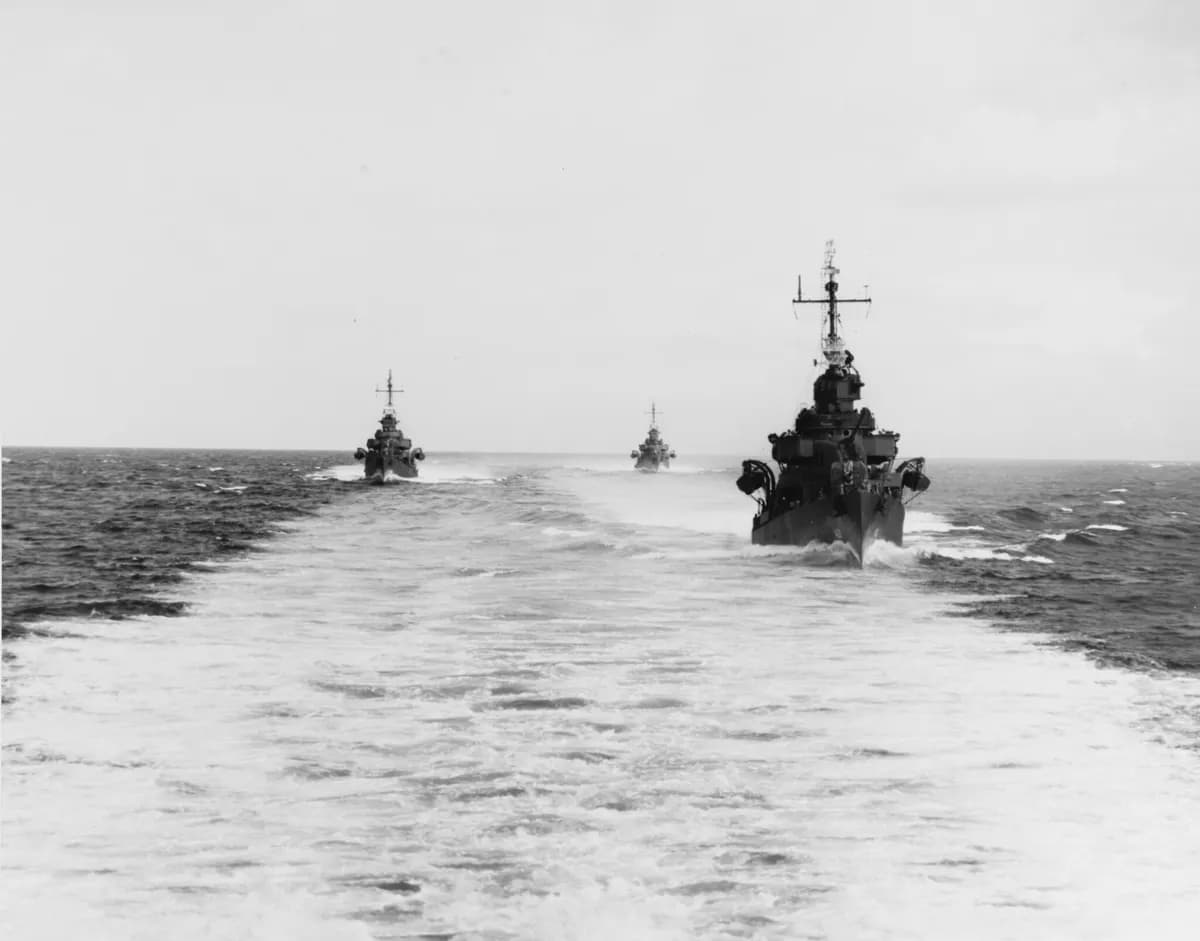
HMS Dragon was deployed to protect the RAF Akrotiri base in Cyprus after it was hit by an Iranian drone. The base was struck by a Shahed-type drone just after midnight on Monday, March 1, hitting a hangar and prompting a partial evacuation. This incident has left the facility, which remains vulnerable, as a focal point in the UK's response to regional threats.
According to Ministry of Defence insiders, the decision to send HMS Dragon was made on the fourth day of the war, about 36 hours after the drone strike on Akrotiri. Multiple reports indicate the deployment was delayed, with the ship not leaving Portsmouth until more than a week after the conflict began. The vessel was in dry dock or maintenance when the conflict started, requiring preparation before deployment.
HMS Dragon set sail from Portsmouth on Tuesday, March 10. Research indicates the ship is being prepared for a voyage of around 3,000 nautical miles, taking about seven days to get into theatre. Multiple reports state that after leaving Portsmouth, HMS Dragon spent three days in the English Channel for final preparations.
However, the ship has since docked in the eastern Mediterranean after suffering technical problems with its water systems. The Ministry of Defence described this as a 'minor technical issue' and stated the ship will be going into port for a 'routine logistics stop' and a 'short maintenance period'. This development creates confusion about whether HMS Dragon is already deployed and operational or still preparing to depart, affecting assessments of UK military responsiveness.
Research indicates a problem with the ship's onboard water system will need to be repaired. The Ministry of Defence confirmed that crew members, of which there are about 200 onboard, have been able to access water and catering, and take showers despite the issue. The destroyer will remain at high readiness during this time, according to defense officials.
HMS Dragon has the Sea Viper missile system, which 'can launch eight missiles in less than 10 seconds and guide up to 16 missiles simultaneously', according to the British Ministry of Defence. Research indicates a Type 45 destroyer like HMS Dragon can monitor a huge area of airspace and can defeat medium-range ballistic missiles and attack drones fielded by Iran. Another Type 45, HMS Diamond, proved its air defense capability during actions in the Red Sea in 2023-24.
HMS Dragon has the Sea Viper missile system, which 'can launch eight missiles in less than 10 seconds and guide up to 16 missiles simultaneously'.
The Sea Viper system and Aster missiles can take down targets like Iranian drones and missiles, but at £1-2 million per shot, according to research. HMS Dragon has yet to receive the Sea Ceptor system, which represents a limitation in its defensive capabilities against certain threats.
Beyond the naval deployment, Chief of the Defence Staff Sir Richard Knighton confirmed the UK has deployed additional Typhoons, F-35 jets, and personnel to Cyprus. Prime Minister Keir Starmer stated that two Wildcat helicopters armed with Martlet missiles for drone interception are also being deployed and are expected to arrive on Friday, March 6. Research indicates the Fleet Air Arm will send these two Wildcat helicopters armed with Martlet missiles to Cyprus.
In an operational update, the Ministry of Defence confirmed that RAF Regiment gunners operating in a 'high threat area' downed an Iranian drone threatening the region overnight. UK Typhoons and F-35 jets have continued their defensive missions across the region, supported by Voyager refuelling and Royal Navy Merlin and Wildcat helicopters, according to the MoD. Additional drones launched on March 1 and March 4 toward Cyprus were intercepted.
RAF Akrotiri has minimal ground-based air defences and no hardened Aircraft Shelters, according to research. The base remains vulnerable despite the recent deployments, with its limited defenses exposed by the successful drone strike.
Defence Secretary John Healey stated that the drone that hit RAF Akrotiri is being analyzed for foreign military hardware. Cyprus' foreign affairs minister Constantinos Kombos claimed the drone was an Iranian-manufactured Shahed-type and launched from Lebanon. Research confirms that on March 1, 2026, a loitering munition hit the RAF Akrotiri base on Cyprus.
Prime Minister Keir Starmer decided the UK would not participate in the war, affecting military deployments. The UK initially refused to grant permission for the US to use UK bases in offensive strikes against Iran.
Cyprus' foreign affairs minister Constantinos Kombos claimed the drone was an Iranian-manufactured Shahed-type and launched from Lebanon.
Multiple reports indicate the US has landed a B-1 Lancer bomber in the UK after Prime Minister Starmer approved defensive US action. Research shows that on March 1 at 21:00 UTC, Britain agreed to let the United States access these bases for strikes on Iranian missiles and launch sites, but excluded use for strikes on political and economic targets in Iran.
The UK has faced criticism for having no major warship in the Mediterranean when the conflict began, according to multiple reports. Former diplomat Ameer Kotecha claimed the UK government had advance warning of the US-Israel attack on Iran but did not do enough to prepare. Multiple reports indicate the UK's military readiness has declined due to defense cuts and spending constraints.
Chief of the Defence Staff Sir Richard Knighton rejects criticism that the UK was ill-prepared for the conflict. According to a Ministry of Defence spokesman or John Healey, HMS Dragon's crew completed six weeks of work in six days to prepare for deployment. Knighton described the current situation as 'probably the most dangerous period in the last 30 years'.
Multiple reports indicate France and Greece have already deployed military assets to Cyprus, unlike the UK. The Cypriot government has called for a discussion about the future of British bases on the island, according to President Nikos Christodoulides.
Before the 2026 strikes, Cyprus was last targeted in 1986 by pro-Libyan militants, research shows. On February 6, 2026, the UK deployed six F-35 Lightning II jets to RAF Akrotiri, joining 10 Eurofighter Typhoons already at the base.
Research indicates there are two areas in Cyprus where British military means and services are permanently stationed, which also host American forces. RAF Akrotiri in the south of the island houses Typhoon aircraft, transport aircraft, refueling tankers, surveillance aircraft, drones, and helicopters, and also hosts some American U-2 surveillance aircraft. Dhekelia airfield in the east of the island hosts a British Army helicopter base.
Defence Secretary John Healey stated that HMS Dragon will set sail in the next couple of days, while SkyNews reports the ship is expected to arrive next week. Former commander Tom Sharpe suggested HMS Dragon may stop to test weapon systems near Greece before arriving in Cyprus. The exact current location and operational status of HMS Dragon remains unclear, as does what specific technical issues affected its water system and how long repairs will take.