

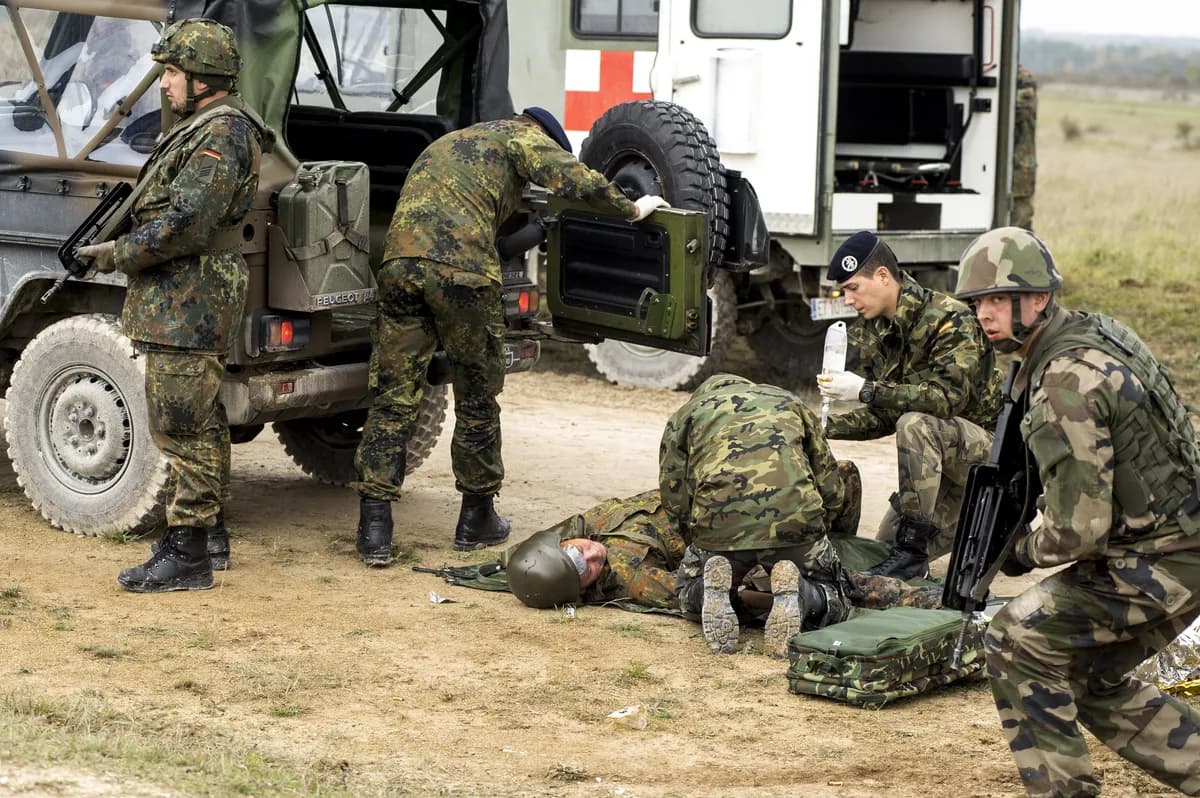
The incident occurred while the soldiers were participating in a training drill, according to officials. Both individuals sustained injuries and are currently receiving appropriate medical care, the US Army's 11th Airborne Division stated in a release. For privacy reasons, the Army is not releasing names or specific details about their conditions until next of kin have been notified.
The extent of the soldiers' injuries has not been disclosed, and their current medical status and prognosis remain unknown. An investigation into the Friday incident is ongoing, officials confirmed. Authorities have been unable to locate the bear after conducting a search.
Both individuals sustained injuries and are currently receiving appropriate medical care. For privacy reasons, we are not releasing names or specific details about their conditions until next of kin has been notified.
The specific location within Alaska where the attack occurred has not been released, and it is unclear whether the bear was a mother with cubs, which could explain a defensive response. The exact time of day when the attack happened is also not known. Both soldiers carried and deployed bear spray during the exercise, CBS News reported, citing a statement.
Regional Supervisor Cyndi Wardlow of the Alaska Department of Fish and Game said it was possible the bear spray saved the soldiers' lives. In an official statement, Wardlow expressed hope for a full and quick recovery for the individuals, adding that the department will continue investigating to increase public safety around wildlife in Alaska. The Alaska Department of Fish and Game assessed that the attack was likely defensive by a bear that had recently emerged from winter hibernation.
We hope both individuals have a full and quick recovery, and our thoughts are with them during this time. ADF&G will continue investigating the circumstances that led to the attack and try to learn everything we can about what happened to increase public safety around wildlife in Alaska. In this case, having bear spray with them in the field may have saved their lives.
This context suggests the animal may have been more aggressive due to seasonal behavior. The incident highlights the risks of military training in bear-populated areas, though such attacks are rare. Officials emphasized the importance of carrying bear spray as a precautionary measure in wilderness settings.
Joint Base Elmendorf-Richardson, located in Anchorage, is a key installation for US military operations in Alaska. The 11th Airborne Division, to which the soldiers belong, is involved in various training exercises across the state. The Alaska Department of Fish and Game regularly monitors wildlife interactions and provides safety guidelines to prevent conflicts.
This attack underscores the ongoing challenges of balancing military activities with wildlife conservation in remote regions. Authorities have not indicated any plans to euthanize the bear if found, focusing instead on understanding the circumstances. The investigation aims to gather details that could inform future safety protocols for both military personnel and civilians.
As the inquiry proceeds, updates on the soldiers' conditions may be provided once privacy concerns are addressed. The incident serves as a reminder of the unpredictable nature of wildlife encounters in Alaska's vast wilderness.