

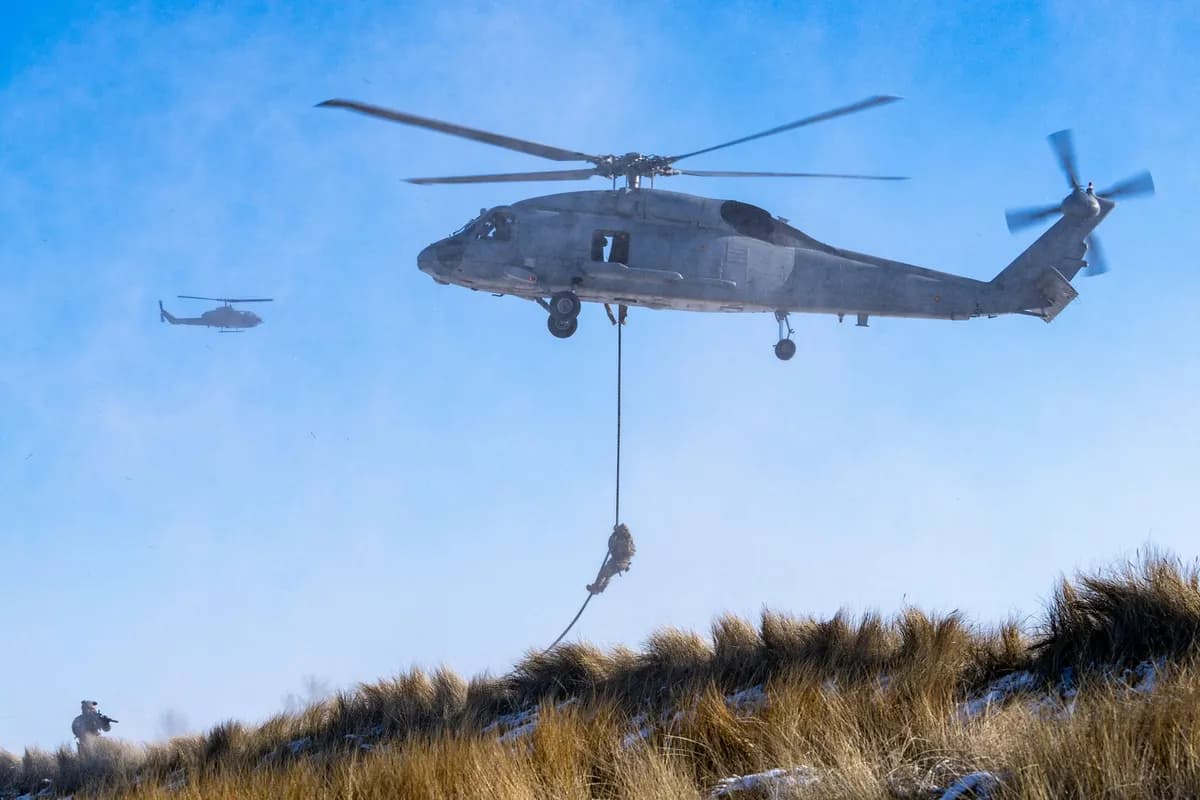
The potential operation would aim to capture approximately 450 kilograms of enriched uranium stored at nuclear sites across Iran, including about 400 kilograms enriched to 60% purity. According to multiple reports, this quantity could be sufficient for up to 10 nuclear warheads if further enriched to weapons-grade levels. The mission represents one of the most audacious military proposals of Trump's presidency, directly targeting Iran's nuclear capabilities. However, major media reports indicate Trump has not made a final decision on the uranium seizure operation, and the proposal remains under review by administration officials.
Military experts warn the operation would be exceptionally complex and dangerous, potentially requiring days to a week to complete with troops exposed to Iranian air defenses and drone systems. According to www.wired.com, Spencer Faragasso described a ground operation using special forces supported by a larger force as extremely risky and ultimately infeasible. Retired General Joseph Votel, former commander of U.S. Central Command and U.S. Special Operations Command, emphasized the operational challenges, stating that this is not a quick in-and-out kind of deal. According to www.wired.com, Jonathan Hackett described how any ground operation targeting nuclear sites would likely involve simultaneous actions at up to 10 locations across Iran, including enrichment facilities, research reactors, and mining sites.
I personally think a ground operation using special forces supported by a larger force is extremely, extremely risky and ultimately infeasible.
Iran's nuclear activities have proceeded without international oversight for months, with the country refusing to allow UN inspections at damaged nuclear facilities including Fordow, Natanz, and Esfahan since last summer's conflict. This lack of transparency has heightened concerns about Iran's nuclear progress and the security of its enriched uranium stockpiles. Preventing Iran from acquiring a nuclear weapon has been one of President Trump's declared war goals, according to the Trump administration. The administration has framed the uranium seizure plan as a preventive measure against nuclear proliferation, though the exact current locations and security status of Iran's enriched uranium stockpiles remain uncertain.
Beyond the uranium seizure proposal, Trump is considering broader military actions including seizing Kharg Island, Iran's primary oil export hub in the Persian Gulf. A significant US troop buildup is underway in the Middle East, with over 50,000 troops currently positioned there according to multiple reports. Research indicates the Pentagon has imminent plans to deploy 3,000 brigade combat troops from the Army's 82nd Airborne Division to the Middle East, though the full scope and objectives of this troop buildup beyond potential uranium seizure or Kharg Island operations remain unclear. Trump has publicly expressed interest in controlling Iran's oil resources, stating in a press conference that he would prefer to take Iran's oil but some people in the US oppose it.
As many as 10 locations could be targeted: the Isfahan, Arak, and Darkhovin research reactors; the Natanz, Fordow, and Parchin enrichment facilities; the Saghand, Chine, and Yazd mines; and the Bushehr power plant.
The military situation has already seen direct confrontation, with an F-15E Strike Eagle carrying two crew members shot down by Iranian forces on April 3 according to multiple reports. One pilot was rescued seven hours after the incident, while the other was saved in a high-stakes extraction late Saturday evening. These incidents highlight the ongoing hostilities between US and Iranian forces in the region. Trump has denied that Israel influenced his decision to engage with Iran, attributing his stance to the October 7 attacks and his long-standing opposition to Iranian nuclear weapons.
Diplomatic efforts have proceeded alongside military planning, with Trump urging US officials to pressure Iran to hand over uranium voluntarily as a condition for ending the war according to multiple reports. However, research indicates Iran's government has rejected Trump's 15-point plan to end the conflict. Secretary of State Marco Rubio emphasized the potential need for direct action, stating in a public speech that people will have to go and get it. White House press secretary Karoline Leavitt warned that the president is prepared to unleash hell in Iran if a peace deal is not reached. Whether Iran is secretly interested in further peace talks despite public claims of having 'no plans' for them remains unknown.
The other two enrichment facilities may also have 60 percent highly enriched uranium, and that the power plant and all three research reactors may have 20 percent enriched uranium.
As an alternative to military action, Trump is considering a diplomatic deal that would allow Iran to resume uranium enrichment after a suspension of 10 years, according to multiple reports. This proposal represents a potential compromise that could address nuclear concerns while avoiding direct military confrontation. However, Trump has expressed skepticism about media coverage of his administration's deliberations and optimism about potential regime change in Iran.
Significant uncertainties surround the uranium seizure plan, including whether it would be conducted solely by the US, jointly with Israel, or involve other partners. The specific timeline or conditions under which Trump would approve the uranium seizure mission also remain undetermined. According to www.wired.com, Jonathan Hackett described how eight of the ten potential target sites are above ground and vulnerable to attack, with the exception of Isfahan and a relatively new enrichment facility known as 'Pickaxe Mountain.' Trump himself has offered contradictory statements about the plan's priority, telling reporters it is not a current focus but something that could be done later. This discrepancy between reported internal deliberations and Trump's public statements leaves uncertainty about the immediacy and priority of the uranium seizure plan.
Eight of the 10 sites—with the exception of Isfahan, which is likely intact underground, and 'Pickaxe Mountain,' a relatively new enrichment facility—are above ground and vulnerable to attack.