

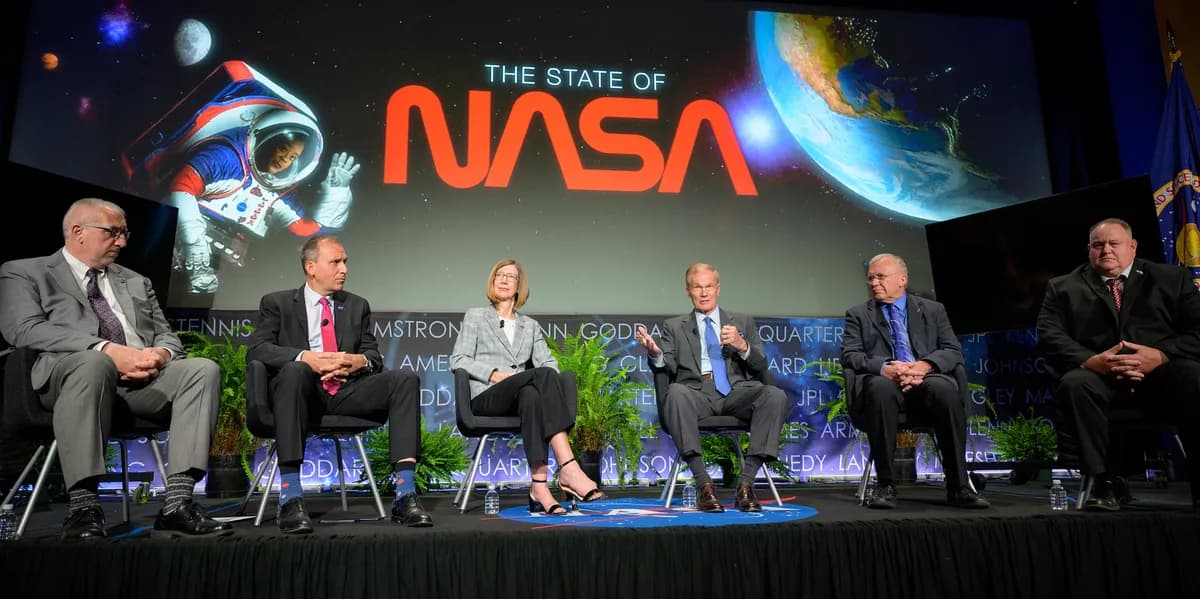
According to The Planetary Society, the White House budget request would slash NASA's science budget by 46 percent from 2026 levels, reducing overall NASA funding by 23 percent. The proposed cuts would cancel more than 50 science missions, including a dozen from NASA's astrophysics team and the Mars Sample Return mission, which was already canceled in 2026. That mission aimed to bring rock samples from Mars back to Earth, some containing the clearest signs of life found there, and NASA said it would help with future Artemis missions and identify risks and opportunities.
Meanwhile, NASA has completed the Nancy Grace Roman Space Telescope, which major media reports say will study 100,000 exoplanets, hundreds of millions of galaxies, billions of stars, and rare objects. The telescope has a field of view at least 100 times larger than the Hubble Space Telescope and can block out starlight to see exoplanets that could sustain life. It will operate 930,000 miles from Earth and could launch as soon as September, months ahead of the May 2027 schedule, while remaining under its $4.3 billion budget.
The budget invests more heavily in the Artemis program, aiming to land astronauts on the moon by 2028. President Donald Trump has made Artemis part of his pledge to 'ensure space superiority.' However, a recent report from NASA's Office of Inspector General questioned the proposed Artemis timeline, though NASA says it remains confident the timeline is on track. The Lunar Reconnaissance Orbiter has mapped the moon's surface and measured its environment since 2009, supporting lunar exploration.
It remains unclear whether Congress will approve the proposed cuts, and the exact impact on the Roman Telescope's operations and other specific missions beyond those named has not been detailed.