

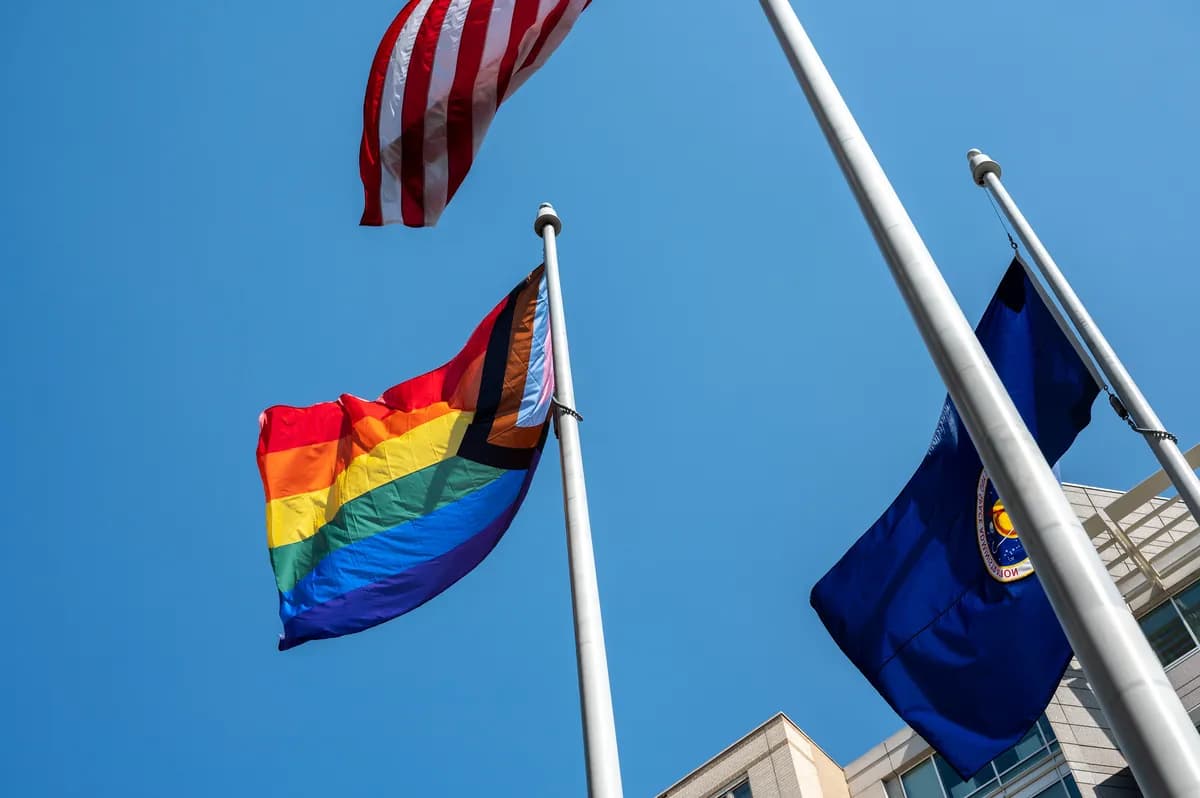
Trans+ History Week, an annual celebration of transgender, non-binary, gender-diverse, and intersex history, will take place from May 4 to May 10, 2026. The event aims to honour often overlooked histories, with a focus on community-led education and empowerment.
Trans+ History Week is a QueerAF launchpad project and an independent Trans+ led community interest company (CIC) that commissions content, hosts exhibitions and events, and operates with a small staff and volunteers. According to its published reports, QueerAF, a not-for-profit publisher, runs the official content and mentoring for the week and works with international partners. In its first year, as documented by the organisation, QueerAF fiscally sponsored the initiative, which was established to run as a Trans+ led project.
Trans+ history runs deep, and it runs through everything. In calm waters and rough tides, Trans+ communities have always found a way - and we will keep finding it: fighting for our dignity, our rights, our community, and our right to simply exist.
QueerAF describes itself as a not-for-profit publisher that reinvests all revenue into its mission and mentoring. The organisation’s biggest source of funding comes from its readers, and its newsletters are ad-free, according to its public statements. Membership costs approximately the price of a posh coffee per month, the publisher has stated.
Multiple major media outlets reported that Trans+ History Week has raised more than £100,000. The initiative, alongside QueerAF, has invested in over 100 trans creatives, including writers, illustrators, audio producers, musicians, photographers, speakers, journalists, poets and comedians, according to those reports. This investment has supported the creation of a wide range of media, from podcast series exploring trans histories to live performances and written anthologies, according to the organisers. However, separate research indicates that over 60 trans creative talents have been paid, mentored, and provided with equipment since the launch.
Trans+ History Week is about telling that story, on our own terms – that matters more now than ever. In the face of erasure, Trans+ people have had to discover and claim our own history, making ourselves visible and refusing to disappear. I've been heartened to see tremendous allyship grow across sectors in response, as more and more people recognise the injustice our community is facing for what it is.
Trans+ History Week launched the 2026 edition of its workbook, a free toolkit for understanding trans history, according to information released to the press. The workbook is designed for running sessions or creating content about trans history, according to the organisation. According to the workbook, it is structured around four lessons: 'We’re more than Trans+', 'We’ve always been here', 'We can’t be erased', and 'We’re stronger together'. The workbook is freely downloadable, and organisers encourage its use in educational settings to spark conversations about trans history.
The creation of the workbook was led by Gray Burke-Stowe, according to details released with the workbook. The writers include Nisreen Fox, Kat Joplin, Ella Osho, and William Elisabeth Cuthbert, all contributors from QueerAF and Trans+ History Week alumni.
Having championed true representation of Trans+ people in advertising for years, I take a particular pleasure in being a part of bringing this new campaign, Reflections, to communities up and down the country.
According to the workbook, the first lesson, 'We’re more than Trans+', delves into historical figures like Charles Hamilton, who was labelled a ‘female husband’ in 1746, illustrating how gender variance has been recorded across centuries. The second lesson, 'We’ve always been here', explores pre-colonial trans identities, including the mudoko dako in Uganda, to show that gender diversity has long existed across cultures.
The workbook notes that 'We can’t be erased' reveals how transmasculine communities have flourished underground in Japan, underscoring their resilience. 'We’re stronger together' traces the enduring legacy of activist Miss Major, linking the resistance of trans women at Compton’s Cafeteria in the 1960s to the ongoing fight for trans liberation.
The UK enters this LGBT+ History Month marking a new historical milestone: The biggest backslide in Trans+ rights and safety ever in the UK. It’s been fuelled by cruel and dishonest rhetoric – but that rhetoric that crumbles in the face of facts and history, which show that we’ve always been here and always will be, overcoming resistance...
Trans+ History Day on 6 May marks the anniversary of the 1933 Nazi raid on the Institut für Sexualwissenschaft in Berlin, the world’s first trans+ clinic, where around 20,000 items were destroyed in the first Nazi book burning. Marty Davies, the founder of Trans+ History Week, published a piece about the raid on QueerAF, which helped inspire the creation of the week, according to accounts of the week's founding. Davies, who grew up during the era of Section 28, a controversial UK law that forbade the promotion of homosexuality in schools, told interviewers that the iconic photograph of the book burning was shown in history lessons, but its full queer and trans context was never discussed. It was only through personal research in later years that Davies discovered the truth, realizing the need for a dedicated week to reclaim trans history, according to interviews.
The Supreme Court, in the case For Women Scotland v The Scottish Ministers, defined ‘woman’ and ‘sex’ strictly in biological terms. The Equality and Human Rights Commission (EHRC) issued guidance on single-sex spaces that was later withdrawn following criticism from trans rights advocates, according to official records.
Reports in major media outlets indicate that MPs are set to examine the EHRC’s revised Code of Practice. Meanwhile, according to major media reports, a series of events across the UK for Trans+ History Week is kicking off, including educational workshops in schools and universities, community art projects, and a bold new awareness campaign spanning social media and public billboards, designed to shed light on trans heritage.
As legal battles continue, trans+ people and their supporters have intensified their fight, with activists organizing protests, launching legal challenges, and using platforms like Trans+ History Week to educate the public and push back against what they describe as a wave of anti-trans sentiment, according to major media reports.