

Swedish researchers discovered alarming concentrations of mercury in sediment traps during a test dredging operation at Norway's Borg harbor in late 2022. The levels surged during the dredging period, reaching some of the highest ever documented in Scandinavia, according to multiple research reports, which compared the contamination to that of Minamata Bay before its environmental disaster.
The sediment traps, deployed as part of ongoing monitoring at Tisler, Säcken, and Väderöarna, captured mercury levels far exceeding safety thresholds. Research data shows the highest concentrations were 1,210 milligrams per kilogram at Säcken and 720 mg/kg at Tisler, both near the Norway–Sweden border, while Väderöarna recorded 159 mg/kg. According to the researchers, these values are vastly above the Norwegian hazard class 5 limit for mercury, which begins at 1.45 mg/kg, marking an exceptionally severe contamination event.
Kystverket, the Norwegian Coastal Administration, carried out the test dredging from November 7 to 23, 2022, removing approximately 3,000 cubic meters of seabed material, according to project documentation. The operation faced challenging conditions, including high water flows of up to 1,300 cubic meters per second, regular ship traffic, and adverse weather, according to the same documentation. It also assessed three fields with different mass types, contamination profiles, and bucket configurations to prepare for a full-scale dredging, project documents show.
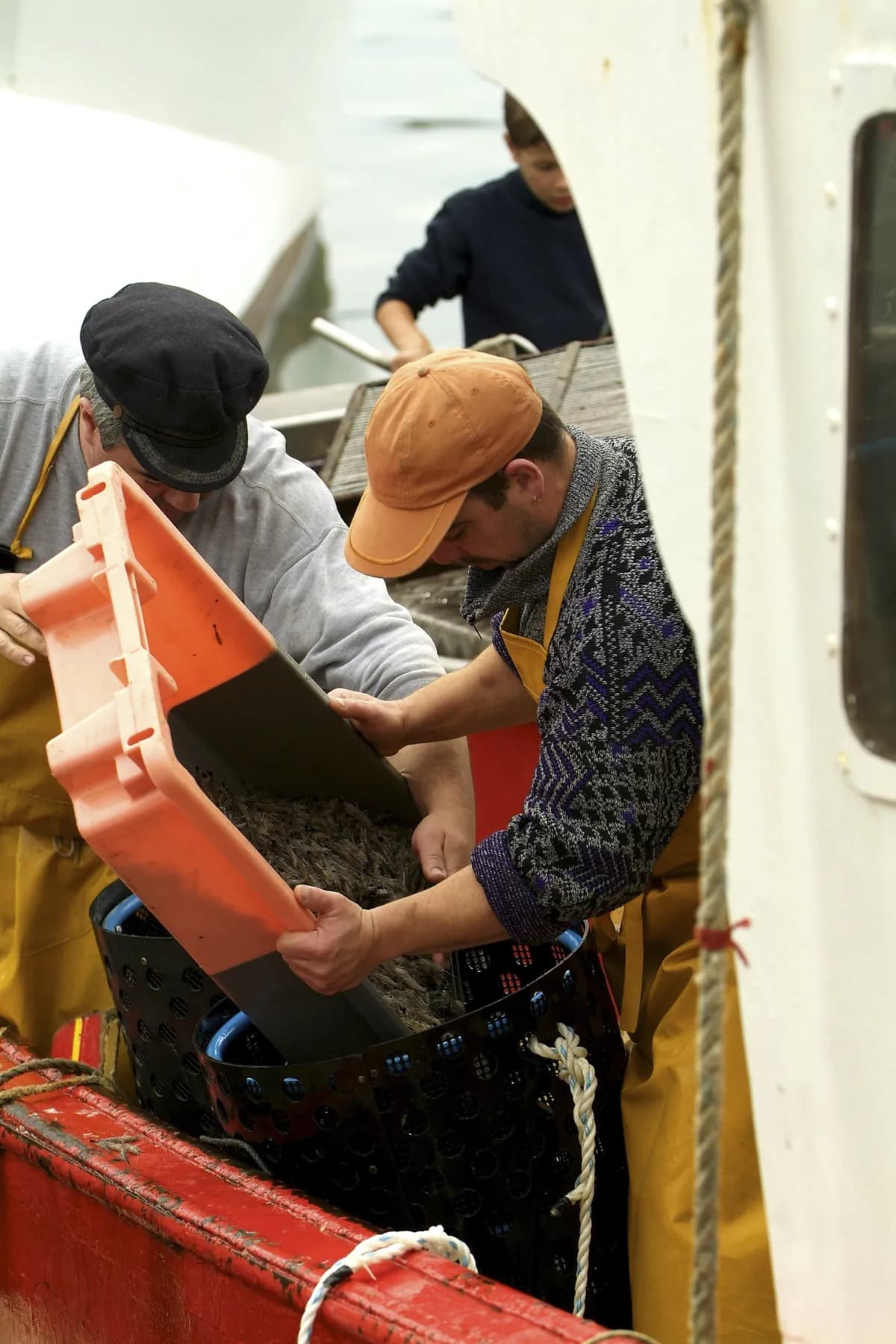
The dredging will cause releases of mercury, dioxins, and other toxins affecting fish and shrimp.
About 1,000 cubic meters of the dredged spoil was dumped at Svaleskjæra, a move opposed by Hvaler municipality, multiple sources confirm. According to project documentation, the test also included trial disposals at sea and on land, partly to validate Sintef's particle dispersion model. This disposal has drawn sharp criticism from local officials and environmentalists who suspect it may have contributed to the mercury spike.
Kystverket rejects any link between the test dredging and the mercury readings. The agency states that its own extensive sampling—over 600 samples with only three of 81 test-area samples exceeding the reporting limit and a maximum mercury concentration of 0.54 mg/kg—shows all mercury in class 1–2, indicating very low contamination. Kystverket also notes the fairway was last dredged in 1997, so the current project deals only with newer sediments, minimizing the relevance of historical pollution. Project data indicates a few samples had elevated copper and anthracene, though overall contamination was mostly class 1–3. This position starkly contradicts the Swedish researchers' findings, which document a dramatic mercury increase precisely during the dredging period, suggesting either a different source or flaws in Kystverket's sampling.
Truls Gulowsen, leader of Naturvernforbundet, believes the evidence firmly points to a link between the test dredging and the mercury spread. According to NRK Østfold, Gulowsen criticized Kystverket's assertion of full control, stating that if the mercury has not been found, it is because the authorities have not searched thoroughly enough. He also told NRK Østfold that the planned dredging cannot proceed under the current plan. Gulowsen advocates for alternatives such as suction dredging and on-land disposal, arguing that the current approach overlooks decades of industrial pollution in the river.
The sampling is insufficient and risks missing high levels of contaminants.
Naturvernforbundet maintains that Kystverket has ignored historical contaminants, including mercury from factories along the Glomma. The group has called for a fundamental revision of the dredging strategy to protect the marine ecosystem.
The mercury findings were quality-assured and reported to Swedish police as a gross environmental crime, but the case was dropped because the pollution source was traced to Norway, multiple sources report. The researchers stated that on July 11, 2024, they formally alerted the Norwegian Environment Agency to the high mercury levels, initiating a prolonged dispute over the data.
Initially, on August 9, 2024, the Norwegian Environment Agency exonerated the dredging, relying solely on an NGI assessment provided by Kystverket without its own investigation, according to the agency. However, researcher Halvor Torgersen told NRK that he contacted the Tjärnö laboratory in early 2025, learned of the data, and alerted the media. Following the publicity, Naturvernforbundet announced it had filed a police report in Norway; the case is now under investigation by the environmental crime unit Øko/miljøkriminalitet Sør.
Borregaard historically released 70 tons of mercury into Glomma, posing a risk of mercury in the food chain if sediments are disturbed.
Bellona has strongly criticized the Norwegian authorities' handling of the mercury alarm. The national park boards of Ytre Hvaler, Kosterhavet, and Færder said they jointly wrote to the Norwegian Environment Agency to express their concerns. On June 10, the agency stated it would reach out to Swedish authorities amid rising international pressure.
The full Borg harbor expansion is part of a 2018–2029 investment plan with a one-billion-kroner budget, according to Kystverket. Kystverket confirmed it first proposed dredging and sea disposal in 2015 before withdrawing the plan. For the current project, Kystverket said it hired Multikonsult to take sediment samples, but according to www.stromstadstidning.se, environmental activist Håkon Borch described the sampling as insufficient and likely to miss high contaminant levels. Borch also highlighted, as reported by the same source, that the Borregaard factory historically discharged 70 tons of mercury into Glomma, posing a risk to the food chain if sediments are disturbed.
The Glomma river has carried industrial mercury for decades, and experts fear that dredging could remobilize these toxins. According to www.stromstadstidning.se, local stakeholder Olav Wergeland Krog warned that digging would stir up sediment and worsen water quality. According to project documentation, the approach to Borg harbor is notoriously difficult due to shallow areas, strong currents, wind, and heavy sediment loads from the river, which complicates any dredging work.
Digging will stir up sediment and worsen water quality.
The project aims to restore the fairway to 1995 standards, including deepening Røsvikrenna to 12 meters and a 90-meter width, and creating a turning basin of 11 meters depth and 290 meters diameter, according to project documents. According to project documents, it will also install new navigation marks, implement environmental measures, and handle dredged material in accordance with permits. Kystverket stated that the project aims to improve safety, reduce grounding risks, increase capacity, and lower the chance of pollution from ship accidents.
Despite passing through studies, obtaining permits, and completing KS2 quality assurance, the project has not been halted, multiple reports confirm. Kystverket plans to open a competition for the construction contract in 2026, with work starting in 2027. This has infuriated environmental campaigners, who see it as a reckless gamble with sensitive marine habitats.
Lars Georgsson of the Swedish Society for Nature Conservation warned, according to www.stromstadstidning.se, that the dredging will release mercury, dioxins, and other toxins that will harm fish and shrimp in the area. Naturvernforbundet Østfold said it opposes the entire Borg harbor project, supporting only additional navigation lights. Naturvernforbundet also announced that it and Miljøpartiet sent a letter to the transportation minister voicing fears about toxic releases. The organization also confirmed it wrote to Sweden's climate minister to oppose the Iddefjorden fairway expansion, highlighting the cross-border environmental stakes.
Despite the mounting evidence and opposition, the actual source of the extreme mercury concentrations remains unconfirmed. It is not yet clear whether the test dredging directly caused the release or if other factors, such as historical industrial dumping, are to blame. Norwegian and Swedish authorities have not announced any joint investigation timeline, and the amount of mercury and other contaminants lying dormant in the riverbed is unknown.