

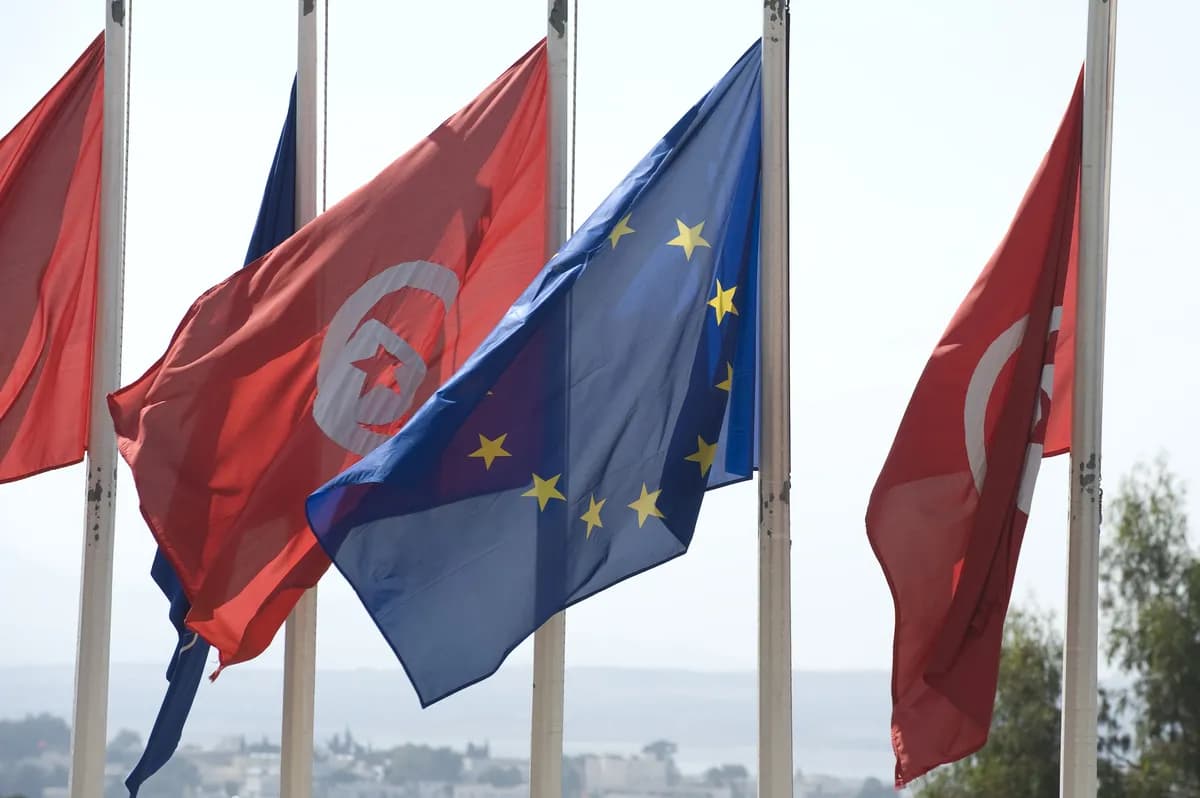
Multiple Swedish media outlets reported that the two senior officials boarded a government plane before dawn, keeping the mission confidential until after arrival. The government has framed the visit as an urgent response to a deteriorating security situation, with gang networks increasingly using remote tactics to commit murders and bombings. Officially, the trip focused on finalizing a cooperation agreement with Tunisian authorities to streamline legal assistance and law enforcement collaboration.
However, according to officials familiar with the matter, the deeper objective is to cripple the Foxtrot network, which has been linked to a surge of violence. The group, run by Rawa Majid, operates through a loose but lethal structure that extends into multiple countries, making international partnerships essential for Swedish police. Police suspect that at least six senior Foxtrot operatives are currently in Tunisia, where they continue to manage criminal operations in Sweden.
These individuals are considered key actors in the network and are believed to be directing violent acts from afar. These six are among the approximately 40 key actors identified by police, whose roles are considered critical to gang operations. Their presence in Tunisia underscores why Swedish authorities see the country as a critical focal point for counter-gang efforts.
Among those thought to be hiding in Tunisia is Mohamed Mohdhi, whom police assess as the network’s second-in-command. Mohdhi, a key figure in Foxtrot’s hierarchy, is suspected of orchestrating a series of violent incidents. His reported presence has intensified Sweden’s push for a productive partnership with Tunisian counterparts.
However, exactly where Mohdhi is located remains unconfirmed, and investigators are working to pinpoint his whereabouts. Mohdhi is specifically accused of ordering the Skogås murder, a high-profile case that shocked the nation. Moreover, SVT and police reports indicate he may have been behind the most recent wave of violence, including the alleged murders committed by a 15-year-old girl.
These accusations highlight the reach and ruthlessness of Foxtrot's leadership, even when operating from foreign soil. The Skogås murder, which drew widespread media attention, underscored how gang conflicts can erupt into lethal violence directed by figures thousands of kilometers away. Meanwhile, the five Foxtrot members already detained in Tunisia have been difficult to connect directly to most violent crimes in Sweden.
Police acknowledge that they can only definitively link the group to a single case, the Skogås murder, despite the existence of a 'Kill everyone' chat alias believed to be used by the network. This evidentiary gap complicates efforts to build strong extradition cases and underscores the challenges of investigating remote-controlled crime. The use of encrypted messaging and compartmentalized command structures often leaves minimal forensic trails, frustrating prosecutors.
Reports from Tunisia indicate that the legal process for the five detained individuals is moving toward a decision, though details remain scarce. Swedish authorities are closely monitoring the cases, hoping for outcomes that could enable extradition or prosecution. The timeline remains uncertain, but both nations are engaging diplomatically to advance the matter.
It is unknown whether Tunisian courts will find grounds to extradite based on the available evidence, and Swedish officials are bracing for a potentially lengthy process. The secret trip to Tunisia is part of a broader Swedish strategy to pursue gang leaders abroad through trust-building and direct cooperation. Police have intensified international outreach, visiting countries where gang figures are known to reside.
These efforts signal a shift from reactive domestic policing to proactive transnational engagement. The approach reflects a recognition that domestic measures alone cannot contain the threat, as gang leaders exploit lax enforcement in third countries. The department announced that Justice Minister Strömmer previously agreed on a memorandum of understanding with Iraq’s Interior Minister to deepen cooperation against organized crime.
Deputy Police Chief Hector’s earlier visit to Iraq helped facilitate the agreement, and a Foxtrot leader was subsequently extradited to Sweden after being held in Iraqi detention for two years. That case demonstrated the potential of formalized international cooperation in returning key figures to face justice. The extradition required sustained diplomatic and legal coordination, setting a precedent for future cases.
In another international operation, suspected gang leader Mikael Ahlström Tenezos was apprehended in Mexico and transferred to Sweden. His arrest illustrates the widening net of Swedish law enforcement, which now extends to Latin America. Authorities have not commented on the specific charges, but the case underscores the global footprint of Swedish gang networks.
The operation involved cooperation with Mexican authorities, though details of the capture have not been released. Looking ahead, the next mission will take Strömmer to Morocco, where police have compiled a list of prioritized key actors to hand over to local authorities. SVT reports that at least three men from criminal networks in western Sweden are known to be in Morocco, wanted for extensive drug offenses.
The trip aims to secure cooperation in locating and extraditing these high-value targets, mirroring the Tunisian push. However, the effectiveness of such trips remains to be seen, as gang leaders may relocate once they sense law enforcement pressure. Police estimates suggest that approximately 800 criminals operating from abroad participate in crimes within Sweden.
Of these, around 40 are designated as key actors—individuals whose removal would significantly disrupt gang operations. These figures underscore the scale of the challenge facing Swedish authorities, who must rely on foreign partners to rein them in. The difficulty of extraditing or prosecuting individuals in countries with different legal systems adds a layer of complexity to police work.
SVT’s own mapping identifies 45 different key actors spread across 12 countries, with clusters in Iraq, Turkey, Dubai, and Morocco. Police confirm that these nations are primary hubs from which gang leaders orchestrate domestic operations. The geographic concentration has informed Sweden’s diplomatic focus, prioritizing agreements with these key states.
The mapping was based on police data and open-source information, revealing how networks have evolved internationally. Beyond current efforts, police express interest in establishing cooperation with Tunisia and Lebanon as the gang problem metastasizes. The police’s situational picture estimates that 67,500 people are now active in or connected to criminal gangs—a staggering number that has fueled public outcry and political pressure.
The escalating toll of gang violence, including recent shootings and bombings, adds urgency to these negotiations. For Sweden, securing international agreements is no longer just a diplomatic goal but a matter of homeland security. The trip to Tunisia is thus seen as a test case for a broader strategy that could encompass multiple nations.