

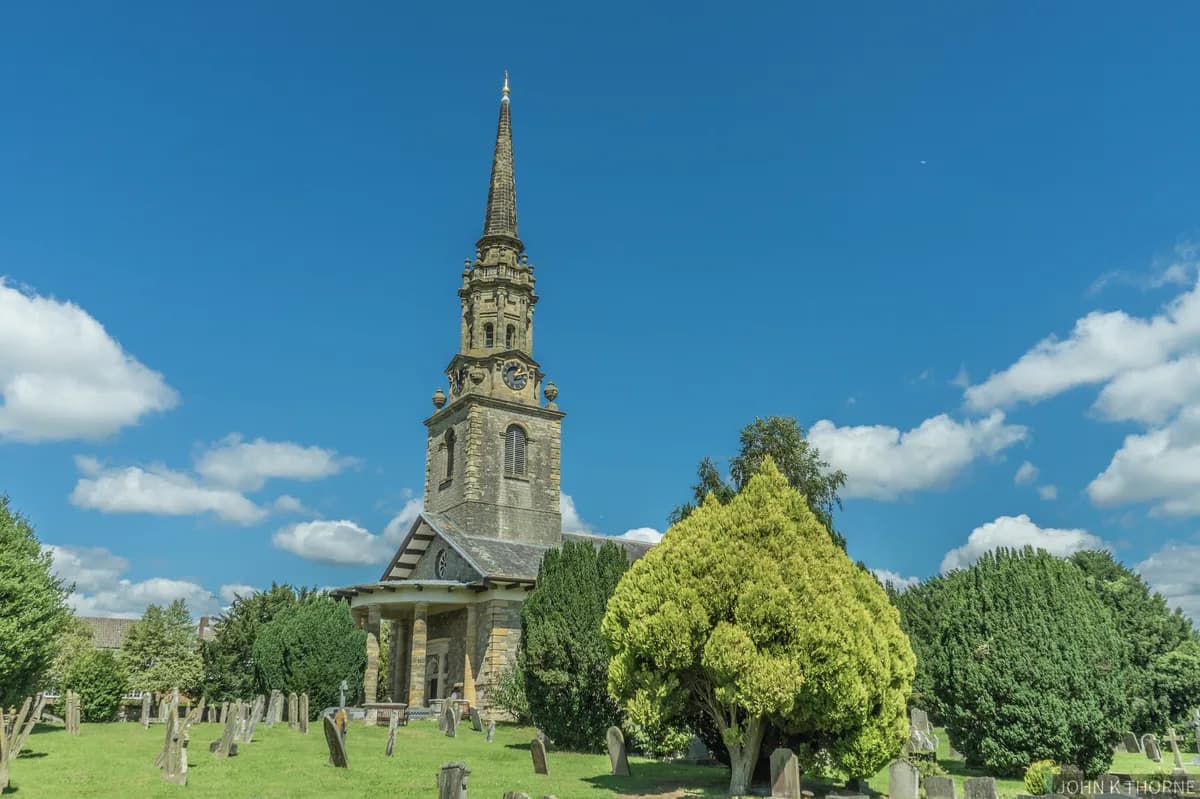
A white power musician was buried in Fors Church in Eskilstuna in December last year, with two of his songs played on the church organ during the funeral, including one with clear Nazi connections. The deceased was a prominent figure within the white power movement, and the funeral drew about 300 people to mourn his passing. The music pieces performed were 'No regrets' by Pitbullfarm and 'Nu drar stormavdelningen ut' by Pluton Svea, both with clear Nazi connections.
Unauthorized elements further complicated the funeral, as a statue depicting Santa Muerte was placed by the coffin without the prior knowledge of the priest, church musician, or funeral home. The statue was brought in only when the church was almost full, and the priest initially mistook it for a Mary statue, only to discover under the veil a skull from a Mexican death saint holding a scythe. This statue, described as a 'statue of a skull' with white power connections, was placed at the altar.
The priest describes the conversation with the relatives before the funeral as a completely normal mourning conversation.
Additional inappropriate actions occurred after the formal service ended, as music was played via mobile phone in the church without agreement with any of the officiants and was perceived as inappropriate by the staff. From the staff perspective, both the priest and the church musician state that the titles on the sheet music did not give a clear picture of the music's ideological connections. The church has engaged in self-criticism, admitting shortcomings and stating that the elements during the funeral are not 'compatible with the Swedish Church's faith, confession, and doctrine'.
The church criticizes both itself and the priest for the funeral being marked by white power elements. The diocese investigation revealed that the priest knew about the dead man's background and that the funeral could not be conducted in a 'safe and secure manner for all involved'. Despite this knowledge, the officiant did not take sufficient measures to ensure no part of the funeral service contained elements linked to the Nazi or white power movement.
The music requests were perceived as generally held and did not give clear warning signals about the songs' background, according to the priest.
Legal implications have emerged from the incident, as the performance of the music could meet the requirements for the crime of agitation against an ethnic group. In its conclusions, the diocese stated that this type of propaganda does not belong in the church context. The final assessment is that the parish did not take sufficient measures to prevent what happened and should have acted differently, and the diocese concludes in its investigation that the church leadership failed in preparations for the funeral of white power veteran Joakim Karlsson.
Responsibility assessment has shifted focus, as the diocese assesses that the priest who conducted the funeral should not be held responsible. Instead, the criticism is directed at the parish and pastorate leadership. Several unknowns remain regarding the specific failures in parish preparations and potential legal actions.
The priest says that unsanctioned music was played in the church after the postlude as a 'coup' that no one was aware of.
Further unknowns involve what disciplinary measures, if any, have been imposed on the parish or pastorate leadership as a result of the investigation, and how the mourners managed to bring in the Santa Muerte statue and play unsanctioned music without the knowledge of church staff. The implications of this event extend beyond the local parish, raising broader questions about security in religious spaces and the church's ability to prevent ideological misuse. The funeral's large attendance of 300 people highlighted the deceased's prominence within the white power movement, adding to the controversy.
The unauthorized Santa Muerte statue, brought in when the church was nearly full, underscores the challenges in monitoring such events. The priest's initial misidentification of the statue as a Mary figure reveals the deceptive nature of the intrusion. The mobile phone music played after the service, without officiant agreement, compounded the inappropriate elements.
The priest says the statue and what it represented worried him the most.
The staff's lack of awareness about the music's ideological connections, based on sheet music titles, points to gaps in vetting procedures. The church's admission that the funeral elements conflict with its doctrine emphasizes the severity of the breach. The diocese's finding that the priest knew the funeral could not be conducted safely but failed to act sufficiently raises accountability issues.
The potential legal classification of the music as agitation against an ethnic group adds a criminal dimension to the incident. The diocese's conclusion that propaganda has no place in the church context reinforces its stance against ideological misuse. The assessment that parish leadership failed in preparations shifts blame from the individual priest to organizational oversight.
The priest links Santa Muerte to the white power movement, saying it helps people get to heaven even if condemned by the Roman Catholic Church.
The unknowns about specific preparation failures and legal actions leave room for further investigation. Disciplinary measures for leadership and the entry of unauthorized elements remain unresolved, highlighting ongoing concerns. Broader implications for church security and prevention strategies suggest a need for systemic changes to avoid future incidents.
The priest says it was not the time to argue then, and neither he nor the funeral home wanted to quarrel with the widow in that moment.
The priest himself states that he did not know anything.