

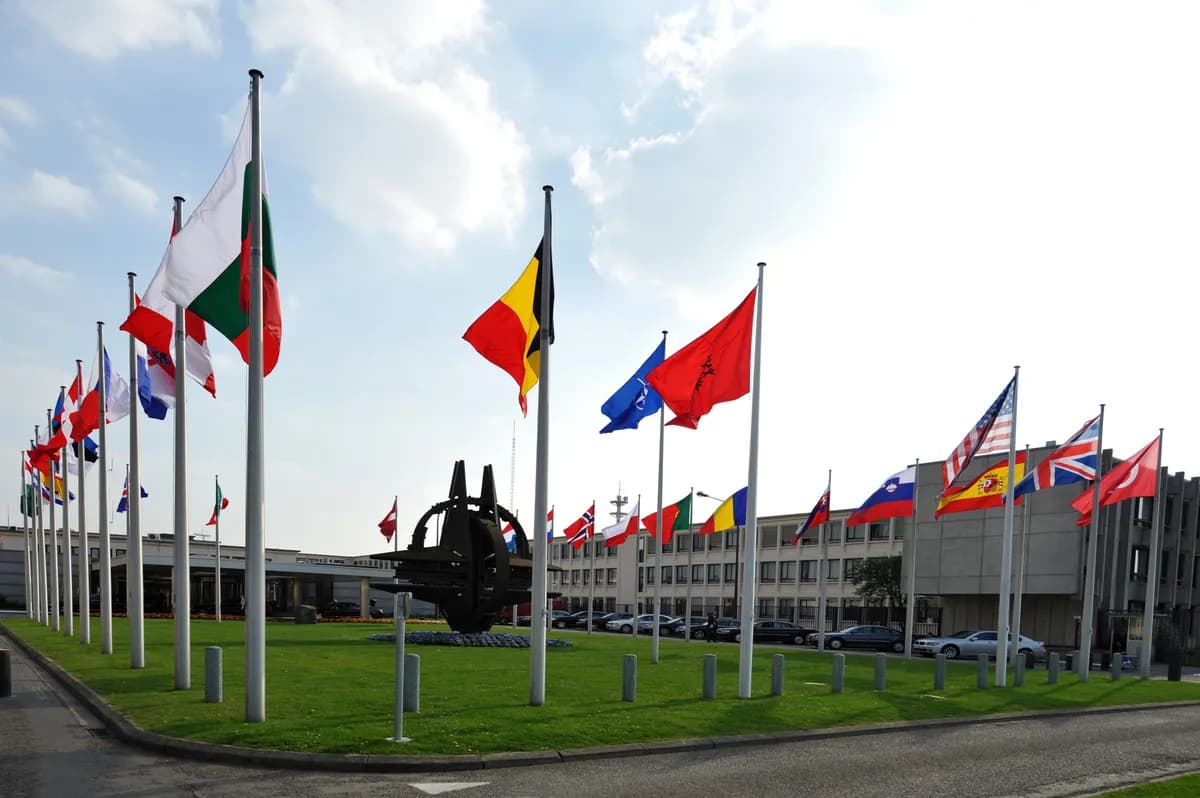
Sweden's flag was raised at NATO Headquarters and across the Alliance, marking its historic entry after over 200 years of neutrality, according to research from multiple sources. The country is now participating in NATO's Steadfast Defender exercise, the biggest since the Cold War, and has provided its largest aid package to Ukraine, covering ammunition, air defenses, and combat boats, the research indicates. Sweden spends more than 2% of GDP on defense, a commitment that underscores its rapid integration into the alliance's military framework. This move represents a profound shift in Nordic security policy, with Sweden's contributions aimed at strengthening collective defense capabilities in response to regional threats.
Finland's NATO integration brings a unique conscription system that is exceptional in Europe, though the costs of this army are not currently included in NATO defense spending calculations, according to major media reports. Minja Koskela, leader of Finland's Left Alliance, has demanded that these costs be factored in, arguing that other NATO countries count professional army costs, so Finland should count its conscription army costs. She stated that these costs belong in defense spending and should not be seen as gaming the system. Of Finland's planned 5% defense spending by 2035, 3.5% will be actual military expenses and the remaining 1.5% will cover defense-supporting expenses such as infrastructure and cybersecurity, major media reports note. Whether NATO will agree to include Finland's conscription army costs in its calculations remains uncertain, as does the specific timeline and conditions for reaching the 5% spending target.
Russia's full-scale invasion of Ukraine in February 2022 fundamentally altered Europe's security landscape, compelling Finland and Sweden to apply for NATO membership, research shows. This aggression was a strategic blunder that has weakened Russia economically and militarily, yet it served as a catalyst for Nordic NATO expansion. Sweden and Finland's accession has fundamentally altered Russia's security calculations in the Baltic and Nordic region, creating a new strategic reality that Moscow must now contend with. The invasion highlighted vulnerabilities in European defense, prompting a reevaluation of long-standing neutrality policies in the face of direct threats.
Other NATO countries can count the costs of their professional armies, so why on earth can't Finland count the costs of its praised and respected conscription army.
Russia's hybrid warfare poses an acute challenge to European societies, exploiting legal gray zones and democratic openness through methods that include disinformation campaigns, cyber attacks, sabotage, instrumentalized migration, GPS jamming, and assassination plots, according to research. These tactics target the foundational elements of stability in the region, requiring coordinated responses to mitigate their impact. Nordic-Baltic regional coordination is crucial for countering Russian hybrid aggression, as isolated efforts may prove insufficient against such multifaceted threats. The effectiveness of this coordination in practice remains an open question, as nations work to harmonize their defenses against evolving asymmetric strategies.
Recent Russian provocations have escalated tensions in Northern Europe, with Finnish authorities seizing the tanker Eagle S in December 2024 on suspicion of damaging undersea cables linking Finland and Estonia, research indicates. Russia has responded to such detentions by offering military protection, such as naval escorts and air support, signaling a willingness to assert its interests aggressively. In May 2025, Russia flew an Su-35 fighter jet past the tanker Jaguar, briefly entering Estonian airspace and prompting Portuguese fighter jets to scramble, according to research. These incidents underscore the high risk of inadvertent escalation in the Baltic Sea region, where close encounters between NATO and Russian forces are becoming more frequent.
Sweden has joined NATO, and an armed attack against Sweden cannot be ruled out, leading to comprehensive civil defense preparations, research shows. The Swedish government commissioned a brochure titled 'In case of crisis or war' to advise the population on preparedness, and the country has a total defence obligation that requires most people to contribute in the event of war. The Riksdag and government want everyone to be self-sufficient for at least a week in a crisis or war, though how this obligation will be implemented and what specific contributions will be required from the population are still being defined. These measures reflect a broader shift toward societal resilience in anticipation of potential conflicts.
I don't understand how it could be seen as 'gaming the system'. Everyone understands that the costs of Finland's army belong in defense spending.
European NATO members believe military investments are the only viable means of security, fearing Russia could attack the alliance if it wins in Ukraine, according to research. This perspective has driven increased defense spending and strategic planning across the continent, with a focus on deterring further aggression. Inadvertent escalation is a high risk in Northern Europe, with close encounters between NATO and Russian forces in the Baltic Sea region highlighting the precarious nature of current tensions. The alliance's response to these challenges will shape its ability to maintain stability in the face of persistent threats.
Before NATO expansion, Finland and Sweden were previously regarded by Moscow as 'virtual' NATO allies due to close partnership and interoperability, research indicates. Both countries signed host nation support agreements with NATO and obtained Enhanced Opportunity Partner status in 2014, laying the groundwork for their eventual membership. This pre-existing cooperation meant that their formal accession was a logical step rather than a sudden shift, though it has nonetheless provoked strong reactions from Russia. The historical context underscores the gradual erosion of neutrality in favor of deeper integration with Western security structures.
Potential future Russian aggression scenarios in Northern Europe include Moscow seeking victories elsewhere if Putin cannot win a clear victory in Ukraine, with a clear victory potentially emboldening further aggression, research suggests. The lowest risk and most likely option for Moscow is Russian forces occupying Norway’s Svalbard archipelago, though other targets could include the Åland islands, eastern Estonia, Gotland, and a land bridge to Kaliningrad. Russia may rearm its military post-Ukraine war to pursue imperial ambitions and test NATO's resolve in Article 5 scenarios, though the current status of its military reconstitution and specific plans for future aggression remain uncertain. These possibilities highlight the need for continued vigilance and preparedness among NATO members.
Russia remains a formidable adversary with the world's largest nuclear arsenal and is reconstituting its forces for future contingencies, according to research. This enduring military capability means that despite economic and strategic setbacks in Ukraine, Moscow retains significant power to challenge NATO in the long term. The reconstitution efforts focus on rebuilding and modernizing forces for potential conflicts, though details on the pace and scope of these initiatives are not fully disclosed. As NATO integrates new members like Sweden and Finland, the alliance must balance deterrence with diplomacy to manage risks in a volatile security environment.