

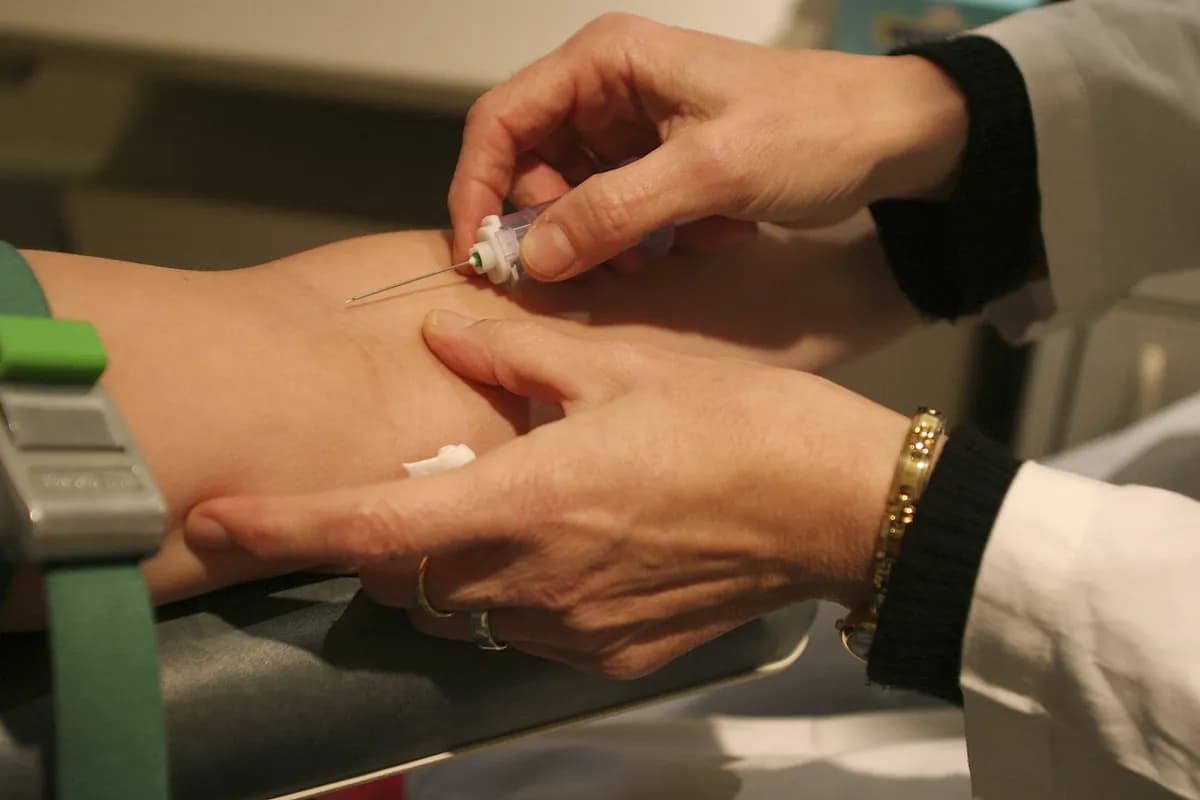
NAT, which stands for nucleic acid testing, offers higher precision for detecting infectious agents in blood compared to older methods, according to official sources. Sweden's delayed implementation has complicated cross-border partnerships, but the new system is expected to make it safer to share Swedish blood within NATO alliances. A pilot project is underway, with Region Skåne currently the only region conducting NAT and having switched to updated waiting period regulations.
Every evening, a blue box containing blood from Halland is transported to Skåne for NAT testing, as part of a collaboration that includes regions Halland, Blekinge, and Kronoberg, allowing Halland to implement new rules this autumn. All regions must implement NAT testing before August 2027, when the EU's new human material regulation takes effect, with the Swedish National Board of Health and Welfare having updated regulations for blood donation with new waiting periods for regions adopting NAT. Several groups will get shorter waiting times due to NAT, but for a large group the waiting time will become longer, though the specific groups and exact new waiting periods have not been detailed.
We are very pleased with the collaboration during the time we have been doing it already.
According to SVT Halland, Ulrika Greczula expressed satisfaction with the collaboration. Before 2010, a man who had sex with another man could never donate blood; today, they must abstain from sex for six months, regardless of being in a long-term monogamous relationship. With NAT, tests become safer, and therefore rules for waiting periods will change, allowing everyone to donate blood on equal terms regardless of sexual orientation, though how this will specifically affect eligibility for men who have sex with men remains unclear.
The timeline for other regions beyond Halland, Blekinge, and Kronoberg to implement NAT, as well as the technical or logistical challenges that made Sweden the last EU country to adopt it, are not yet specified.