

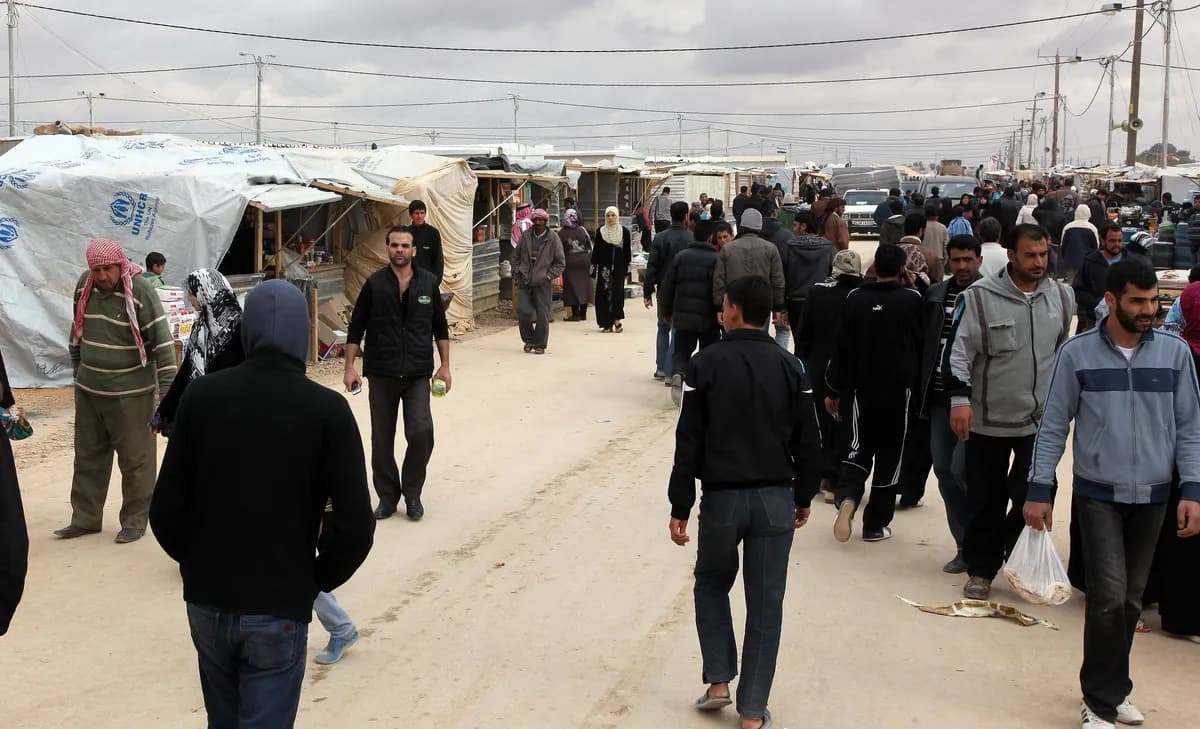
Hawa is one of more than 900,000 Sudanese refugees living in a camp in eastern Chad, part of a total of over 1.3 million who have arrived since fighting broke out between the Sudanese Armed Forces and the RSF in April 2023. Most families crossing into Chad are women and children, comprising 80-90% of arrivals, because some men stayed to tend crops, some have gone to war, and some have been murdered, according to Dermot Hegarty, NRC's country director in Chad. The international community is cutting the money that keeps these refugees alive, with UNHCR and WFP issuing a joint warning that assistance to more than a million people faces drastic cuts unless a $428 million funding gap is filled. UNHCR can currently help only four in every ten refugees, while WFP has already halved food rations and may be forced to cut them again.
Living conditions in Chad are dire, with refugees in Ennedi Est province surviving on less than half the WHO minimum daily water requirement. Water is trucked to transit camps, with families queuing for hours to collect a few litres, sometimes four per person per day against a WHO minimum of 15. Shelters are plastic sheeting on wooden poles, which will disintegrate in six months with no money for more durable options, and some 80,000 families have no shelter. A single teacher faces more than a hundred children in the largest classrooms, and seven in ten refugee families have reduced or skipped meals in the past month, according to a survey by the Norwegian Refugee Council. Temperatures in Chad are now at 43 degrees Celsius and will exceed 50 degrees Celsius over the coming months, according to Dermot Hegarty.
The things that will be visibly shocking are people sitting under trees trying to get shade. Most of the families crossing are women and children – between 80 and 90 per cent – because some men stayed to tend what they were growing, some have gone to war, some have been murdered.
Kenya is bearing an extraordinary share of the refugee burden, with 311,491 registered refugees in Turkana County alone, where Kakuma refugee camp faces problems including lack of school equipment, water access issues, and poor sewage system. 200 more people arrive each week and 400 births are recorded in the camp every month, according to Daniel, who oversees health operations for the Kenya Red Cross. Funding to Kenya Red Cross operations has fallen by 54%, causing resource and staff losses. Clinicians in the camp see between 110 and 200 patients a day, against a WHO recommendation of 50, and iron supplements for pregnant women have dried up, increasing risks at delivery.
Individual stories highlight the personal impacts, such as Joseph, a 14-year-old refugee in Kakuma camp who makes and sells items like bags and shoes from plastic bottle caps to afford school equipment because his school no longer distributes free supplies due to funding cuts. Samar fled Sudan to a refugee camp in Turkana, Kenya, arriving stricken with cholera and traveling with children not all her own.
Now we have the problem of the war in the Middle East. It's just made things worse.
Globally, several governments are cutting aid due to prioritizing domestic needs and increased military spending, affecting places like Kakuma refugee camp. Norway maintains its aid percentage of 1% of GNI but includes more varied expenses, with Norway and Ukraine receiving the most from the Norwegian aid budget by 2026. The UK has cut aid and signals further cuts in 2027 from 0.5% to 0.3% of GNI, while France is not on track to meet the 0.7% target, projected to be 0.38% in 2026. Germany has a decline from 0.68% in 2024 to 0.52% in 2026, with further cuts towards 2029, and aid cuts are also occurring in Belgium, Canada, South Korea, the Netherlands, Sweden, and Switzerland.
The war in Iran has made it harder for Abbas Awad to find medicines in his village outside Sudan's capital, with prices spiking and pharmacies out of stock. Aid groups say the Iran war has cut off vital shipping routes, disrupting their ability to get food and medicine to millions in need, with the standoff between the US and Iran essentially shutting down the Strait of Hormuz, impacting routes from hubs like Dubai. Transport costs have spiked with higher fuel and insurance rates, with the UN reporting up to a 20% cost increase and delays. The International Rescue Committee had about $130,000 worth of pharmaceuticals for Sudan stranded in Dubai for weeks, now being transported by road to Oman and then flown out.
Three years ago, two rival factions of Sudan's military opened fire on each other in Khartoum, leading to a humanitarian disaster with nearly one-in-three Sudanese driven from their homes. US President Donald Trump extended the fragile ceasefire with Iran, but aid groups worry little will change. Sudan is widely described as facing the world's worst humanitarian crisis, with for the roughly 5,000 people relying on a public health clinic in Qoz Nafisa, some must search at other clinics and spend their own money. Clinic staff have been struggling to meet demand since the war with Iran began at the end of February, and the last shipment from the IRC to the clinic was in December, with expected shipments in February and April not arriving, according to Dr. Amira Sidig.