

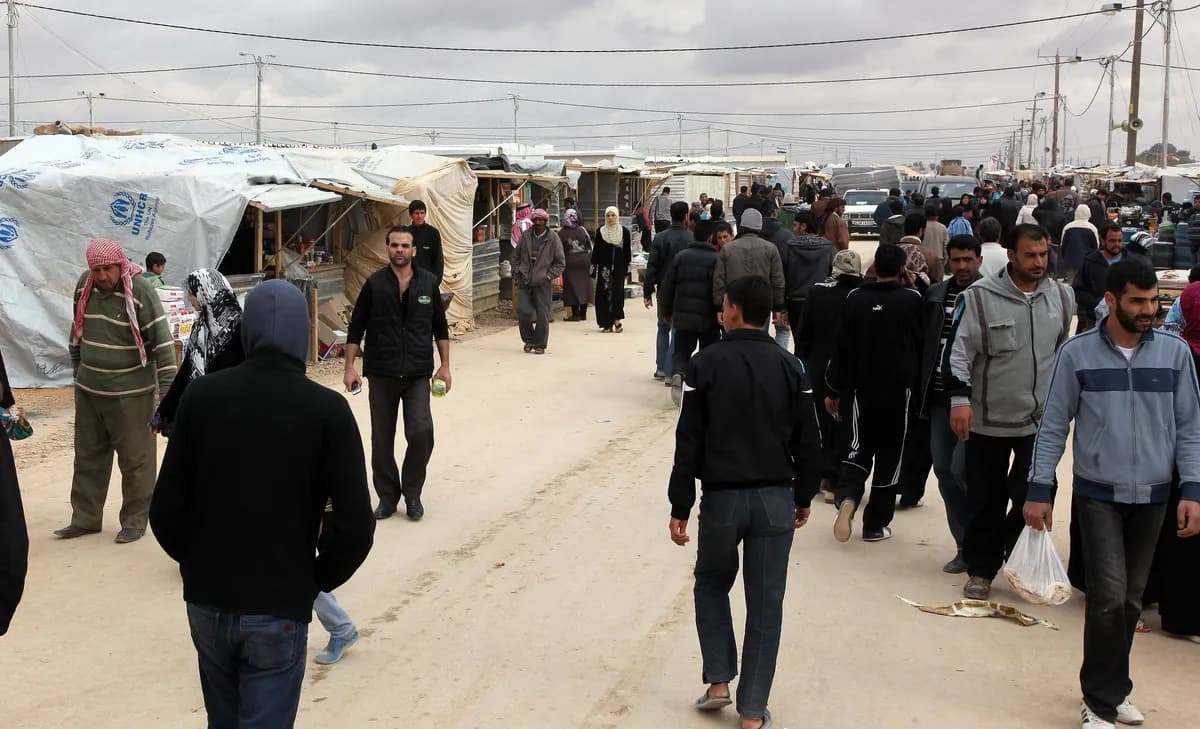
Hawa was gang-raped for more than a week by Rapid Support Forces fighters at a checkpoint on the road out of El Fasher in Sudan, according to multiple reports. Her release was paid for by friends sending money to her phone, and her brother was shot dead when he tried to intervene. She is one of more than 900,000 Sudanese refugees living in a camp in eastern Chad, part of a broader crisis where more than 1.3 million Sudanese refugees now reside in eastern Chad, with over 900,000 having arrived after fighting broke out between the Sudanese Armed Forces and the RSF in April 2023. Three years ago, two rival factions of Sudan's military opened fire on each other in Khartoum, leading to a humanitarian disaster with nearly one-in-three Sudanese driven from their homes.
The international community is cutting the money that keeps Sudanese refugees in Chad alive, multiple reports indicate. UNHCR and WFP issued a joint warning that assistance to more than a million people faces drastic cuts unless a $428 million funding gap is filled. UNHCR can currently help only four in every ten refugees, and WFP has already halved food rations and may be forced to cut them again.
Severe humanitarian conditions plague refugees in Chad. In Ennedi Est province, refugees are surviving on less than half the WHO minimum daily water requirement. A single teacher faces more than a hundred children in the largest classrooms in refugee camps, and some 80,000 families have no shelter. Seven in ten refugee families in Chad have reduced or skipped meals in the past month, according to a survey by the Norwegian Refugee Council. Temperatures in Chad are now at 43 degrees Celsius and will exceed 50 degrees Celsius over the coming months, according to Dermot Hegarty. Most families crossing into Chad are women and children, between 80 and 90 percent, Hegarty described to The Independent - World. Shelters are plastic sheeting on wooden poles, which will disintegrate in six months with no money for more durable options, he added. Water is trucked to transit camps, with families queuing for hours to collect a few litres, sometimes four per person per day against a WHO minimum of 15.
Several governments are cutting foreign aid due to prioritizing domestic needs and increased military spending, according to major media reports. The UK has cut aid and signals further cuts in 2027, from 0.5% to 0.3% of GNI. France is not on track to meet the 0.7% of GNI aid target, projected to reach 0.38% in 2026. Aid cuts are also occurring in Belgium, Canada, South Korea, the Netherlands, Sweden, and Switzerland.
In Kenya, the impact is felt in camps like Kakuma, which faces problems including reduced access to drinking water, poor sewage systems, new refugees from South Sudan, fewer medicines, lower healthcare capacity, cuts in psychosocial help, trauma treatment, child follow-up, and less food distribution, according to major media. Joseph, a 14-year-old refugee in Kakuma camp, makes and sells items like bags and shoes from plastic bottle caps to afford school equipment, according to reports. His school no longer distributes free school equipment due to funding cuts. UNHCR has overall responsibility in Kakuma camp and says it is necessary to prioritize the most acute needs.
Turkana County in Kenya hosts 311,491 registered refugees, with 200 more people arriving each week and 400 births recorded in the camp every month, according to Daniel. Funding to Kenya Red Cross operations has fallen by 54%, causing resource and staff losses. Clinicians in Turkana see between 110 and 200 patients a day, against a WHO recommendation of 50, Daniel told The Independent - World. Iron supplements for pregnant women in Turkana have dried up, increasing risks at delivery, he added. Samar fled Sudan to a refugee camp in Turkana, arriving stricken with cholera and traveling with children not all her own.
Critical unknowns remain, including what specific actions donors are taking to address the $428 million funding gap for UNHCR and WFP in Chad and how many refugees have died due to the lack of medical supplies and food cuts. The total number of refugees affected by aid cuts across all countries mentioned, including Sudan, Chad, and Kenya, has not been confirmed, and it is unclear what percentage of the cuts are directly attributable to increased military spending versus other domestic priorities. Plans by the Sudanese government or RSF to address the humanitarian crisis or allow aid access remain unanswered.