

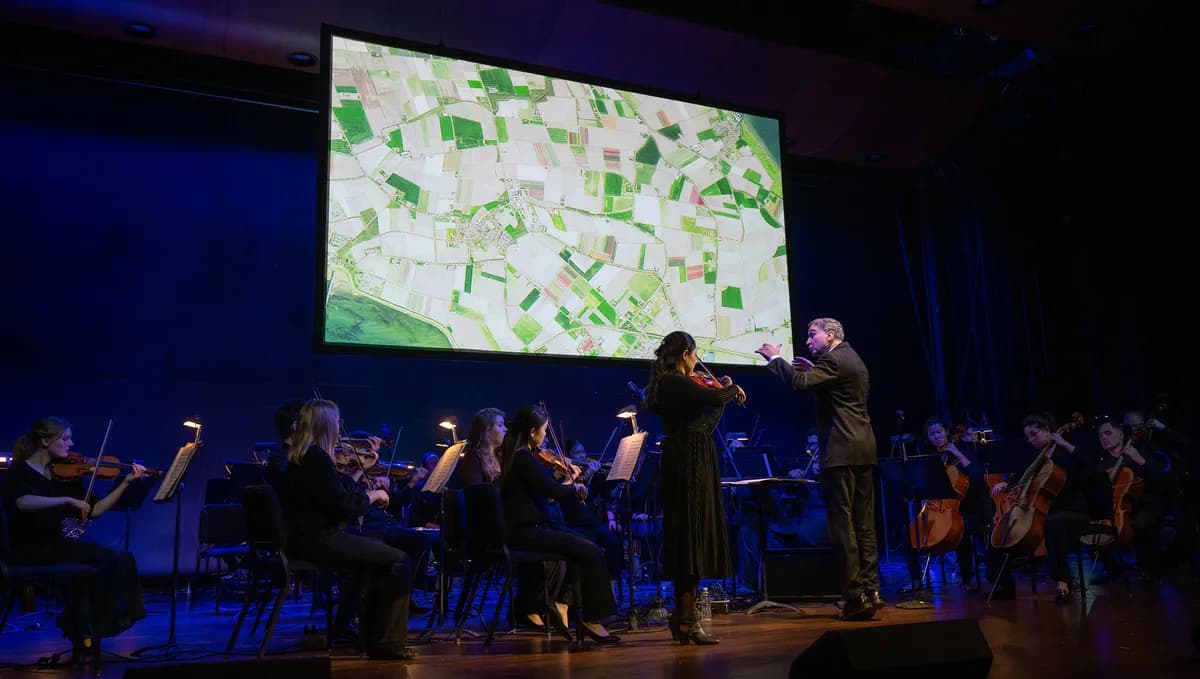
50 euros and the venue offering free Wi-Fi to attendees. According to The Independent - Main, Kyra Mulder, a 21-year-old occupational therapy student at the Amsterdam University of Applied Sciences, described the experience as calming and helpful for concentration, noting it was a new experience as she does not normally listen to classical music. Simon Reinink, the general director of the Concertgebouw, emphasized the initiative's role in engaging younger audiences; according to Euronews, he described it as one of many ways to welcome them to the inspiring environment, hoping it would lead to return visits, and according to The Independent - Main, he similarly framed it as a method to seduce younger audiences to discover the venue.
During a recent session, musicians played Johann Pachelbel's Canon in D, some Handel and Schubert, and movie music from Studio Ghibli films. Thijmen Broekman, a medical student, told Euronews that the quiet environment and music helped him concentrate without multitasking difficulties. Professor Bas Bloem, a neurologist at the Radboud University Medical Center in Nijmegen, explained the psychological benefits; according to Euronews, he described how background music can create a state of flow, balancing skills and challenges to enhance productivity, and he added that it is not a one-size-fits-all solution and may not be well-researched but can be soothing.
It's actually very calming and helping in concentrating on the work that we have to do, which is something that surprises me because normally I don't really listen to classical music, so that's a new experience for me.
The typical attendance numbers, frequency of sessions, specific success measures, expansion plans, and other methods to attract younger audiences remain unknown.
Well, it's one of the many ways to welcome younger audiences to the Concertgebouw, and it's such an inspiring place to study with great music in this wonderful, beautiful environment, and it's one of the ways to more or less seduce younger audiences to discover the Concertgebouw and hopefully they will be enthusiastic that it will come back.
It is one of ways to more or less seduce younger audiences to discover the Concertgebouw and hopefully they will be enthusiastic and ... they will come back.
I think the reason why music in the background can be so soothing almost is that it creates a state of flow.
Flow is this mysterious balance between your level of skills and being challenged, and you want to be in that sweet spot. You don't want to be overchallenged, you don't want to be underchallenged, and I think music in the background can help you to reach a state of flow, and everybody knows when you reach a state of flow, you can go on endlessly and be enormously productive.
I don't think it's difficult to multitask here because it's really quiet environment and nice quiet music so that helps me to concentrate and I'm not having any difficulties multitasking.