

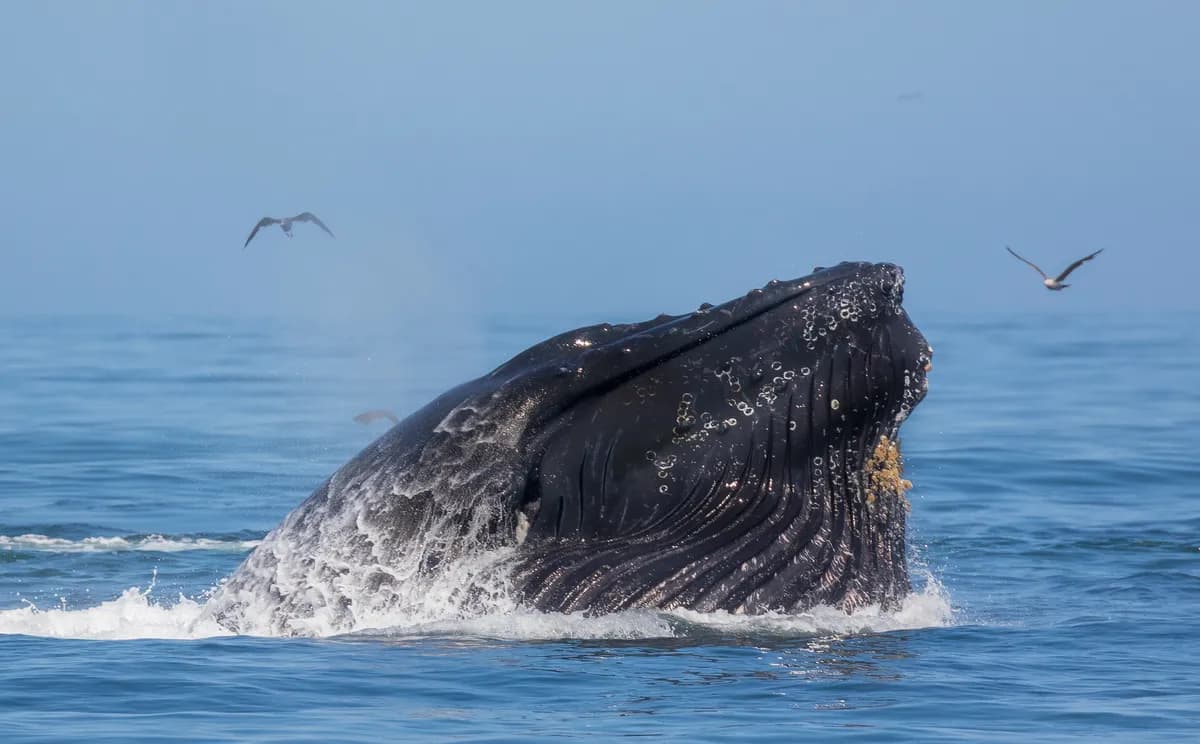
The whale has repeatedly stranded and freed itself over about a month, according to multiple reports. It is now stranded once more in the Kirchsee, a small bay on the island of Poel. The whale has repeatedly returned to shallow waters near the coast instead of swimming out to sea, complicating rescue efforts.
A key reason for the whale's fast decline is thought to be a fishing net caught in its jaw, weakening it and leading it to lose its sense of direction, multiple reports indicate. The whale should not be in the Baltic Sea because it has too little salt and is not deep enough for it to survive. It is thought the whale might have been lured into the Baltic Sea by shoals of herring.
Wounds have been detected on the whale's back, in addition to another infection on its skin. Attempts to save the whale were declared at an end at a press conference held by Environment Minister Till Backhaus, rescue workers, and scientists from the maritime museum in Stralsund almost two weeks ago. The local fire brigade is spraying the whale with sea water in an attempt to comfort it.
The scientific team is investigating whether it makes sense to play the whale recordings of its own songs underwater to mobilise it. The whale recently made some unusual noises on Saturday night. Experts said the whale was beyond saving.
The whale has been nicknamed Timmy by some locals, but experts refuse to use the nickname, saying attempts to anthropomorphise the whale are part of the problem. Environment Minister Till Backhaus believes there is no longer any realistic hope of saving the humpback whale. Experts brought in to help save the whale or ease its demise have faced death threats.
One leading humpback whale expert has stopped allowing her name to be quoted in the media because it has become dangerous to talk about humpback whales in Germany. The Ministry of the Environment in Schwerin has published a report on the assessment of the stranded humpback whale on the internet. It remains unclear how long it will take for the stranded humpback whale to die, with experts noting that whales can survive for months without food.
The exact condition and prognosis of the whale's injuries and infections have not been detailed publicly. What specific threats experts have faced, and from whom, is also unknown, though the danger has led to increased caution among researchers. Scientific findings from investigating the whale's unusual noises and playing recordings are still pending, with no results released yet.