

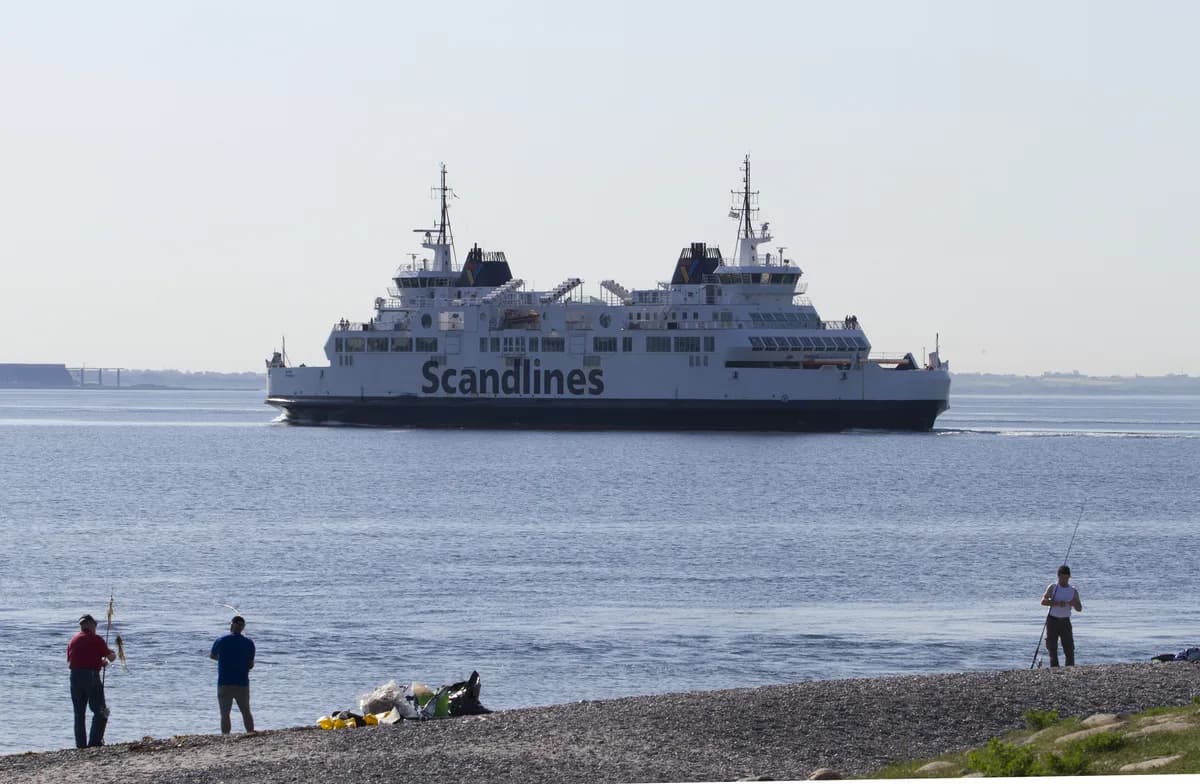
The vessel Stena Nautica will continue to operate the route until 30 April 2026, after which traffic will cease, according to multiple reports. The company’s Board of Directors has decided to discontinue the ferry route and to reach an agreement with Hallands Hamnar and Grenå Port to terminate the cooperation. Stena Line CEO Niclas Mårtensson attributed the closure to significant challenges in achieving profitability over a long period.
Strong competition from fixed bridge connections to and within Denmark was identified as a main reason for discontinuing the route. Challenging market conditions due to global uncertainty and a weak economic climate also contributed to the decision. Christina Bromander, Trade Director for Stena Line’s Denmark routes, said the company had worked hard and tried various measures to reverse the trend without success due to an insufficient customer base.
She explained that despite efforts, the customer base simply was not sufficient. Stena Line has operated the Halmstad–Grenaa route since 2020 with one vessel, Stena Nautica. The route was relocated from Varberg following new development plans for the Port of Varberg.
Approximately 120 people work on the route, both onboard and on land. Bromander stated that the ambition is to offer continued employment within Stena Line to as many affected employees as possible. se, Johan Live, Stena Line’s press manager, described efforts to retain staff, saying the company will do its best to ensure as many as possible can continue working within the company.
Customers impacted by the closure will be offered a good alternative on the Frederikshavn–Gothenburg route, Bromander added. Stena Line’s Swedish ferry network will continue to comprise six ferry routes and 12 vessels: Gothenburg–Frederikshavn, Gothenburg–Kiel, Trelleborg–Rostock, Karlskrona–Gdynia, Nynäshamn–Ventspils, and Umeå–Vaasa, the latter starting from February 2026. SVT Nyheter Halland reported that in 2023, Danish travelers on the Grenaa ferry increased by 25 percent compared to the previous year, suggesting recent traffic growth.
We will do our best to ensure that as many as possible can continue working within the company.
However, Hallandsposten reported that the last trip from Halmstad took place in April, a vague timeframe that conflicts with the confirmed cessation date of 30 April 2026. The discrepancy may stem from an incomplete report or reference to a different year. The exact financial losses that led to the decision have not been disclosed, and it remains unclear whether another operator will replace the service.
The impact on local economies and tourism in Halmstad and Grenaa is also uncertain. The closure marks the end of a route that was established in 2020 after relocating from Varberg due to port redevelopment plans. Stena Line has emphasized that the decision was difficult but necessary given the persistent lack of profitability.
The company noted that the route faced unique challenges, including the dominance of fixed links like the Øresund Bridge, which offer faster and often cheaper alternatives for both passengers and freight. Despite a 25 percent increase in Danish travelers in 2023, the overall customer base remained insufficient to sustain operations. The Stena Nautica, a ro-pax vessel with capacity for passengers and vehicles, has been the sole ship on the route, and its future deployment after April 2026 has not been announced.
The closure will affect approximately 120 employees, and Stena Line has pledged to prioritize their reassignment within the company. The Frederikshavn–Gothenburg route, which will serve as the primary alternative for affected customers, offers multiple daily departures and is part of Stena Line’s extensive Scandinavian network. The company’s remaining Swedish routes connect key ports in Sweden with Denmark, Germany, Poland, Latvia, and Finland, maintaining a strong presence in the region.
The decision to close the Halmstad–Grenaa route reflects broader industry trends where ferry operators face pressure from fixed infrastructure and economic headwinds. While the 2023 traffic increase suggested some recovery, it was not enough to offset long-term losses. The conflicting report about the last sailing in April may refer to a temporary suspension or a different year, but Stena Line has confirmed that operations will continue until the end of April 2026.
Local stakeholders in Halmstad and Grenaa have expressed concern about the economic impact, as the ferry service supported tourism and trade. However, no concrete plans for a replacement service have been announced. Stena Line’s focus remains on strengthening its profitable routes and adapting to changing market conditions.