

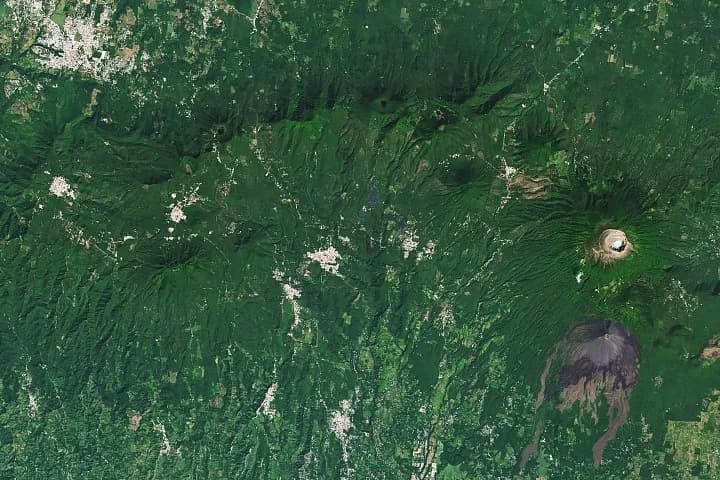
The Ahuachapán area features craters, recent lava flows, geysers and heated mineral pools, with a geothermal plant that by the early 1980s was generating 40 percent of the country's electricity, according to official sources. The 2025 steam blast is the latest volcanic-related event in a region shaped by the Central American Volcanic Arc, which stretches over 1,000 kilometers from Guatemala to Panama, officials added.
El Salvador's tallest volcano, Santa Ana, rises 2,381 meters above sea level and features crescent-shaped ridges around a hot, acidic crater lake. It remains active, with small to moderate explosive eruptions recorded since the 16th century; its most recent significant eruption, in 2005, launched a gas and ash column and sent lahars down its slopes, officials said. On Santa Ana's southern flank, Izalco volcano began forming in 1770 and grew into a steep-sided stratovolcano through frequent eruptions over the next two centuries. Its regular Strombolian eruptions and lava fountains earned it the nickname 'Lighthouse of the Pacific,' and its most recent activity occurred in 1966, according to official records.
The Apaneca Range, a line of forested, dimpled stratovolcano peaks with no recorded Holocene eruptions, shows persistent geothermal activity including fumaroles, hot springs and steam vents. A steam blast occurred near Laguna Verde volcano in the Apaneca Range in October 1990, officials said. The Ahuachapán Geothermal Power Plant, which has operated since 1975, leverages groundwater naturally heated to around 250 degrees Celsius and local fault systems, according to official data. Specific details on casualties or the current electricity production percentage were not disclosed.