

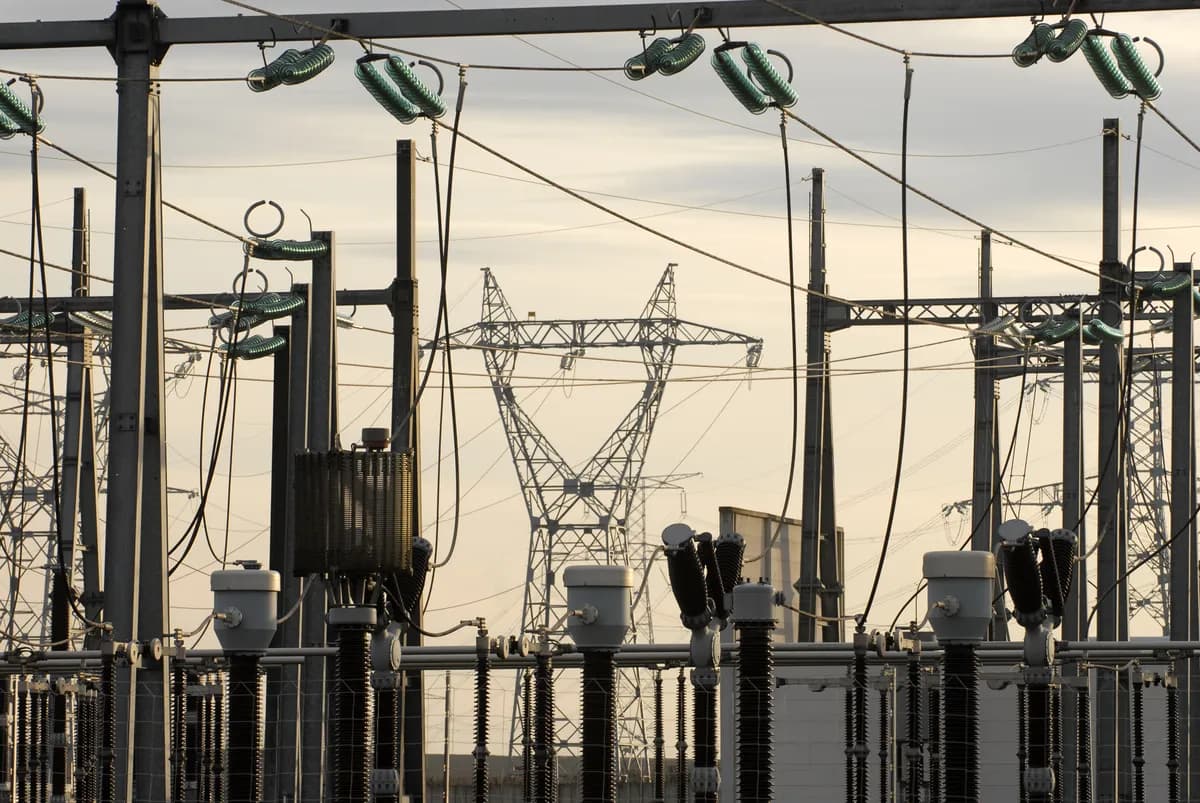
Statnett will no longer allocate capacity in the power grid for large industrial projects in Northern Norway, setting the limit at Svartisen in Nordland, according to multiple reports. The company has reduced the limit for normal power consumption in Eastern Finnmark from five to one megawatt. The new limit applies to the transmission grid stations Lakselv, Adamselv, Tana bru, and Varangerbotn. Nearly 30 industrial projects north of Svartisen that have requested more than 5 MW must wait, and the power stop also affects existing projects that want to scale up.
Statnett estimates that consumption in the region will increase by 60 percent over the next ten years, and by 330 MW in the next year alone, almost a full Melkøya facility. The company's analysis shows that the risk of power shortage and voltage collapse in the event of a fault is unacceptably high. According to NRK Nordland, Gunnar Løvås in Statnett said the limit is set due to supply security and that they cannot perform magic; they must adhere to physical laws. Anne Sofie Ravndal Risnes, director of regional plans at Statnett, said reducing the limit to 1 MW is a measure to ensure they can handle various incidents and maintain good power supply.
We and a united power industry are appalled by Statnett's decision.
Statnett is working to increase grid capacity, including building a new 420 kV power line from Skaidi to Lebesby and installing a control unit on the power connection to Finland. These measures could increase capacity by up to 100 MW, and with one measure in place, the current limit could be raised. However, the timeline for these upgrades remains unclear.
Projects that have already been allocated capacity in the power grid will retain it. Aker and Nscale are building one of Europe's largest data centers for AI use in Kvandal, Narvik, and have reserved 230 MW for the first phase. According to Stian Jenssen, Statnett's decision does not affect the first phase of the Kvandal data center, but the goal was to scale up.
We are a region where power is abundant. Now we are not allowed to use it. It is absolutely catastrophic.
County councilor for business in Nordland, Svein Eggesvik (Sp), believes the decision will have dramatic consequences and mean a complete stop for business development in the north. He said the power stop does not affect speculators but real jobs, businesses, and local communities in a vulnerable situation. Eggesvik added that for years, power has been sent out of the region without local value creation, and now the business community in the north gets the bill for the lack of national grid development. He also noted the unpredictable timeline, saying there is no idea how long it will last.
According to NRK Nordland, Elnar Remi Holmen, CEO of Salten Kraftsamband, described the decision as catastrophic, saying the region is flooded with power but not allowed to use it. Eirik Frantzen, CEO of Nordkraft, told NRK Nordland that the decision is one of the worst things Northern Norway has experienced in decades and that it puts a line through all northern area policy and development indefinitely. He added that they have never been concerned with their own profitability but with increasing consumption to create new industrial jobs, making the situation very serious and almost catastrophic.
It is outrageous. It is one of the worst things Northern Norway has experienced in many decades.
The new limit in Eastern Finnmark means Barents Nett must say no to several projects wanting to connect to the grid. According to NRK Troms og Finnmark, Jens Roald Betsi, CEO of Barents Nett, said 1 MW can run a normal hotel in Finnmark, but projects like charging stations, shore power, mineral industry, or land-based fish farming require more. He noted that Statnett says the limit is temporary, but grid development takes a long time, so the situation will not change in the short term. Wenche Pedersen (Ap), leader of the Eastern Finnmark Council, told NRK Troms og Finnmark that the situation is very serious and that many have warned about it for a long time.
The duration of the power consumption limits remains unknown, as does the timeline for the new 420 kV power line from Skaidi to Lebesby and the installation of the control unit on the power connection to Finland. It is also unclear how many jobs and investments are at risk due to the power stop, and which specific industrial projects are affected north of Svartisen and in Eastern Finnmark.
It is like putting a line through the entire northern area policy and through all development indefinitely.
We have never been concerned with our own profitability. We are concerned with increasing consumption so we can create new industrial jobs. So this is very, very serious and actually almost catastrophic.
We do that out of consideration for supply security in the area.
And we cannot conjure everything just by taking measures in the grid. It takes a long time to build out. So we must relate to the physical laws and that supply security is our core task.
One megawatt of power can be enough to run a normal hotel in Finnmark. But if you want to establish charging stations, have shore power for vessels, start mineral industry, have land-based fish farming, it usually requires capacity beyond one megawatt.
I note that they say it is temporary. I sincerely hope so. But I know that grid development takes an awfully long time. In other words, this is not a situation that will change in the short term.
When you reduce the possibility of getting access to power, it goes without saying that it is a very serious situation. One that many of us have warned against for a long time.