

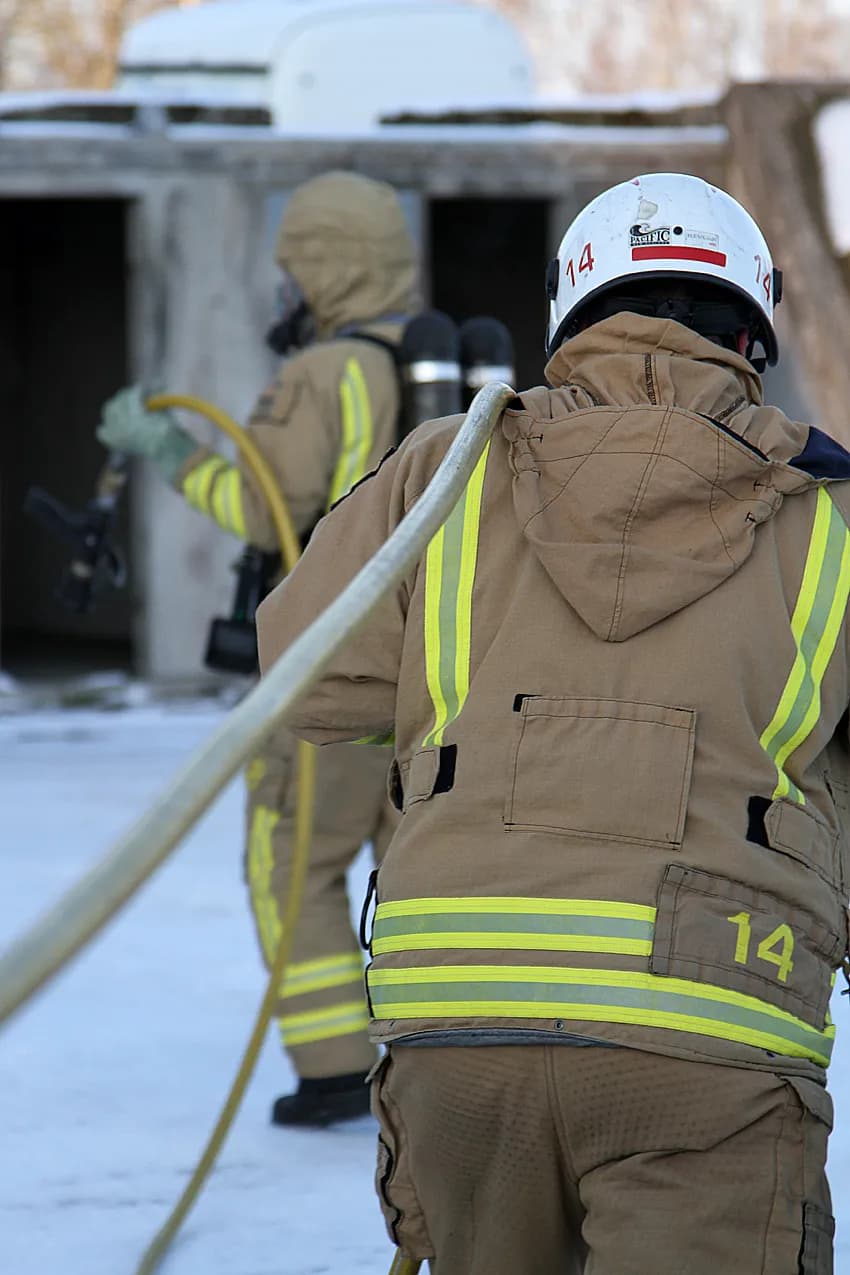
Emergency services across Scandinavia were kept busy over the Easter weekend as multiple reports of smoke and gas odors triggered responses in several cities. In Uppsala, the fire service received a call about a smoke smell in a public venue on Kungsgatan around 20:00 on April 13, according to the duty operator. Meanwhile, in Bergen, multiple police cars responded to the area around Den Nationale Scene due to a gas smell from a hotel room, as reported by operations leader Dan Erik Johannessen of the Vest police district.
In Bergen, police have control of the scene, Johannessen confirmed. The hotel reported the gas smell, according to multiple sources. One person is being taken care of by health personnel. Bergens Tidende earlier reported that police had equipped themselves with shields, though the reason for this precaution was not specified.
In Trondheim, the fire brigade responded to a suspicious smell in a building on the east side of the city on Wednesday afternoon, according to an operator at the Midt-Norge 110 central. Police also sent a patrol to the location, operations leader Martin Eriksen Skjerve of the Trøndelag police district said. Earlier that day, at 09:37, the 110 central received a report of smoke development from an apartment complex at Charlottenlund. The situation there was described as undramatic by watch leader Kåre Peder Norvik.
In Oslo, several people inhaled smoke after reports of smoke development in Smalgangen on Grønland, according to operations leader Vidar Pedersen of the Oslo police. Initial reports indicate the smoke came from a fuse box, Pedersen said.
In Eskilstuna, SOS was alerted on Easter Saturday evening about a smoke smell in an apartment building in Nyfors, which turned out to be a dry cooking incident, according to multiple sources. Later, the fire brigade was called to Mälarsjukhuset at 19:22 for a smoke smell, which turned out to be a leak. The nature of the leak was not disclosed.
On Saturday afternoon, the fire brigade responded to an address in Skönsberg, according to multiple sources. In Vestmanland, the rescue service was on its way to an incident, though details were scarce.
In Hässleholm, a fire at a waste facility caused thick smoke in Vankiva, Finja, and northern parts of the city, the incident commander reported. The incident commander urged everyone in the area to go indoors and close doors, windows, and ventilation.
General fire safety principles emphasize that adequate fire safety reduces injury to people and property in a fire. Fire protection should be designed based on set prerequisites, have optimal function, and the organization should have correct information and understanding of the systems. Fires and smoke particles can spread rapidly in a ventilation system. Fire safety design calculations for load-bearing structures can optimize fire protection and result in major savings and environmental benefits.
Brandskyddslaget offers fire safety design according to the Swedish Building Regulations (BBR). A fire safety review includes an inventory of current status in existing buildings and operations, a gap analysis, and a list of suggested actions. Fire safety review is typically undertaken in conjunction with sale, purchase, renovation, or development of a property. Brandskyddslaget provides fire safety design, preparatory studies, fire safety design reports, fire safety reviews, fire and life safety documentation, and fire protection design sketches and drawings.
Regarding noise disturbances, the person or entity causing the noise is responsible for any disturbance. Noise disturbances can result in sleep and concentration difficulties. For noise from roads, first contact the road maintainer.
Moisture and mold in homes can cause health problems. If you suspect moisture or mold damage, first contact your property owner. The property owner is responsible for assessing and remedying any damage. The most common causes of mold infestation are moisture-damaged walls, ceilings, or floors, or inadequate ventilation. The risks of moisture and mold damage are not fully understood. People with allergies, asthma, or sensitive airways and mucous membranes more often have problems in moisture- and mold-damaged environments. Children and adolescents are especially sensitive to moisture and mold.
Legionella bacteria can cause Legionnaires' disease and Pontiac fever. The risk of contracting legionella is small, but there is reason to be vigilant. A common cause of legionella spread is bacterial growth in building water tanks and piping systems. Legionella bacteria grow in temperatures between 20°C and 45°C. To become ill, the bacteria must reach the lungs. The risk of infection is greatest from showers, hot tubs, and similar sources where water aerosols containing legionella can be inhaled.