

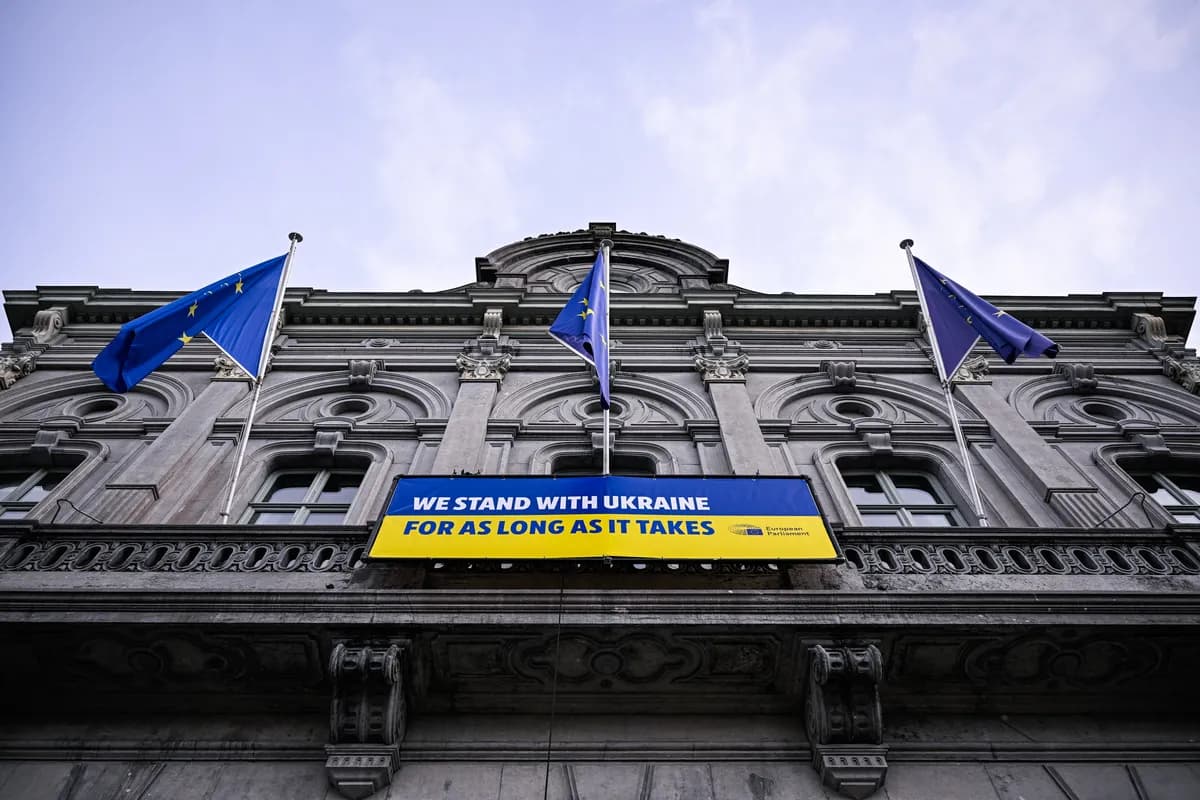
Russia invaded Crimea and parts of the Luhansk and Donetsk regions in eastern Ukraine in 2014. The Kremlin launched a full-scale invasion of Ukraine on February 24, 2022, following its recognition of the Donetsk and Luhansk People's Republics as independent states earlier that year, according to research from multiple sources.
Vladimir Putin's stated reasons for invading Ukraine included false claims of genocide against Russian speakers in Donbas, which have been widely discredited internationally, according to research from multiple sources.
The human cost of the conflict has been devastating for military personnel on both sides. In December 2024, Ukrainian President Volodymyr Zelensky said 43,000 Ukrainian soldiers were killed and 370,000 injured, while 198,000 Russian soldiers were killed and 550,000 injured, though these claims are not verifiable. A CSIS analysis in June 2025 estimated Russian military casualties would reach one million by summer 2025 and Ukrainian casualties at 400,000 since 2022, according to the Center for Strategic and International Studies. The war results in significant military losses, with both sides suffering heavy casualties that strain their forces.
Civilian suffering has been equally severe, with a UN report in January 2026 estimating nearly 15,000 civilians killed and over 40,600 injured in Ukraine since February 2022, according to the Office of the United Nations High Commissioner for Human Rights. The war severely affects civilians through destroyed infrastructure, displacement, and economic collapse, leading to widespread humanitarian crises.
The battlefield has evolved slowly, with Russian forces gradually expanding territory control in eastern Ukraine throughout 2025. ISW analysts say Russia took about 4,700 square kilometers, while Russia claims 6,000 square kilometers, according to research from multiple sources. Russian forces intensified counterattacks in Kursk Oblast in October 2024, advancing in areas like Kremyanoye and Zeleny Shlyakh, multiple reports indicate.
Unconfirmed claims continue to circulate about front-line developments, particularly regarding Russian advances in Kursk Oblast. Russian milbloggers claimed Russian forces seized settlements like Olgovka and Nizhny Klin in Kursk Oblast, but ISW has not observed confirmation, according to these sources.
NATO has undergone significant transformation in response to the Russian threat, strengthening its defenses with tens of thousands of combat-ready soldiers on its Eastern flank, half a million troops on high readiness, and 23 Allies spending at least 2% of GDP on defense, according to multiple reports. Jens Stoltenberg served as NATO Secretary General from 2014 to 2024, research from three sources confirms. During his tenure, Montenegro, North Macedonia, Finland, and Sweden joined the alliance, multiple reports indicate, expanding NATO's membership and strategic depth.
NATO support to Ukraine has grown from marginal in 2014 to massive, coordinated through a new command in Germany, research from two sources shows, enhancing the efficiency and scale of military assistance.
International military and financial aid to Ukraine has been substantial but uneven, with recent packages attempting to address critical shortages. The UK announced an additional £2.26 billion in support to Ukraine via loans repaid using profits from immobilized Russian sovereign assets, on top of £3 billion annual military support, according to UK Defence Secretary Grant Shapps. The US House of Representatives unblocked vital Ukraine aid in April 2024 after months of deadlock, with Britain, Germany, and the Netherlands also announcing new support packages, multiple reports confirm, highlighting ongoing Western commitment.
External factors have occasionally shifted battlefield dynamics, with Elon Musk's decision to deny Russian forces access to Starlink in February 2025 giving Ukraine an advantage, forcing Russian retreats in some areas, according to research from multiple sources, demonstrating how technology can influence conflict outcomes.
Diplomatic efforts to end the conflict have repeatedly failed, with a US-backed peace plan in November 2025 suggesting Ukraine cede control of Luhansk, Donetsk, Crimea, and occupied parts of Zaporizhzhia and Kherson to Moscow, but Zelensky rejected it, multiple reports indicate, underscoring the challenges in reaching a negotiated settlement.
Russia represents the most immediate threat to NATO, with Putin bringing war back to Europe on a scale not seen since World War II, according to research from two sources, posing direct security risks to the alliance.
China represents the most serious long-term challenge to NATO, modernizing its military, bullying neighbors like Taiwan, and seeking to dominate the South China Sea, multiple reports indicate, requiring sustained strategic attention.
Other adversarial states are expanding aggressive behavior, with Iran backing terrorists and militias attacking ships in the Red Sea and U.S. bases, and North Korea continuing its nuclear and missile programs, research from two sources shows, contributing to global instability.
China, Russia, Iran, and North Korea are increasingly aligned, subverting sanctions and fueling Russia's war in Europe, according to multiple reports, creating a complex network of adversarial powers that challenges Western interests.
Key uncertainties surround the conflict's trajectory, including whether Ukraine can sustain its defense without more consistent Western support, how Russia will manage its mounting casualties and economic strain, and whether NATO unity will hold through potential political changes in member states, all of which could shape the war's outcome and broader geopolitical landscape.