

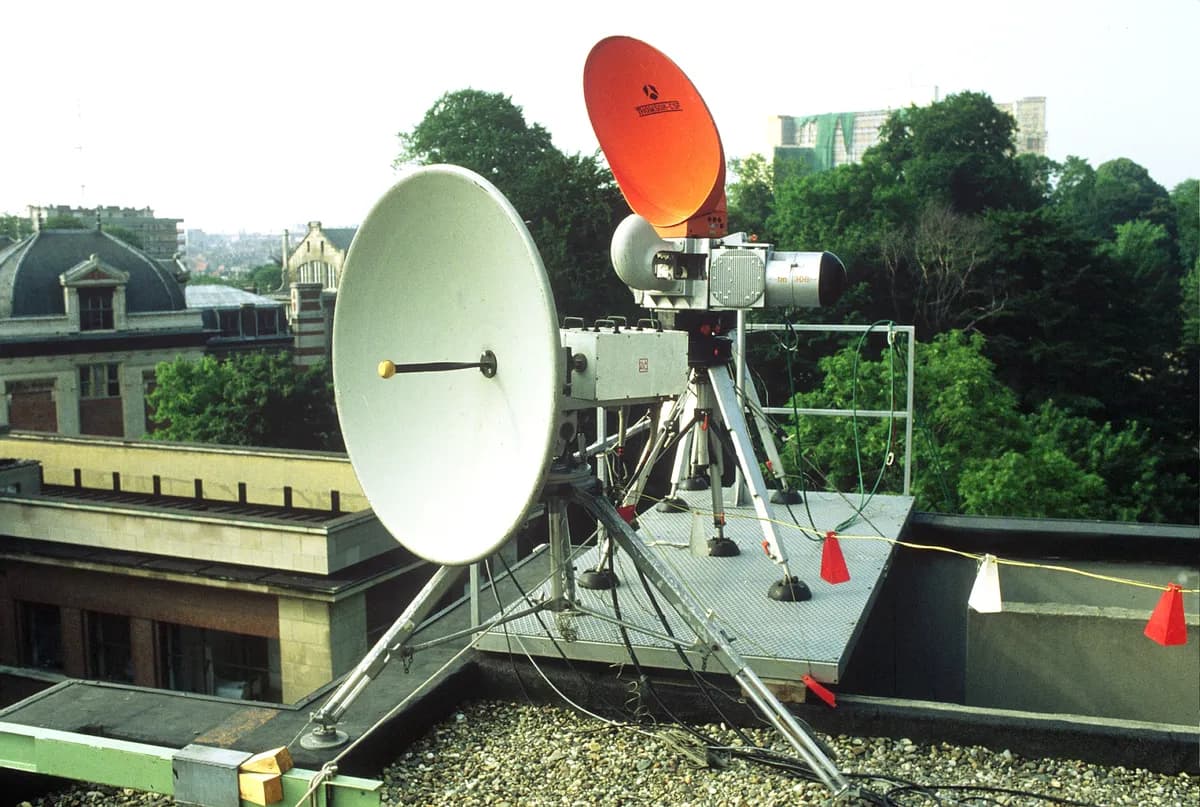
Russia is pursuing a new and more advanced anti-satellite weapons system that would violate the Outer Space Treaty, according to Biden administration officials. Officials familiar with the intelligence assessment say the Russian ASAT system involves a nuclear explosive device. Such a weapon could pose a threat to U.S. and allied military satellites and other space-based assets, research indicates. A nuclear weapon in orbit would violate the Outer Space Treaty, specifically Article IV which prohibits deploying weapons of mass destruction in orbit. During the Cold War, the Soviet Union and U.S. experimented with ASAT weapons, including nuclear explosions, research shows.
The United States is very concerned about reports of Russia's nuclear anti-satellite weapon plans, General Stephen Whiting, head of U.S. Space Command, stated in a press conference. NATO Secretary General Mark Rutte has raised concerns that Russia may be exploring the possibility of deploying nuclear weapons in space. Rutte emphasized that using nuclear weapons against satellites could disrupt global communication systems and satellite-based monitoring. NATO is adapting to threats in space by sharing intelligence, establishing national space commands, and investing in satellites, according to research. In 2021, NATO reaffirmed that Article 5 applies to attacks in or from space.
America is 'very concerned' about the Kremlin's plans for a nuclear anti-satellite weapon.
General Stephen Whiting described Russia as a sophisticated space power that continues to invest in counter-space weapons. According to Whiting, Russia sees the U.S. and NATO as too strong in conventional warfare and believes attacking space systems could level the battlefield. The war in Ukraine has provided Moscow with valuable insights into Western military systems, research indicates. Whether Russia has already deployed or is actively testing the nuclear anti-satellite weapon in space remains unknown, as does the exact timeline and current stage of development for this system.
Russia has been carrying out sustained satellite communication and GPS jamming, putting civilian airliners at risk, General Stephen Whiting reported. Experts fear a nuclear blast in low Earth orbit could destroy up to 10,000 satellites. A U.S. intelligence report warned that Russia is developing a satellite capable of carrying a nuclear weapon. Russia's alleged ambitions for a nuclear anti-satellite weapon first emerged in February 2024 when Pentagon officials briefed members of Congress, according to major media reports.
Russia remains a sophisticated space power and they continue to invest in counter-space weapons.
The war in Ukraine is now in its fifth year. Russian forces have slowly expanded the amount of territory they control, mostly in eastern Ukraine. Russia gained almost five thousand square kilometers of territory in 2025, research indicates, though analysts at ISW say Russia took about 4,700 sq km of territory in 2025, while Russia claims to have taken 6,000 sq km. This discrepancy affects the assessment of Russia's military progress and the scale of territorial changes in the conflict.
In eastern Ukraine, Russia has been advancing through the Donbas, surrounding and overwhelming villages and towns, according to research. Russia has been trying to gain full control of Donetsk, Luhansk, Zaporizhzhia, and Kherson regions. Shortly after the invasion, Russia held referendums to try to annex these regions but has never had them under full control. A Russian summer offensive near Pokrovsk made rapid advances, and Russian officials previously claimed to have captured Pokrovsk. In some areas, especially east of Zaporizhzhia, Russian forces appear to have been forced to retreat.
Russia is thinking about placing in orbit a nuclear anti-satellite weapon that would hold at risk everyone's satellites in low Earth orbit.
There is some evidence that Elon Musk's decision to deny Russian forces access to Starlink at the start of February has given Ukraine an advantage, research shows. Ukraine requested the move as evidence grew that Starlink was enabling Russian forces to mount increasingly accurate attacks. Ukraine maintains drone attacks on Russian oil infrastructure and military sites.
Casualty figures are contested and lack verifiable up-to-date numbers. In December 2024, Ukrainian President Volodymyr Zelensky said 43,000 Ukrainian soldiers had been killed and 370,000 injured since February 2022, while he also stated that 198,000 Russian soldiers had been killed and 550,000 injured. Some 55,000 Ukrainian soldiers have been killed, according to later statements from Zelensky, indicating rising casualties but creating uncertainty about the current toll. None of Zelensky's casualty claims was verifiable; Russia has said its losses are less than Ukraine's. In June 2025, CSIS estimated Russian military casualties would reach one million during the summer of 2025, and estimated Ukrainian military casualties since 2022 to be 400,000, including 60,000–100,000 soldiers killed. According to a UN report in January 2026, nearly 15,000 civilians had been killed and more than 40,600 injured since February 2022, while research indicates fighting and air strikes have inflicted nearly 56,000 civilian casualties, with the overwhelming majority occurring in Ukraine. The BBC has confirmed the names of almost 160,000 people killed fighting on Russia's side.
An outcome with a nuclear anti-satellite weapon in orbit is one that the US 'just couldn't tolerate'.
Since January 2022, Ukraine has received about $188 billion in aid from the United States and $197 billion from the European Union. Fighting and air strikes have inflicted nearly 56,000 civilian casualties, and 5.9 million people are registered as refugees from Ukraine.
The Trump administration pledged to seek a settlement to end the war, setting out a twenty-point draft peace deal and a June deadline. Ukraine accepted the proposal after discussions, but many terms of the deal—including territorial concessions and security guarantees—remain unclear. Russia has stated that it will not agree to an amended deal that departs from the 'spirit and letter' of President Putin's August summit with President Trump in Alaska. A U.S.-backed peace plan unveiled in November suggested Ukraine could cede control of Luhansk, Donetsk, Crimea, and occupied parts of Zaporizhzhia and Kherson to Moscow. The specific terms and security guarantees in the proposed peace deal are unknown.
From a Russian perspective, they look at the United States and NATO and see an overmatch there of conventional arms.
A series of fatal terrorist attacks within Russia since the war began have highlighted intelligence failures and a deep distrust of the West. The Kremlin shows greater interest in pursuing Russia's political opponents than investigating terrorist threats, and the FSB's counterterrorism policy is more reactive than preventive. Ukrainian armed forces' incursions into Kursk in 2024 meant Russia was not in control of its own borders for several months. Corruption networks around the then-regional governor of Kursk failed to shore up Russia's civilian defences, with serious security consequences. Frequent rumours about the ill-health of Chechen strongman Ramzan Kadyrov will force the Kremlin to revisit succession plans for the region sooner than expected, and Kadyrov's actions in the past year suggest his actions are only partially under the Kremlin's control. The potential demobilisation of veterans from the war has received the most state attention, funding and resources among security risks.
Russia is conducting an escalating campaign of sabotage and subversion against European and U.S. targets in Europe led by the GRU. The number of Russian attacks nearly tripled between 2023 and 2024. Russia's primary targets include transportation, government, critical infrastructure, and industry, with many targets having links to Western aid to Ukraine. Russia's main weapons and tactics include explosives, blunt or edged instruments, and electronic attack. The GRU was likely responsible for many attacks, either directly or through recruited agents, while other operations relied on Russia's 'shadow fleet' for undersea attacks. Roughly 27 percent of attacks were against transportation targets, 27 percent against government targets, 21 percent against critical infrastructure, and 21 percent against industry. The most common weapons involved explosives and incendiaries (35 percent), with other weapons including blunt or edged instruments (27 percent), electronic attack (15 percent), and weaponization of illegal immigrants (8 percent).
Russia believes that novel ways of trying to undermine the United States and NATO, such as by neutralizing space capabilities, helps them to level the battlefield.
Western countries have not developed an effective strategy to counter these attacks. The increase in attacks indicates the West has failed to coerce Russia from stopping its campaign. Russian attacks are a U.S. problem as well, with operations against U.S. targets like bases in Germany. The effectiveness of Western strategies to counter Russia's sabotage campaigns in Europe remains uncertain.
On February 21, 2022, President Vladimir Putin recognized the independence of Donetsk and Luhansk and ordered Russian troops into Ukrainian territory as 'peacekeepers.' On February 24, 2022, Putin launched a full-scale invasion he called a 'special military operation.' Putin's stated reasons for the invasion included the false claim that Ukraine was committing genocide against Russian speakers in the Donbas. Putin's invasion was widely seen as an attempt to reassert Russian influence over Ukraine and prevent its further integration with the EU and NATO.
The US is very concerned about reports of Russia's nuclear anti-satellite weapon plans, but won't speak about intelligence sources and methods.
Ukraine maintains drone attacks on Russian oil infrastructure and military sites. Ukrainian armed forces' incursions into Kursk in 2024 meant Russia was not in control of its own borders for several months.
NATO Secretary General Mark Rutte stated that Russia's capabilities in space are outdated compared to Western standards.
Russian President Vladimir Putin cited the need to protect the rights of Russian citizens and Russian speakers in Crimea and southeast Ukraine.
NATO Secretary General Mark Rutte has raised concerns that Russia may be exploring the possibility of deploying nuclear weapons in space.
Rutte emphasized that using nuclear weapons against satellites could disrupt global communication systems and satellite-based monitoring.
Rutte stressed that placing nuclear weapons in space would breach the 1967 Outer Space Treaty.
Rutte added that Russia's capabilities in space are outdated compared to Western standards.
Rutte described the situation as a source of serious concern for NATO.
Rutte announced increased satellite surveillance of the Arctic due to increased activity by Russia and China.