

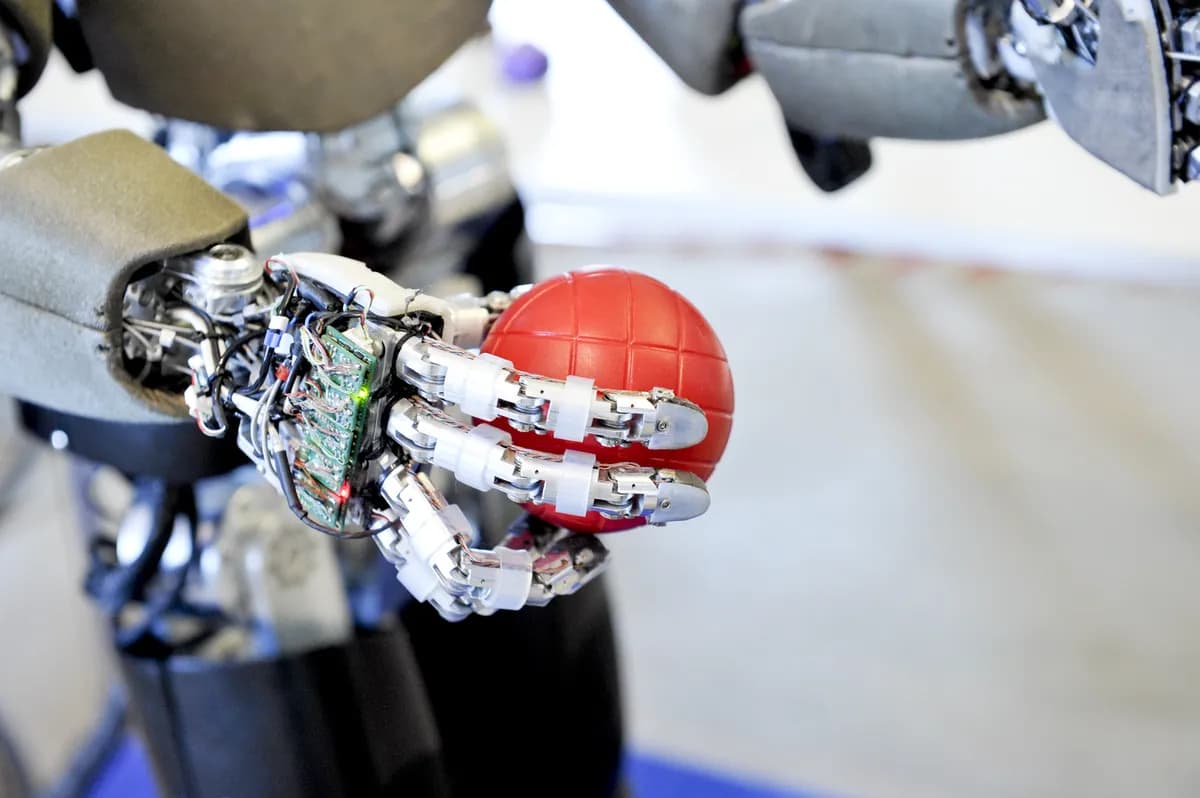
A half-marathon event in Beijing featured humans competing against humanoid robots, aiming to showcase rapid technological advancements in robotics. A robot won the race, finishing the half-marathon in approximately 50 minutes. According to major media reports, the winning robot was developed by Honor and was three times faster than last year's winning robot. The robot's performance demonstrated notable speed improvements in bipedal locomotion technology over a short timeframe, marking a significant milestone in robotics development.
Robots and humans ran on separate tracks to avoid collisions during the event, a safety measure implemented by organizers. Participation in the event increased significantly compared to last year, with event organizers claiming it was the world's first half-marathon where humans and bipedal robots ran in the same race. The official race is scheduled for April 19, following a test run where more than 70 teams participated, indicating strong interest from the robotics community and extensive preparation for the upcoming competition.
The technology is still in its nascent stage with more advancements ahead.
Despite these advancements, some robots experienced technical failures such as tripping, collapsing, or overheating during the race. Nearly half or around 40% of the robots raced autonomously without human intervention, while the event included both remotely controlled and fully autonomous robots, showcasing a range of operational modes. According to www.wired.com, Alan Fern described how the race demonstrates how robust humanoid hardware has become, noting that until five years ago or so, researchers didn't really know how to get robots to walk reliably, and now they do.
Last year's event had many robots that failed to finish, but this year's event involved systematic upgrades in rules, protocols, and safety procedures compared to last year, according to research sources. These improvements contributed to a more organized competition with enhanced operational standards, reflecting lessons learned from previous iterations. The event highlights the potential of humanoid robots to reshape jobs and combat, according to major media reports, while also demonstrating both progress and limitations in China's humanoid robot industry, as noted by research sources.
Researchers who build humanoid robots typically focus on trying to get them to complete tasks and respond effectively in a diverse range of different environments, rather than run as fast as possible.
There are contradictions regarding the number of robots participating in the current event, with some reports stating over 100 robots competed while others indicate 21 humanoid robots participated. This discrepancy affects the perceived scale and success of the event, with implications for assessing technological adoption and competition intensity. Another contradiction exists regarding the performance of robots relative to humans, with claims that the winning robot was faster than the human world record conflicting with assertions that the robots were unable to keep up with the speed of the humans.
Further contradictions involve the timing of the winning robot, with reports varying between 50 minutes and 50 minutes and 26 seconds, which could affect record-keeping and precision in evaluating robot performance improvements. Additionally, there is a minor discrepancy about the number of robots in last year's race, with figures of 21 robots starting last year versus 20 robots participating last year, affecting the baseline for measuring year-over-year growth in participation.
The AI technology used in humanoids hasn't progressed very much since 2021, when my team sent a bipedal robot to run a 5K race.
Several unknowns remain about the event's specifics. What specific scoring rules caused an Honor robot with a faster time to be pushed off the podium has not been clarified. How many robots actually finished the race, given varying reports on failures and completions, remains unclear, as does the exact breakdown between autonomous and remote-controlled robots in terms of performance and failures.
What were the specific technical causes of the robot failures, such as overheating or navigation errors, has not been detailed. How the event's organization and funding reflect China's strategic goals in robotics also remains uncertain. According to Daily Mail - Science & Tech, Xioadi Du described the technology as still in its nascent stage with more advancements ahead.
The race demonstrates how robust humanoid hardware has become, noting that until five years ago or so, we didn't really know how to get robots to walk reliably, and now we do.
According to www.wired.com, Alan Fern described how researchers who build humanoid robots typically focus on trying to get them to complete tasks and respond effectively in a diverse range of different environments, rather than run as fast as possible. He also noted that the AI technology used in humanoids hasn't progressed very much since 2021, when his team sent a bipedal robot to run a 5K race. Furthermore, he explained that going from a 5K to a half-marathon is a hardware robustness problem and he would be surprised if one of these companies makes it through without replacing the robot.
The event's scale and technological implications continue to generate discussion within the robotics community and beyond, as China advances its ambitions in this competitive field. The race serves as a benchmark for evaluating the durability and speed of humanoid robots in real-world conditions, pushing the boundaries of what is possible in robotics innovation.
Going from a 5K to a half-marathon is a hardware robustness problem and I would be surprised if one of these companies makes it through without replacing the robot.