

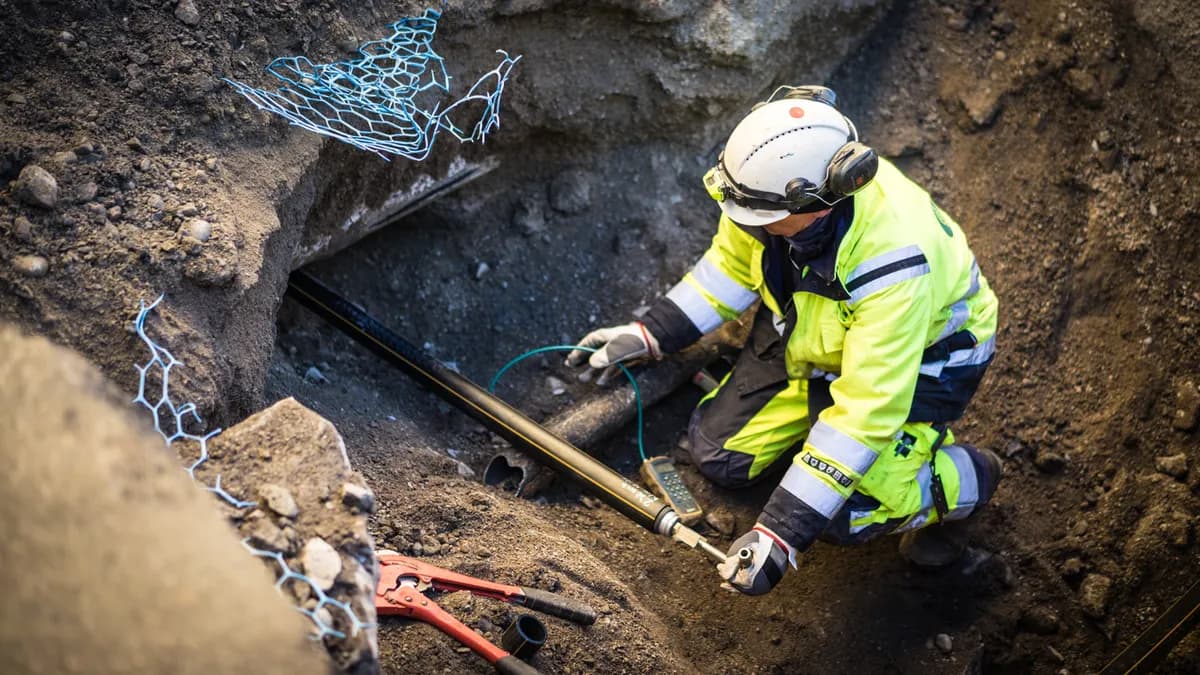
According to SVT Nyheter, Storforsen hotel CEO Jens Hardegård said he ordered the excavation on behalf of municipal commissioner Johan Dahlqvist. Dahlqvist confirmed the order was made on his behalf, stating the purpose was to protect municipal property. However, the invoice sent to Älvsbyn municipality in October 2025 listed former community building manager Roger Tuomas as reference.
Tuomas told SVT Norrbotten he did not order the job and believes it was a mistake that he was listed. Municipal manager Anna Lindberg certified and paid the invoice of 105,000 SEK despite the municipality claiming no order was placed. The municipality's environmental inspectors and officials had no knowledge of the order.
I ordered the excavation on behalf of municipal commissioner Johan Dahlqvist.
The hotel paid for the excavation after SVT started asking questions about the affair. Dahlqvist said such matters could be deemed beneficial to the hotel, and then they should bear the costs. He added that he should have involved officials earlier but acted as the municipality had previously done regarding Storforsen's mouth.
The excavation was carried out by the same contractor as in 2022, when the municipality restored and extended two stone arms as flood protection without waiting for a permit. The contractor declined to comment, referring questions to the municipality. The county administrative board in Norrbotten demands that the restoration work be redone and that a fish expert be involved.
The excavation was ordered on my behalf.
The restoration requirements include involving a fish expert and ensuring no environmentally hazardous emissions from machinery. In 2022, the County Administrative Board argued the stone arms destroyed spawning grounds for salmon and trout. The Land and Environment Court later granted permission for the restoration of the southern stone arm but rejected the extension of the northern one.
Prosecutor Märta Warg told SVT Norrbotten the investigation concerns unauthorized environmental activity because no permit was sought for the water operations. No person has been formally notified of suspicion of a crime. Unauthorized environmental activity is a crime under Chapter 29 of the Environmental Code, punishable by fines or up to six years in prison.
The purpose was to protect municipal property.
Anna Lindberg declined an interview citing the police investigation, but stated the municipality will cooperate fully with authorities. Jens Hardegård said the municipality has driven the process for years, including the recent measures, and noted the river has not flooded this winter despite extreme cold. A Swedish government report proposes measures to strengthen environmental criminal law, including a stricter penalty scale and a shift in sanctions to better utilize law enforcement resources.
The report proposes more rigorous suitability tests for conducting environmentally hazardous activities, and that when assessing serious environmental crime, particular importance should be attached to whether the act was part of a crime carried out systematically, in an organized form, or for profit. A new waste crime is proposed, targeting businesses or activities that habitually or on a large scale dispose of waste in an unauthorized manner. Environmental crimes linked to waste management are particularly prevalent in connection with organized crime.
I should have involved officials earlier, but I acted as the municipality had previously done regarding Storforsen's mouth.
The criminal provisions of Chapter 29 of the Environmental Code have been criticized for being complicated and difficult to apply. The report proposes a 'good repute test' for operators, where a permit should be refused to anyone not considered suitable after a suitability test. The suitability requirements should also apply to notifiable activities and when an activity is merged or transferred, or when a new person with significant influence enters.
Environmental crimes are a growing threat to the environment and society. The Swedish Forest Agency's 2025 inventory shows 18% of known cultural heritage sites subject to regeneration felling were damaged or seriously damaged, a statistically significant increase compared to 10% in 2024. During the last four years, the proportion of damage or serious damage has been between 10-13%.
Such matters could be deemed beneficial to the hotel, and then they should bear the costs.
If impact such as light vehicle ruts and felling debris is included, 38% of sites were affected or damaged, while 62% were neither impacted nor damaged. For cases with a County Administrative Board decision, damage to areas surrounding ancient remains has been 30-40% nationwide in recent years. Soil scarification is the single largest cause of damage, causing 10% of damaged or seriously damaged sites in 2025.
The second most common cause is vehicle ruts (5%), followed by windthrown trees and felling debris (3% each). The proportion of damaged or seriously damaged known cultural heritage sites without any marking increased from 12% in 2024 to 22% in 2025. Damage or serious damage occurred to the same extent regardless of how cultural heritage stumps were placed.
The investigation concerns unauthorized environmental activity because no permit was sought for the water operations.
A statistically significant increase in damage occurred only in Götaland, where the proportion was 25% in 2025, with soil scarification accounting for 17% of damages and planting on cultural heritage sites occurring to a greater extent than in the rest of the country. In Northern Norrland, damage and serious damage increased from 8% to 15% in 2025, with soil scarification as the most common cause. In Southern Norrland, the damage level was 16%, but soil scarification caused the least damage (4%) compared to the rest of the country.
Älvsbyn municipality offers a whistleblower channel together with Lantero for reporting suspected misconduct. The channel is for work-related suspected misconduct of public interest, such as environmental crimes, corruption, nepotism, or theft. Reports are handled by case officers or an external independent lawyer, with feedback to the whistleblower committee.
To guarantee anonymity, users are recommended to use a computer outside the municipality's network and copy-paste the link. The municipality prefers receiving feedback via email but also provides an anonymous web form. The Parliamentary Ombudsman criticized Älvsbyn municipality for deficient documentation and handling in a care case, and for late response.
Social manager Robert Cortinovis stated measures have been taken to address the deficiencies, including competence assurance and updated routines. Municipal council chair Tomas Egmark expressed regret but confidence that the deficiencies will be remedied. The Ombudsman concluded that the case does not warrant any further action or statement.
Certain environmentally hazardous activities require a permit or notification before starting, as per the Environmental Assessment Ordinance and the Ordinance on Environmentally Hazardous Activities and Health Protection. Activities are classified into three levels: A (permit from Land and Environment Court), B (permit from County Administrative Board), C (notification to the municipal Environment and Building Committee). Notification must be made at least six weeks before starting, and the activity cannot start until a permit is granted.
The Swedish Environmental Protection Agency is working on a major revision of the plan for the next edition, with edition 4 published in March 2024. The allocation plan is updated annually and shows the agency's 2025 operational plan for remediation of contaminated sites and budget distribution. The work plan is updated quarterly and serves as a working document for the agency, county boards, and principals, listing ongoing remediation projects and applications.
Storforsen is Europe's largest unbound rapid, part of the Pite River, with a 5 km fall stretch and 82 m drop. The nature reserve parking is free except during large events when a small fee is charged to finance parking attendants. The area is partially accessible for people with disabilities, with wheelchair access to the rapids and designated parking.
Storforsen is visited by about 150,000 people annually, making it one of Norrbotten's most visited tourist destinations.