

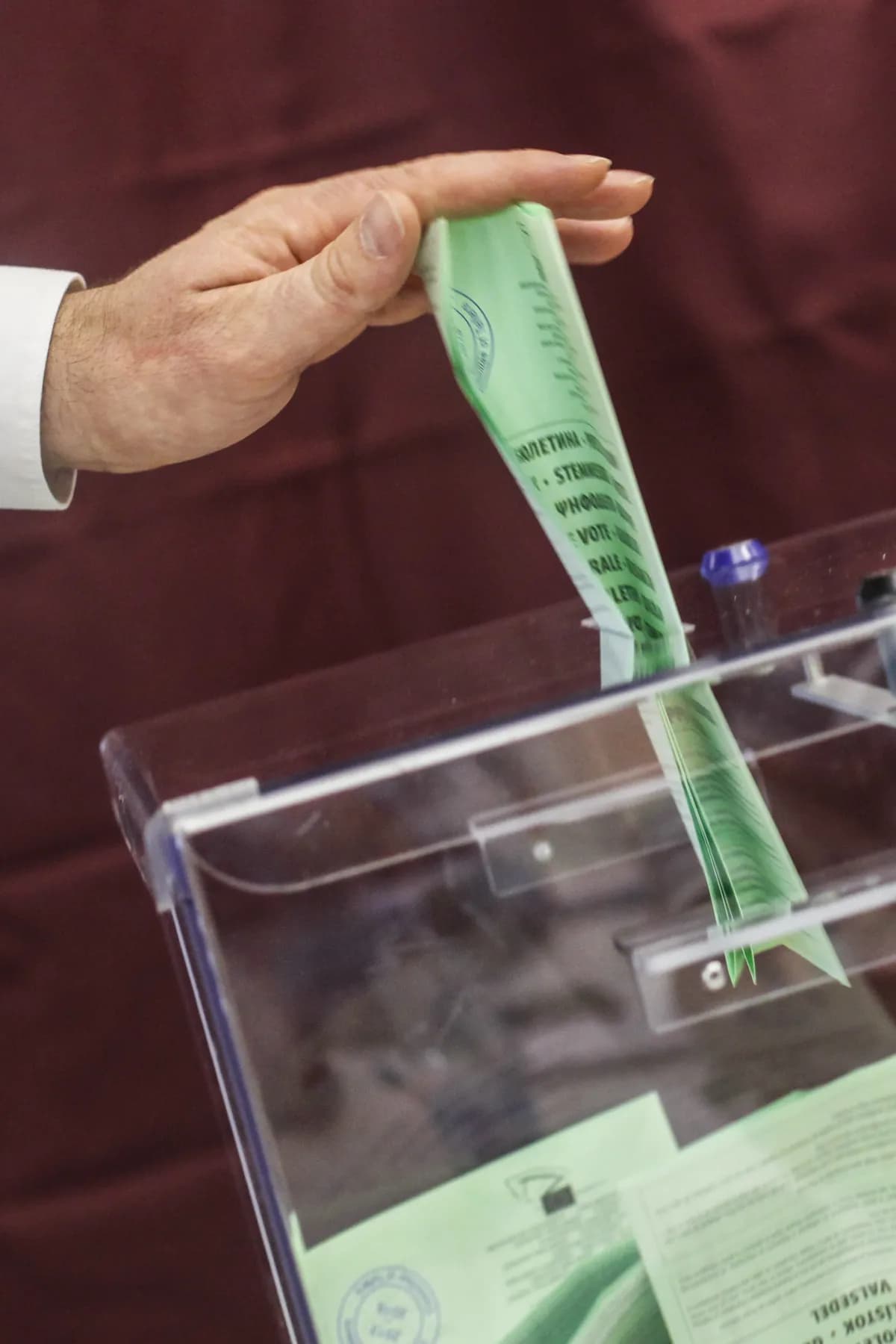
Some polling stations in Peru will reopen on Monday because tens of thousands of people were prevented from voting in Sunday's election. At least 50,000 voters were unable to cast their ballots on Sunday due to technical and logistical problems. Electoral authorities have granted a one-day extension to more than 50,000 voters who could not vote on Sunday, according to major media reports.
This widespread disenfranchisement has cast a shadow over an already contentious electoral process, raising immediate questions about the integrity and administration of the vote across multiple regions. Preliminary election results indicate a fragmented and highly competitive field. A preliminary count of half the votes cast put conservative candidate Keiko Fujimori slightly ahead of right-wing former Lima mayor Rafael López Aliaga, major media outlets reported.
86%, followed by Rafael López Aliaga and Jorge Nieto, according to those same sources. Polling station surveys indicate that Peruvian right-wing politician Keiko Fujimori appears to have received the most votes in the presidential election, with around 16%, major media noted. These early numbers reveal a deeply divided electorate with no candidate commanding a dominant position, setting the stage for a protracted political battle in the coming weeks.
The battle for second place is very close-run, according to major media reports from two sources. All candidates are far short of the 50% of votes needed to win outright, making a runoff between the top two candidates on 7 June almost certain, major media reported based on two sources. This near-certainty of a second round intensifies the significance of every percentage point in the preliminary tallies, with several candidates clustered within narrow margins.
The uncertainty surrounding the final composition of the runoff pairing adds a layer of volatility to Peru's political landscape, with potential implications for policy direction and international relations. Logistical failures at the heart of the voting disruptions prompted an official response from Peru's highest office. Peru's current President José María Balcázar said that the company hired to deliver the voting material had failed to do so in time, according to major media reports.
Police and prosecutors went to the electoral authority's headquarters to investigate why it failed to deliver voting materials, major media reported. This intervention by law enforcement underscores the severity with which authorities are treating the breakdown in electoral logistics, which affected polling stations both domestically and internationally. The investigation aims to determine whether negligence, mismanagement, or external factors contributed to the widespread delivery failures that left many polling stations without essential materials at opening time.
In response to the problems, electoral officials implemented immediate measures to mitigate voter disenfranchisement. Voters who experienced problems in Lima and at polling stations abroad will be able to cast their ballots on Monday, according to major media reports. Polling stations were kept open longer than planned on Sunday due to problems, those same sources indicated.
These adjustments represent an attempt to salvage participation in an election where voting is mandatory for Peruvians aged between 18 and 70, and those failing to cast their vote can incur a fine, as major media noted. The extension and prolonged hours reflect the electoral authority's recognition of the significant disruption caused by the logistical failures, though they may not fully compensate for the initial exclusion experienced by many voters. Allegations of fraud emerged alongside the logistical challenges, though international observers offered a contrasting assessment.
Rafael López Aliaga has questioned the integrity of the vote and the handling of postal ballots, major media reported. An EU observer mission said it had found no evidence of fraud, despite claims by Rafael López Aliaga, according to those same sources. This divergence between domestic accusations and international validation creates a complex narrative around the election's legitimacy, potentially influencing public perception and post-election stability.
The EU's preliminary findings provide an external benchmark against which fraud claims can be measured, though they may not fully address specific concerns about postal ballot administration raised by candidates. Political reactions to the disruptions included direct demands for accountability from electoral officials. Supporters of Rafael López Aliaga demanded the resignation of electoral chief Piero Corvetto, major media reported.
This call for resignation reflects broader frustrations with the electoral authority's performance and adds pressure on institutions already grappling with logistical failures. The targeting of Corvetto specifically suggests that critics view leadership failures as central to the voting problems, rather than viewing them as isolated technical issues. Such demands could escalate depending on the resolution of the ongoing investigations and the final election outcome.
Voter eligibility rules added urgency to efforts to address the disenfranchisement. More than 27 million Peruvians were eligible to vote, according to major media reports from three sources. With voting mandatory for most adults, the logistical failures created not only a democratic deficit but also potential legal complications for those prevented from participating.
The scale of the eligible electorate magnifies the impact of any disruption, making the exclusion of tens of thousands statistically significant in a closely contested race. These mandatory voting rules distinguish Peru's electoral context from many other democracies, where non-participation carries no penalty, thereby increasing the stakes for both voters and administrators. The election occurs within a specific political context marked by a crowded field and imminent leadership transition.
A total of 35 candidates are running for president, major media reported based on two sources. Whoever wins the presidential race will replace the 83-year-old José María Balcázar, who has only been in the job since February, according to those same sources. This exceptionally large candidate pool reflects Peru's fragmented political landscape and the absence of dominant parties, contributing to the unpredictability noted by observers.
The short tenure of the outgoing president adds another layer of instability, as the incoming leader will inherit a government with limited recent continuity and face immediate challenges in establishing authority. Historical parallels with previous elections provide context for the current delays. The delays recall the 2021 election, when results took five days, major media reported.
This recurrence of electoral timing issues suggests systemic problems in Peru's electoral administration that transcend individual elections or specific logistical contractors. The 2021 precedent may influence public patience and institutional responses, as stakeholders recall previous resolutions to similar challenges. These historical echoes underscore the need for structural reforms beyond immediate fixes to prevent recurring disruptions in future electoral cycles.
Contradictions exist regarding the precise number of voters affected by the logistical problems. While at least 50,000 voters were unable to cast their ballots on Sunday, major media separately reported that around 63,000 people were prevented from voting due to a logistical problem. This discrepancy in numbers affects understanding of the scale of the voting disruption and the number of people granted an extension.
The variation may stem from different methodologies in estimating affected voters, timing of assessments, or definitions of what constitutes prevention from voting. Resolving this numerical contradiction will be important for accurately gauging the election's inclusivity and the adequacy of remedial measures. The causes of the specific technical or logistical problems remain unclear, as does the identity of the company responsible for delivering voting materials.
Investigations by police and prosecutors may eventually clarify these unknowns, but for now, they represent significant gaps in public understanding of the election's administration. Determining responsibility is crucial not only for accountability but also for preventing similar failures in future elections, particularly given the historical pattern of delays. The company's performance and any contractual obligations will likely come under scrutiny as authorities seek to explain how such widespread disruptions occurred.
Specifics regarding Monday's reopening and the final second-round candidates also remain uncertain. While voters in Lima and abroad are scheduled to participate, the exact number of polling stations reopening and their precise locations have not been detailed. Similarly, the tight race for second place means the composition of the June runoff remains undetermined until all votes, including those cast on Monday, are fully counted.
These unknowns will resolve in the coming days, but until then, they contribute to an atmosphere of suspense and potential contention. The handling of Monday's voting and the final tally will be closely watched for any further irregularities or disputes.