

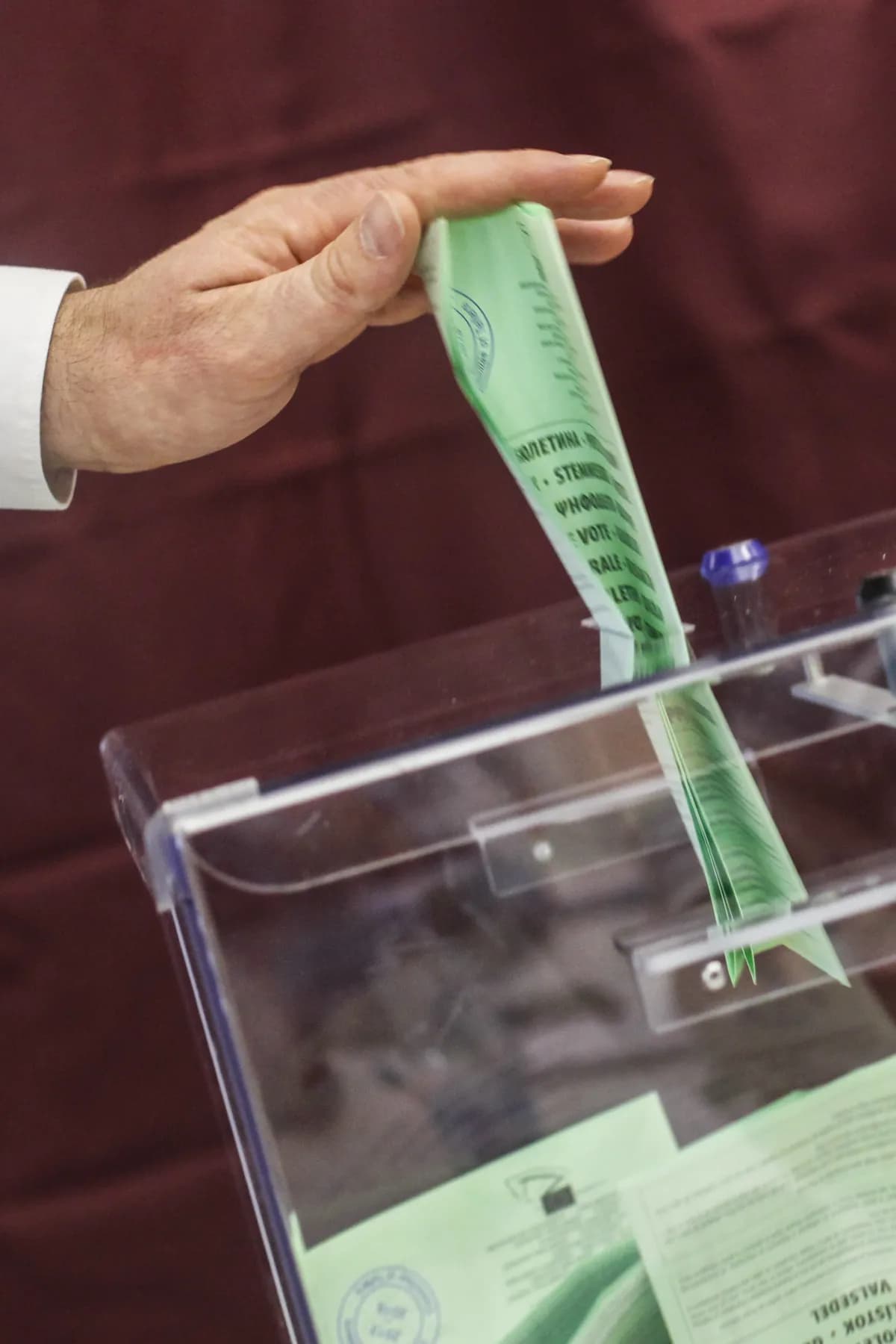
Some polling stations in Peru will reopen on Monday because tens of thousands of people were prevented from voting in Sunday's election. At least 50,000 people were prevented from voting in Sunday's election. Around 63,000 people were prevented from voting due to a logistical problem. The electoral authorities have granted a one-day extension to more than 50,000 voters who could not cast their ballots on Sunday. Voters who experienced problems in Lima and at polling stations abroad will be able to cast their ballots on Monday. This disruption has injected uncertainty into an already volatile electoral process, highlighting systemic weaknesses in the country's voting infrastructure.
Logistical failures were at the heart of the voting problems, with Peru's current President José María Balcázar stating that the company hired to deliver the voting material had failed to do so in time. Police and prosecutors went to the electoral authority's headquarters to investigate why it failed to deliver voting material. The investigation's outcome could have implications for future elections and accountability for the disruption.
The scope of the voting problems was broad, with polling stations kept open longer than planned on Sunday due to problems. The exact number of polling stations that will reopen on Monday and their specific locations have not been detailed by authorities, adding to the confusion. Voters affected by these technical and logistical problems, which have not been fully specified, are now scrambling to participate in the extended voting window. This extension aims to mitigate the disenfranchisement but has raised questions about the efficiency and reliability of Peru's electoral system.
A preliminary count of half the votes cast put conservative candidate Keiko Fujimori slightly ahead of right-wing former mayor Rafael López Aliaga. According to exit polls, Keiko Fujimori appears to have received the most votes in the presidential election, with around 16 percent. The battle for second place is very close-run. These early figures suggest a fragmented electorate, with no single candidate commanding a dominant share of the vote.
All candidates are far short of the 50% of votes needed to win outright, making a runoff between the top two candidates on 7 June almost certain. None of the candidates is polling above 15%. A total of 35 candidates are running for president. The final official vote count and which two candidates will advance to the runoff on June 7 remain unknown, adding suspense to the post-election period.
More than 27 million people are eligible to vote in Peru. Voting is mandatory for Peruvians aged between 18 and 70, and those failing to cast their vote can incur a fine. This mandatory system aims to ensure broad participation but has been tested by the logistical challenges. The voter demographics, including a significant youth population, could influence the outcome as candidates like Ricardo Belmont target younger voters.
Whoever wins the presidential race will replace President José María Balcázar, who has only been in the job since February. Peru has had nine presidents in a decade. This frequent turnover has eroded public trust in institutions and created a volatile governance environment. The incoming president will face immediate challenges in stabilizing the political system and addressing pressing national issues.
Peru's current President José María Balcázar said that the company hired to deliver the voting material had failed to do so in time.
The fight against crime tops voter concerns amid record homicide and extortion rates. Political corruption is a close second concern for voters. These twin crises have shaped campaign platforms, with many candidates promising tough measures to restore security and integrity. Voters' priorities highlight the urgent need for effective leadership in a country grappling with systemic problems.
Corruption's legacy looms large, with four former presidents in jail, most linked to bribery cases involving the Brazilian construction company Odebrecht. This history of high-level graft has fueled public cynicism and demands for accountability. The ongoing legal cases against former leaders serve as a stark reminder of the corruption that has plagued Peruvian politics. Addressing this legacy will be a critical task for the next administration to rebuild trust.
Keiko Fujimori is making her fourth bid for the presidency, having reached the runoff in the last three elections and losing by extremely narrow margins each time. She served as first lady in the autocratic 1990s government of her late father, Alberto Fujimori, who was convicted over corruption and human rights abuses and spent 16 years in prison. Her political background ties her to a controversial era, which both attracts loyal supporters and draws criticism from opponents. This election represents another attempt to overcome past defeats and secure the presidency.
Other leading candidates include Ricardo Belmont, who has risen in most opinion polls, winning the younger vote with his upbeat messaging and the slogan 'hugs not bullets'. However, Belmont is known for making xenophobic and sexist remarks. His campaign contrasts sharply with more hardline approaches, offering a different vision for addressing Peru's challenges. The diversity of candidates reflects the electorate's search for alternatives beyond traditional politics.
Hard-right campaigns are prominent, with Rafael López Aliaga running a hard-right campaign littered with disinformation, hate speech and threats against journalists and opponents. Carlos Álvarez describes himself as an admirer of Donald Trump and El Salvador's leader Nayib Bukele and his tough-on-crime campaign has focused on megaprisons and the death penalty. These candidates appeal to voters frustrated with crime and seeking radical solutions. Their rise signals a shift toward more authoritarian styles of governance in response to public safety concerns.
Both Keiko Fujimori and Rafael López Aliaga have promised to use an 'iron fist' to tackle the crime wave. This approach emphasizes harsh penalties and increased policing, resonating with voters alarmed by rising violence. However, critics warn that such measures could undermine human rights and fail to address root causes. The emphasis on crime-fighting highlights its centrality in the election discourse.
Institutional context adds complexity, as the newly re-established Senate cannot be dissolved by the president and is expected to wield considerable political power. This structural change could constrain the next president's ability to govern, especially if facing a hostile legislature. The Senate's renewed influence may lead to increased checks and balances or political gridlock, depending on the election outcome. Understanding this dynamic is crucial for assessing Peru's future governance.
Unknowns persist, including the outcome of the police and prosecutors' investigation into the electoral authority's failure to deliver voting material. The exact technical and logistical problems that occurred at polling stations have not been fully disclosed. As the extended voting concludes, attention will turn to finalizing results and preparing for the runoff, with many questions still unanswered about the election's integrity and impact.