

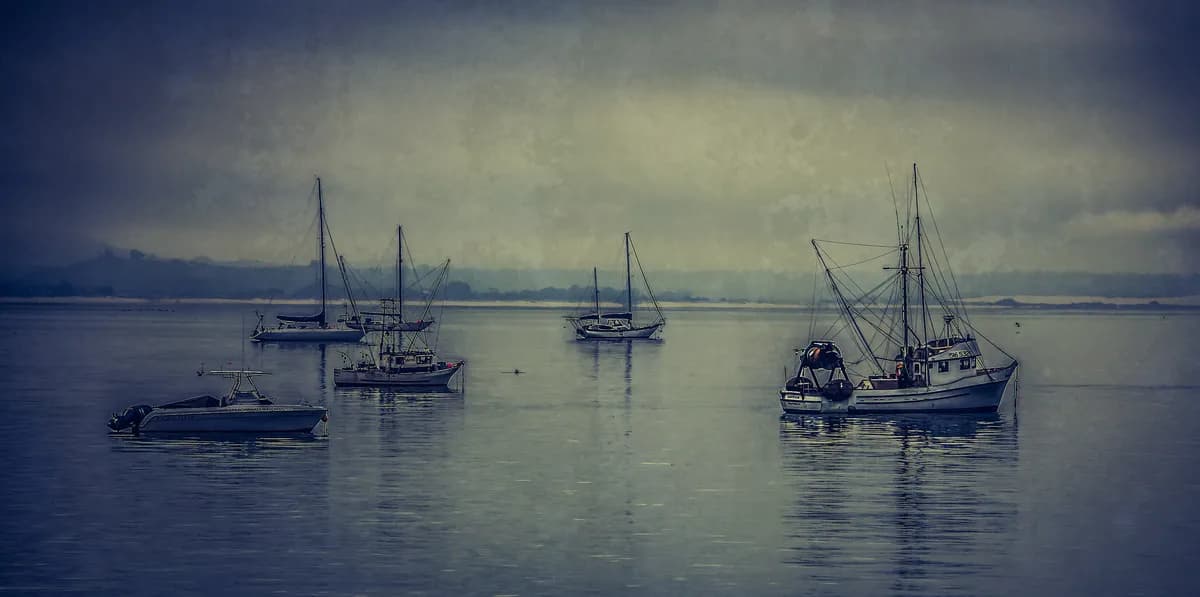
The ship Flora 1 is suspected of environmental crime after an oil spill within the Swedish economic zone east of Gotland. The Swedish Coast Guard estimates the spill in the Swedish economic zone is between 1.7 and 18 cubic meters. Meanwhile, environmentalist groups have accused Mexico's government of lying about the origins of a massive oil spill in the Gulf of Mexico. The oil spill off the coast of Veracruz state has spread more than 373 miles and into seven nature reserves.
Contradictory claims surround the source of Mexico's massive Gulf spill. Satellite images captured by environmental groups show that the root of the spill was a pipeline from Mexico's state-run oil company, Pemex, and that a large oil slick appeared in early February. However, Pemex called the information and images circulated by environmental groups inaccurate. Mexican President Claudia Sheinbaum denied accusations of a leak in state oil infrastructure and said no leak has been reported. The government is investigating whether the spill was due to natural seeps or a leak from facilities. Authorities claim the spill originated from a vessel anchored off the coast of Coatzacoalcos in Veracruz state and two natural seepages.
The official Mexican government response includes damage assessments indicating 800 tons of hydrocarbon-laden waste have spilled into the ocean from the Gulf of Mexico spill. Government estimates show about 430 tons of hydrocarbons have been collected along the coasts of Veracruz, Tabasco, and Tamaulipas. Authorities have ruled out severe environmental damage from the spill. The oil covered an area of about 600 kilometers including 200 kilometers of coastline in Veracruz and Tabasco. The spill affected seven protected natural reserves in Veracruz and Tabasco.
Environmental impact evidence appears to contradict official statements. Dead turtles, eels, and fish have been found on Mexican beaches and near shorelines due to the spill. Environmental authorities confirmed six species, including sea turtles, birds, and fish, were contaminated by the spill. Environmental groups argue the contaminated area may be far wider than officially reported.
Health authorities have downplayed contamination risks from the spill. Federal health authorities have denied any reports of illnesses linked to consuming fish or seafood due to possible contamination.
Ongoing investigations struggle to identify responsible parties for the Gulf of Mexico spill. The vessel responsible for the spill has not yet been identified because 13 ships in the area had not been inspected as of early March. The source of the spill remains active, with one main source estimated to be natural seeps in Cantarell, Bay of Campeche. The federal government is still carrying out a technical and scientific investigation to identify the source of the spill. President Claudia Sheinbaum suggested a private operator may be responsible rather than Pemex.
Conflicting reports exist about the spill's geographic extent. While the oil covered about 600 kilometers including 200 kilometers of coastline, major media sources indicate the affected coastline officially stretches about 165 kilometers. Environmental groups argue the contaminated area may be far wider than officially reported. Oil is present over a longer stretch than some official estimates acknowledge.
The Swedish spill involves additional details suggesting potential severity. Major media reports indicate Flora 1 released a larger amount of oil in Swedish waters than initial estimates might suggest.
Key unknowns include significant volume discrepancies and source identification challenges. The exact volume of the oil spill in the Gulf of Mexico remains uncertain, with government reports of 800 tons spilled and 430 tons collected, while environmental groups suggest it may be larger. Who is the responsible party for the Gulf of Mexico spill remains unclear, with disputes over whether it's a ship, natural seeps, or a Pemex pipeline. The vessel has not been identified, and investigations continue amid conflicting claims about infrastructure involvement.
Further unknowns concern environmental damage assessment and economic impact. The full extent of environmental and economic damage from the Gulf of Mexico spill is not fully known, with official assessments downplaying severity while activists report widespread harm to wildlife and fisheries. How many fishermen have been affected by the Gulf of Mexico spill has not been estimated by authorities, though activists say it could be several hundred.
Additional unknowns involve fishermen impacts and natural seep causes. Authorities have not provided an estimate of how many fishermen have been affected by the Gulf of Mexico spill, though local reports suggest significant livelihood disruptions. What caused the increased flow of contaminants from natural seeps in the Gulf of Mexico remains unexplained, with authorities noting a greater flow in the last month but not explaining why.
The spills have implications for government accountability and environmental oversight. The contradictory claims about spill sources in Mexico raise questions about transparency and corporate responsibility, particularly regarding state-owned Pemex. Environmental groups' allegations of government misinformation challenge public trust in official damage assessments. The Swedish investigation into Flora 1 tests enforcement mechanisms for maritime environmental crimes. Both incidents highlight gaps in spill response coordination and monitoring systems, with potential policy implications for international waters protection and corporate accountability frameworks.