

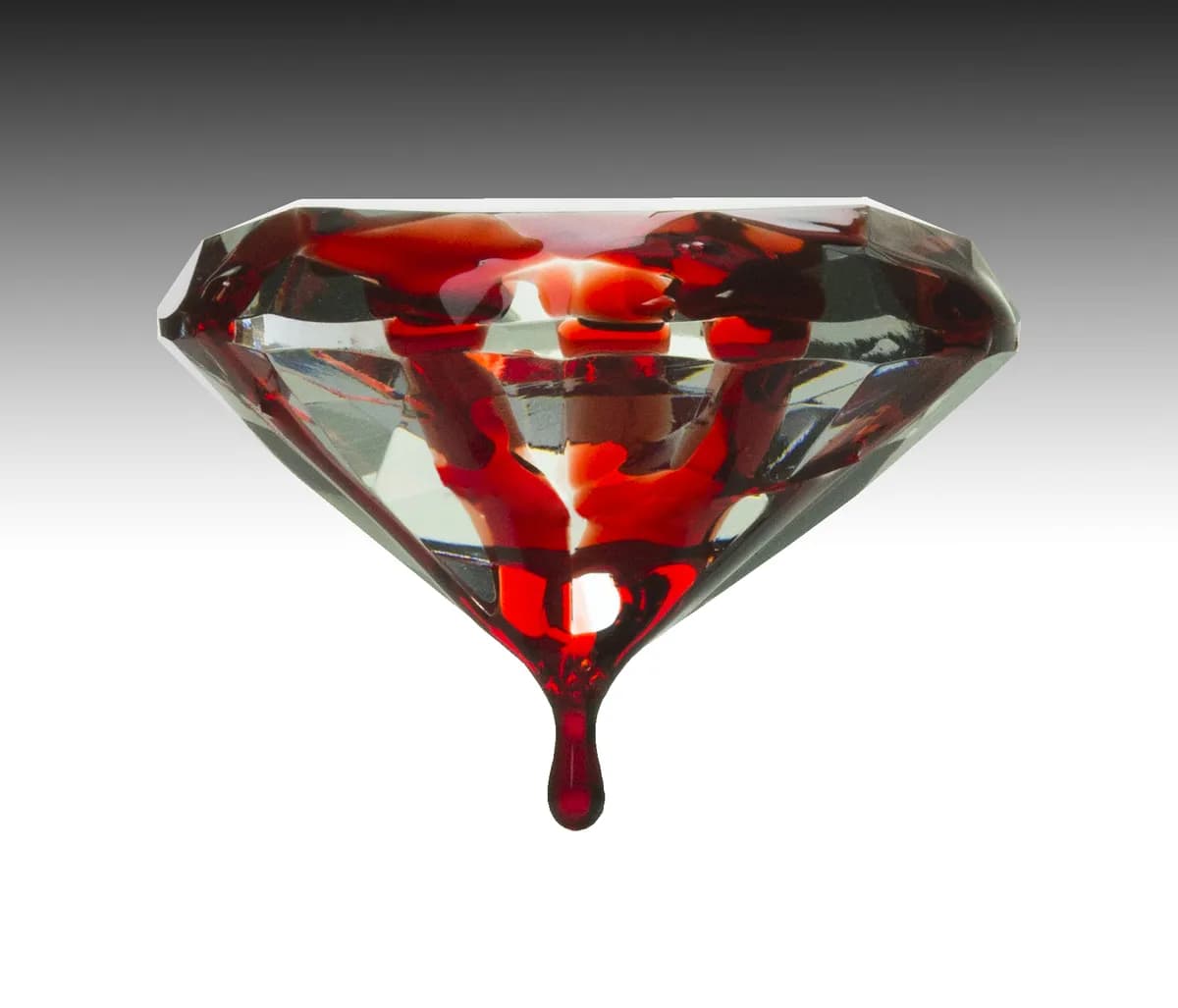
Mayor Zohran Mamdani said he would encourage King Charles to return the Koh-i-Noor diamond. He made the remark during a press conference ahead of meeting the king at a September 11 memorial event, according to a spokesperson. It remains unclear whether the topic was broached during their private conversation.
According to palace officials, the king and queen visited the 9/11 Memorial & Museum on Wednesday, the penultimate day of their state visit to the United States. The royal couple laid a bouquet of white flowers at the memorial pool and met with first responders and families of those killed in the 2001 attacks, ahead of the 25th anniversary of September 11. Their itinerary included a moment of silence at the reflecting pools and conversations with survivors and firefighters, a palace spokesperson said, describing the visit as a tribute to the resilience of New Yorkers.
A spokesperson for the mayor confirmed that Mamdani made the remarks during a press conference held prior to the memorial. However, the mayor's daily schedule, released by his office earlier that day, made no mention of a meeting with the British monarch, stating only that he would attend a wreath-laying with other elected officials. The spokesperson added that Mamdani is generally opposed to the concept of a monarchy, a position consistent with his democratic socialist and anti-colonial political views.
Buckingham Palace declined to comment on Mamdani's call for the diamond's return. An Indian government spokesperson did not immediately respond to a request for comment, although India has consistently urged Britain to return the gem.
According to a report in the New York Post, some social media users criticized Mamdani, suggesting he should focus on local New York issues. One X user, quoted by the outlet, called the plea "performative," while others questioned which country should actually receive the diamond, given multiple nations claim it.
The Koh-i-Noor, which means "Mountain of Light" in Persian, is a 105.6-carat diamond and one of the most famous pieces in the British Crown Jewels. According to the Royal Collection Trust, the gem is currently set in the Queen Mother's crown, crafted in 1937 and adorned with 2,800 diamonds, and is on public display at the Tower of London.
According to royal commentators, Queen Camilla opted to wear a modified version of Queen Mary's crown at King Charles's coronation last year that did not contain the Koh-i-Noor, a decision widely reported as an effort to avoid diplomatic controversy. Royal historians noted that she became the first consort since the 18th century to reuse a crown rather than commission a new one.
The scale of trafficking networks targeting Indian cultural heritage is massive and more work is needed to return stolen artifacts.
Observers say Mamdani's remarks have reignited a long-simmering debate over the diamond's ownership, with multiple nations having staked claims. India has repeatedly called for the diamond's return, while Pakistan, Iran, and Afghanistan have also asserted historical rights to the gem. Historians say the diamond's complex provenance makes it a focal point for post-colonial restitution discussions.
Britain acquired the diamond in 1849 under the Treaty of Lahore, which concluded the Second Anglo-Sikh War. According to historian William Dalrymple, the treaty forced the cession of the gem from the region that is now Pakistan, along with vast territories. The diamond was subsequently presented to Queen Victoria and has remained in British possession ever since.
According to the Royal Collection Trust, the earliest written record of the diamond dates to 1628, during the Mughal Empire, when it was set in the famed Peacock Throne of Shah Jahan. It was later seized by the Persian ruler Nader Shah when he sacked Delhi in 1739, as recorded by historians. By 1813, the diamond had come into the possession of Sikh ruler Ranjit Singh, a fact documented by historians Anita Anand and William Dalrymple.
On the same day, in a separate development, Manhattan District Attorney Alvin Bragg's office announced the return of 657 antiquities to India, valued at $14 million. The pieces included items connected to alleged smuggler Subhash Kapoor, who is currently on trial in India. A spokesman for Bragg's office emphasized that the ceremony, held at the Indian consulate, was unconnected to the royal visit and had been scheduled weeks in advance.
In a statement, Bragg emphasized the massive scale of trafficking networks targeting Indian cultural heritage and the need for continued repatriation efforts. The returned objects included a bronze figure of Avalokiteshvara, a red sandstone Buddha looted by Kapoor, and a sandstone dancing Ganesha taken by Kapoor's co-conspirator Ranjeet Kanwar.
According to his official biography, Mamdani is New York City's first democratic socialist mayor and is of Indian American descent, born in Uganda to parents of Indian origin. His administration has described New York's history as one of colonization, exploitation, and racial oppression, framing his policies in anti-colonial terms that resonate with progressive voters.
It is unclear whether Mamdani directly raised the diamond issue with King Charles during their brief exchange. A mayoral aide declined to say which country Mamdani believes should receive the diamond, leaving open questions about the intended recipient of any potential restitution.