

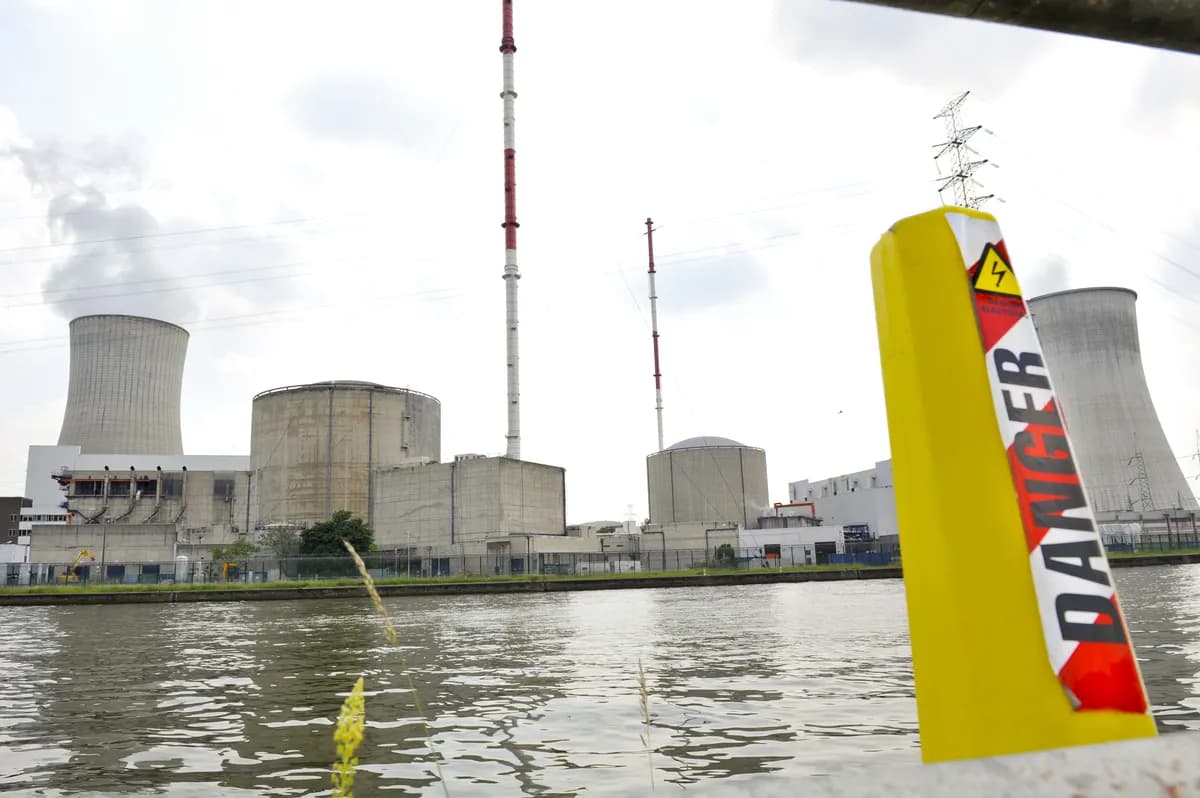
The committee's main recommendations are that Norway should not start a full nuclear power process now, but should build up expertise to make such a decision easier in the future. The nuclear power committee advised against starting nuclear power in Norway because it is too expensive and takes too long to establish.
Economic barriers present significant obstacles to nuclear power development in Norway. The committee's calculations show that nuclear power, even with the most optimistic assumptions, needs electricity prices of at least 113 øre per kilowatt-hour to cover costs, while the estimated long-term electricity price in Norway is 50–80 øre. If nuclear power is to be established in Norway, private investors must find it profitable to invest, requiring investment costs to be 70–80 percent lower. The committee notes that this aligns with the situation in Sweden and Finland, where large energy companies like Vattenfall and Fortum say they cannot build new nuclear power without extensive state support. The committee does not see good socio-economic reasons for the state to support the establishment of nuclear power in Norway.
Timeline challenges further complicate nuclear power's potential contribution to climate goals. Even if Norway decided today, the committee believes production is not realistic until at least the mid-2040s, due to the need to develop legislation, authorities, and professional environments. Nuclear power production will not come in time to contribute to meeting the Paris Agreement's 2050 goals, and other alternatives must be built in the meantime, including upgrading hydropower and expanding wind and solar power. The committee warns that prospects of future nuclear power could hinder the expansion of alternatives, risking less power and less transition in the coming decades.
Technical and safety concerns add to the committee's skepticism about nuclear power. The committee is skeptical of small modular reactors (SMRs) as a near-term solution, citing no established factories, no standardized models, and uncertainty about costs. The handling of spent fuel is a major challenge, as it emits harmful radiation for thousands of years and requires deep geological disposal for 100,000 years, with Finland being the only country to have completed such a repository. Accidents can have major consequences, requiring very strict safety requirements, but it is challenging to assess the probability and consequences of an accident.
The report comes amid renewed debate about nuclear power in Norway after decades of dormancy. In 1986, the Storting decided that nuclear power was not relevant in Norway's energy supply, leading to a dormant debate for decades. The green transition and high energy prices have made the nuclear power question relevant again, leading the government to appoint a committee two years ago. The committee's report is unanimous and nearly 500 pages long.
Political positions on nuclear power vary across Norway's parties. A survey by Debatten shows that all other parties want more knowledge on nuclear power, with the Labor Party and Center Party saying no to establishing nuclear power plants, while the Center Party is positive if a municipality wants it, and the six other parties (Høyre, Frp, KrF, Venstre, MDG, Rødt) say yes with certain reservations.
Private sector initiatives continue despite the committee's negative assessment. The question of nuclear power in Norway has been made current by the private company Norsk Kjernekraft AS, which wants to build nuclear power plants in several places in Norway and has agreements with nine Norwegian municipalities and a municipal company to plan small nuclear power plants. It is uncertain how the need for power towards 2050 will develop, with Statkraft's latest energy report indicating electricity consumption will likely increase more in the next 25 years than in the previous 25 years, but expecting a power surplus in the Nordic region as a whole by 2050.