

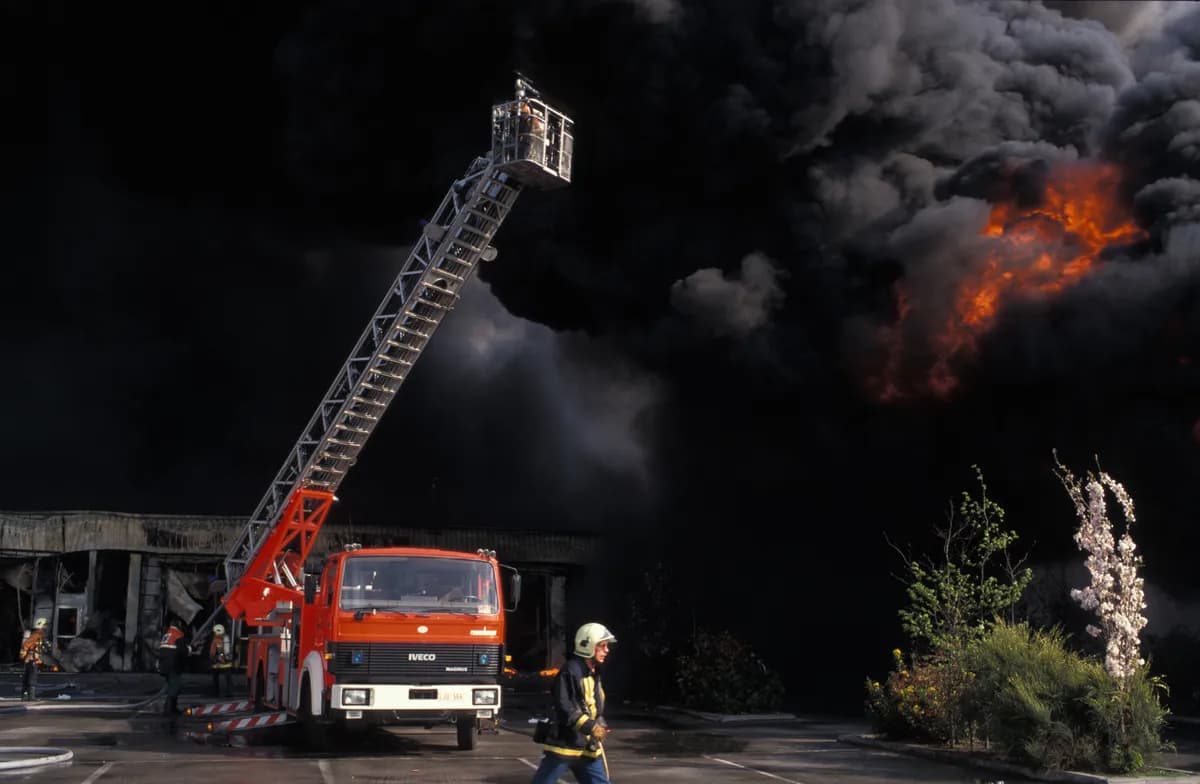
A yellow danger warning for forest fire is in effect in Møre og Romsdal over the weekend, according to the Meteorological Institute. Fires in Ålesund and Ørland have been particularly challenging, with flames threatening settlements and forcing evacuations, local officials said.
DSB has entered a new agreement with Arctic Aviation, providing a total of 25 helicopters distributed across the country for forest fire preparedness, according to DSB. From April 15 to August 15, one forest fire helicopter is on permanent standby at Geiteryggen near Skien, covering all of Southern Norway, DSB said. An extra forest fire helicopter is deployed in Nordland from April 14 to 16 due to high risk of grass and heather fires, according to DSB. During April 14-16, two forest fire helicopters will operate in the Salten area, DSB said. The helicopter has already been deployed six times, according to DSB. DSB can deploy additional helicopters elsewhere in the country if needed, the agency said.
Every year we have a fixed helicopter on standby.
So far this year, 346 forest, grass, and scrub fires have been registered, according to DSB. Last year, there were 1126 fires in inland and outfield areas in Norway. Forest fire helicopters were used in 41 of them. The preparedness cost around 19.5 million kroner.
Local flying clubs also assist; Grenland and Sandefjord flying clubs help monitor forest areas in Eastern Norway and can be airborne daily during the driest periods, according to local officials. "They are very important. It gives us the opportunity to detect fires early," said Jan Helge Kaiser, Fire Chief at Vestfold Interkommunale Brannvesen.
We make two assessments per week, based partly on the forest fire danger warnings. We can set up preparedness across the country based on where the forest fire risk is greatest. Precisely to have resources to handle the risk it represents.
Johan Marius Ly, Department Manager at DSB, said: "Every year we have a fixed helicopter on standby." He added: "We make two assessments per week, based partly on the forest fire danger warnings. We can set up preparedness across the country based on where the forest fire risk is greatest. Precisely to have resources to handle the risk it represents." Ly described the extra deployments as "a risk-reducing measure that contributes to faster and more effective extinguishing. It helps protect both nature, values, and perhaps also lives."
Pilot John-Arne Hellesø said: "When we arrive, we get a brief briefing from the incident commander, and then we work systematically inwards towards the fire front." He noted that "DSB has concluded that helicopters are the most effective tool in Norway." Hellesø added: "There is no doubt that this is one of the most meaningful jobs you can have. You feel that you are contributing to something bigger than yourself."
They are very important. It gives us the opportunity to detect fires early.
Roger Vangen, Response Leader in Tingvoll, recalled a recent fire: "The helicopter was absolutely crucial. At the start we got water from a small stream, and that was too little. Without the helicopter that fetched water from the sea, the fire would have spread up the forest. So the fire would have become much larger."
Sindre Egeness, Fire Chief in Ålesund, said: "A forest fire helicopter has great effect, not least if it is deployed early in the extinguishing work. Especially when there is little wind, as has been in recent days." He added: "We are well staffed and have access to more people on short notice, so we are not concerned about capacity."
When we arrive, we get a brief briefing from the incident commander, and then we work systematically inwards towards the fire front.
The Meteorological Institute reports that fire danger may increase in lowland areas due to drying of last year's vegetation, but snow still covers many lowland areas in Northern Norway.
DSB has concluded that helicopters are the most effective tool in Norway.
There is no doubt that this is one of the most meaningful jobs you can have. You feel that you are contributing to something bigger than yourself.
This is a risk-reducing measure that contributes to faster and more effective extinguishing. It helps protect both nature, values, and perhaps also lives.
The helicopter was absolutely crucial.
At the start we got water from a small stream, and that was too little. Without the helicopter that fetched water from the sea, the fire would have spread up the forest. So the fire would have become much larger.
A forest fire helicopter has great effect, not least if it is deployed early in the extinguishing work. Especially when there is little wind, as has been the case in recent days.
We are well staffed and have access to more people on short notice, so we are not concerned about capacity.