

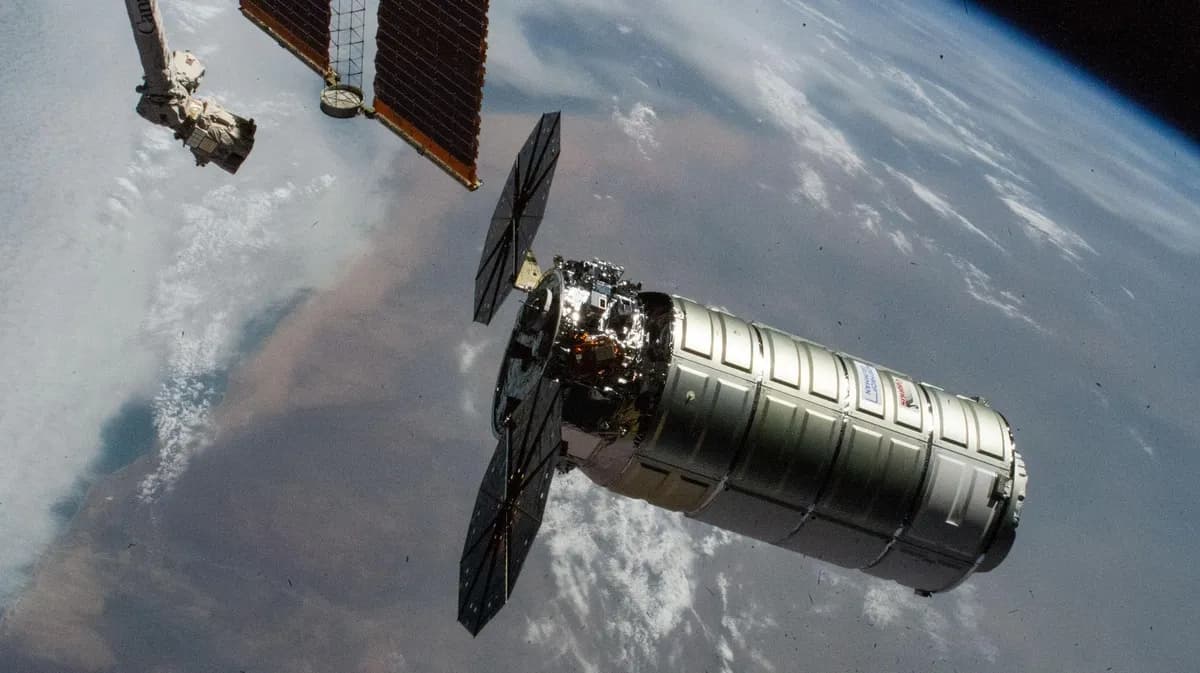
The Cygnus XL will launch on a SpaceX Falcon 9 rocket from the Cape Canaveral Space Force Station in Florida, with liftoff targeted for no earlier than Wednesday, April 8, from Space Launch Complex 40 at Cape Canaveral Space Force Station in Florida. Following arrival, astronauts aboard the space station will use the Canadarm2 to grapple Cygnus XL before robotically installing the spacecraft to the Unity module's Earth-facing port for cargo unloading. The spacecraft will remain at the space station until October, and this is the company's 24th spacecraft built to deliver supplies to the International Space Station under contract with NASA.
Scientific investigations being delivered include a new module for the Cold Atom Lab to expand its research capabilities and improve understanding of general relativity, planetary composition, and dark matter. The mission will also deliver an investigation studying blood stem cell production in microgravity to create a larger number of therapeutic cells, and another that measures how radio signals sent from Earth change as they pass through the upper atmosphere to improve models predicting impacts of solar activity and space weather. Additional cargo includes a study of how spaceflight impacts the relationship between organisms and their gut microbiome using roundworms to identify ways to maintain microbiome stability and protect astronaut health, the European Enhanced Exploration Exercise Device, a compact exercise system jointly developed by NASA and ESA to preserve muscle mass and bone health in microgravity, and the Supplemental Heat Rejection Evaporative Cooler to provide heat rejection for the orbiting laboratory in the event of dual thermal control system failures.
Media accreditation is open for the launch, with the application deadline for U.S. citizens being 11:59 p.m. EDT, Wednesday, March 18.